
Méndez, 80, helped organize spontaneous civilian rescue efforts after the 1985 Mexico City earthquake and has led Topos missions around the world for four decades. He is already in La Guaira, helping search for the few survivors who may still be trapped beneath collapsed buildings.
“The hardest part is telling someone that their loved one has died,” Bello said.
Rescuers in his team say they must keep their emotions in check once they reach the disaster zone, where staying focused can mean the difference between life and death.
“There is no hunger, no heat, no sleep,” said volunteer Merry Valencia, who has spent 14 years with the brigade, reciting part of the group’s code of conduct. “There is no fear.”
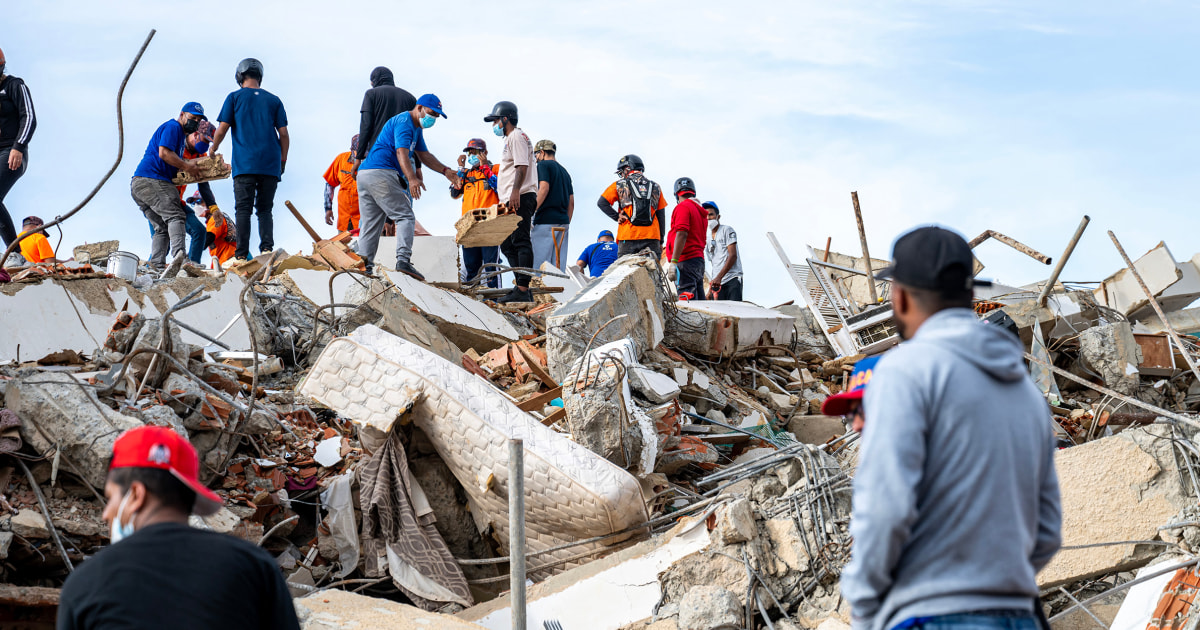
Once they assess the stability of collapsed structures, rescuers split into small teams assigned to different sections of the debris. They crawl through narrow openings and voids inside pancaked buildings — a practice that earned them the nickname “Topos,” or moles. They often use thermal cameras and other specialized equipment to search for signs of life.
Armed with shovels, hand hammers and other tools, they slowly remove rubble, inch by inch, trying to avoid triggering further collapses.
A call for silence spreads quickly
“We are rescue workers from Mexico. If anyone is alive, make some noise or call out now!” a Mexican Army rescuer shouted Saturday as he searched the ruins of a collapsed building in La Guaira.
Moments later, he raised a clenched fist in the air.
The gesture signals an order for complete silence, a search technique that emerged during the 1985 Mexico City earthquake and was later formalized by the Topos. Versions of the protocol are now used by rescue teams around the world.
The signal spreads instantly through the disaster zone. Rescue workers, soldiers, volunteers and journalists will have to stop talking. For several seconds, the only sound is silence.
Rescuers then wait intently for any indication of life, using sensitive microphones, telescopic cameras or simply pressing an ear against the rubble, hoping to detect a voice, a knock or the faintest movement.