

All living former presidents of the Supreme Court issued a joint condemnation Monday of the government’s announcement a day earlier that it does recognize a ruling by the top court as valid, saying that refusing to respect or obey court decisions is “the last nail in the coffin of democracy.”
The five retired Supreme Court presidents — Aharon Barak, Dorit Beinisch, Asher Grunis, Esther Hayut and Uzi Vogelman — asserted that the government’s declaration would create legal anarchy.
“Such conduct completely undermines normal governance and law in the country. It will lead to anarchy and to the concentration of all governmental powers in the hands of a single body alone, and will make the existence of a functioning society impossible,” the former court presidents said.
The retired justices said that in order to avoid such results, the government should immediately announce that it is committed to obeying court rulings.
In a declaration issued by the cabinet on Sunday, the government vowed not to respect the High Court of Justice’s decision in June to enable the Council of the Second Authority, the commercial broadcasting regulatory body, to resume operations despite lacking a two-thirds quorum of members.
Get The Times of Israel’s Daily Edition
by email and never miss our top stories
By signing up, you agree to the terms
Using wording proposed by Communications Minister Shlomo Karhi and Justice Minister Yariv Levin, the government stated that it would not recognize any decisions made by the council in its current status.
The government argued that the court order violates one of the provisions of the 1990 law for the Second Authority, and said, “The government has determined that the rule of law obligates all governmental authorities, including the court,” and that “a ruling that directly contradicts the clear language of the law cannot confer authority that does not exist under the law.”
The declaration gave rise to concerns that the government was violating the rule of law and taking the country toward a constitutional crisis, with President Isaac Herzog, Attorney General Gali Baharav-Miara, and opposition chiefs condemning the move.
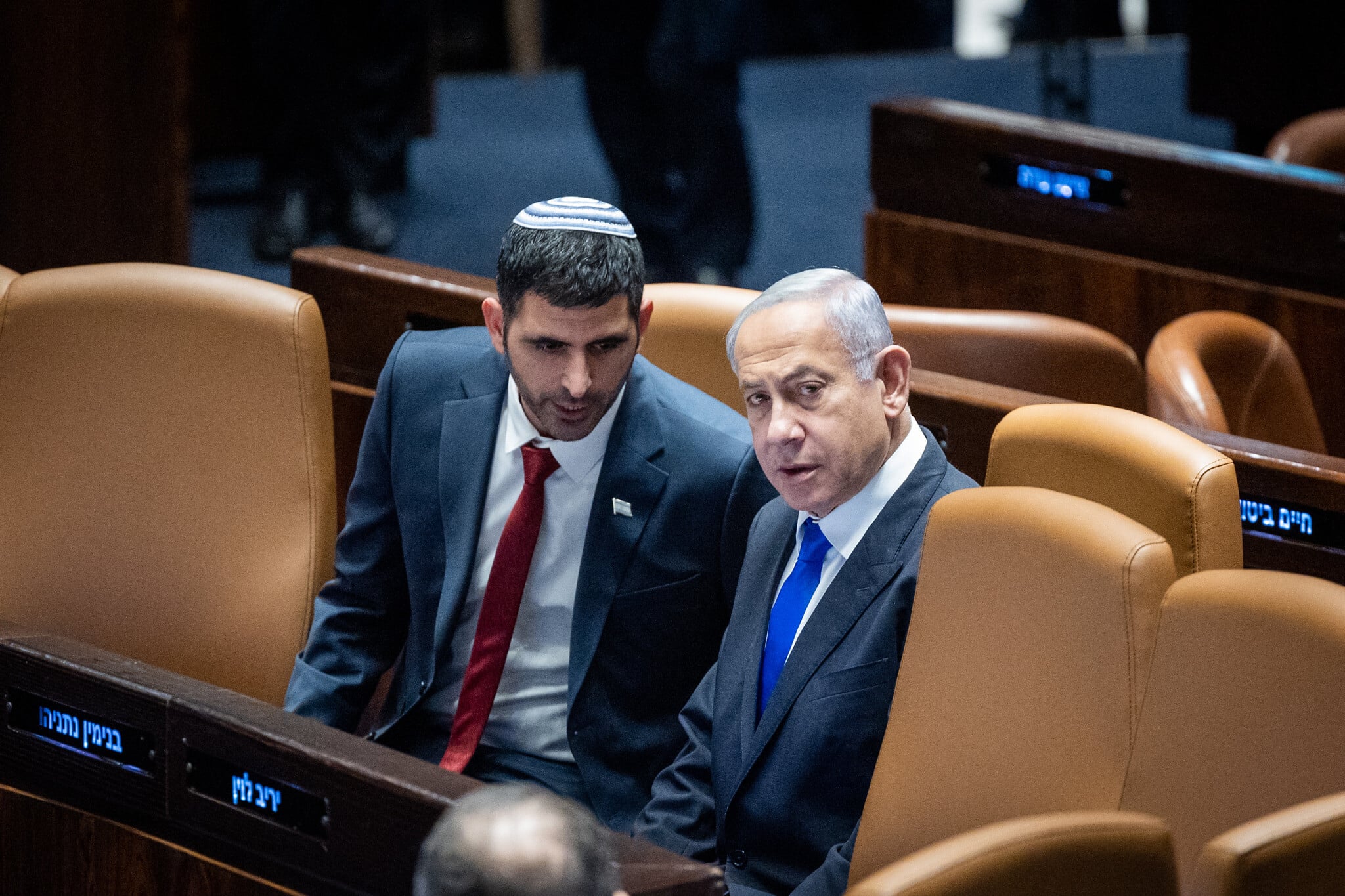
Prime Minister Benjamin Netanyahu (right) with Communications Minister Shlomo Karhi during a discussion and a vote in the assembly hall of the Knesset, March 1, 2023. (Yonatan Sindel/Flash90)
Earlier Monday, Culture and Sports Minister Miki Zohar said that Prime Minister Benjamin Netanyahu does not intend to go down the “slippery slope” of a constitutional crisis, asserting that the premier would comply with the court decisions after all.
He claimed that the government resolution rejecting the High Court ruling on the operations of the Council of the Second Authority, the commercial broadcasting regulatory body, “did not create a constitutional crisis — but sought to prevent one.”
“We told the High Court that its behavior was against the law,” Zohar insisted on Monday. “We must obey the High Court’s decisions, but we are saying that we are on the verge of a constitutional crisis.”
The fight over the membership of the Second Authority’s council centers around a proposed buyout of Channel 13 by a group of high-tech entrepreneurs, headed by a prominent critic of the government, which the council must approve.
Organizations that petitioned the High Court against the government alleged that Karhi and the government tried to assert political control over the council to thwart the buyout. And the court itself, in an interim order in May, all but accused Karhi of unlawfully exerting influence over the council in an effort to hinder its operations and, by extension, the Channel 13 acquisition.
In disobeying the High Court, the government could create a constitutional crisis if the Council of the Second Authority makes decisions that the court would consider valid but that the government rejects.
The struggle over the Second Authority comes against the backdrop of Karhi’s persistent efforts over the entire course of the government’s tenure to exert greater control over the regulation of broadcast media, as well as his efforts to reduce the independence of the Kan public broadcaster, or shut it down completely.
We can’t do this work alone.

The war with Iran has been draining for all of us in Israel. But when I heard about a high casualty incident – ballistic missile impacts in Arad and Dimona that left nearly 200 people wounded – I drank a cup of coffee, packed a bag, and headed south.
There, I spoke with Shilgit, the head of an after-school program for underprivileged youth. Standing outside her destroyed center, Shilgit said it was a miracle that no children were hurt and spoke about the community coming together in the hours since.
As a Times of Israel reporter, I’m committed to telling stories of resilience like Shilgit’s. But my colleagues and I can’t do this alone. If you value work like this, please consider joining our reader support group, The Times of Israel Community. Your financial support is essential to keep real human reporting like this going.
— Stav Levaton, military reporter
Already a member? Sign in to stop seeing this
You’re a dedicated reader

That’s why we started the Times of Israel – to provide discerning readers like you with must-read coverage of Israel and the Jewish world.
So now we have a request. Unlike other news outlets, we haven’t put up a paywall. But as the journalism we do is costly, we invite readers for whom The Times of Israel has become important to help support our work by joining The Times of Israel Community.
For as little as $6 a month you can help support our quality journalism while enjoying The Times of Israel AD-FREE, as well as accessing exclusive content available only to Times of Israel Community members.
Thank you,
David Horovitz, Founding Editor of The Times of Israel