
“We just want to take viewers into this world,” said director Habiba Nosheen
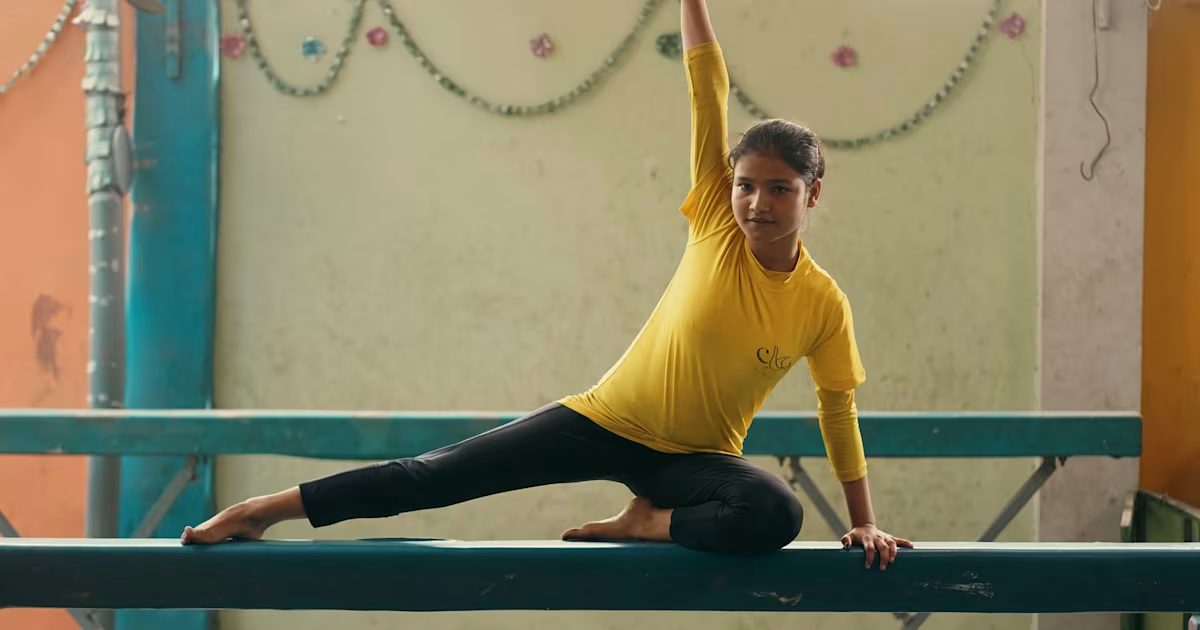
The girls to whom Nosheen refers, and the focus of the film, are Kiran, Anwara and Sonia, three stateless Pakistani teenagers who effected change within their deprived community in Karachi’s Machar Colony by being the first girls to learn gymnastics.
And when we say gymnastics, we’re not talking about performing on Olympic-level apparatus here but equipment such as one long strip of bump-strewn soft matting for floor exercise, beams that can be hard or rounded or even different heights, and a tatty vault.
But the passion for the sport is the same as for gymnasts the world over.
The documentary joins the trio as they aim to represent their colony at the national championships in two months’ time.
The Emmy-award-winning Nosheen takes care to portray, honestly and movingly, the joys and trials of being at the forefront of breaking barriers and cultural norms.
“It’s important to centre the story around how these girls found the sport,” said Nosheen who came across the girls via human rights attorney, Tahera Hasan, who helped with the adoption of Nosheen’s own daughter. Hasan, who features heavily in the film, started a school in 2012 that provides free education and sports for stateless children including gymnasts for girls.
“Hasan said most people assume that people who are from a disadvantaged background should be entitled to three meals, learning to read and write, and that’s it, we’ve done our duty,” said Nosheen. “But she’s like, I just don’t see the world that way. I think children’s right to play is so essential to their well-being and every child deserves that, no matter what, no matter who they are.”
That’s why Hasan called the school, Khel, Urdu for play.
It was important to Nosheen to film in a way that felt reflective of her community with engagement with the girls’ story key.
“It doesn’t spell things out for you, that’s not the storytelling in this film,” said Nosheen, whose previous documentaries include the hard-hitting “Outlawed in Pakistan” and who is creator and host of the series “Conviction: The Disappearance of Nuseiba Hasan”.
“We didn’t want to dumb down things, we wanted an audience who can get it… We just want to take them into this world, so we didn’t want to compromise the creativity by explaining every little bit.”
Another aspect of making this film was a personal one.
“This piece of work is such a big shift artistically and creatively as a storyteller, but I needed to make this for myself as well. I do a lot of stories about the Muslim world, I do a lot of stories about women’s issues, and it gets really heavy… and I wanted to see happier stories from the part of the world that I come from.
“That coverage overtakes anything else. It silences our humanity and building characters that are nuanced, that resist, that are joyful, there’s not a lot of opportunities.
“I think if we want to humanise the experience of Muslim women and Muslim people or brown people and decolonise the way that cinema has looked at the lives of Muslim girls and brown people in general, I think we’ve got to start telling stories differently, and I think part of that has to do with who tells the story.”