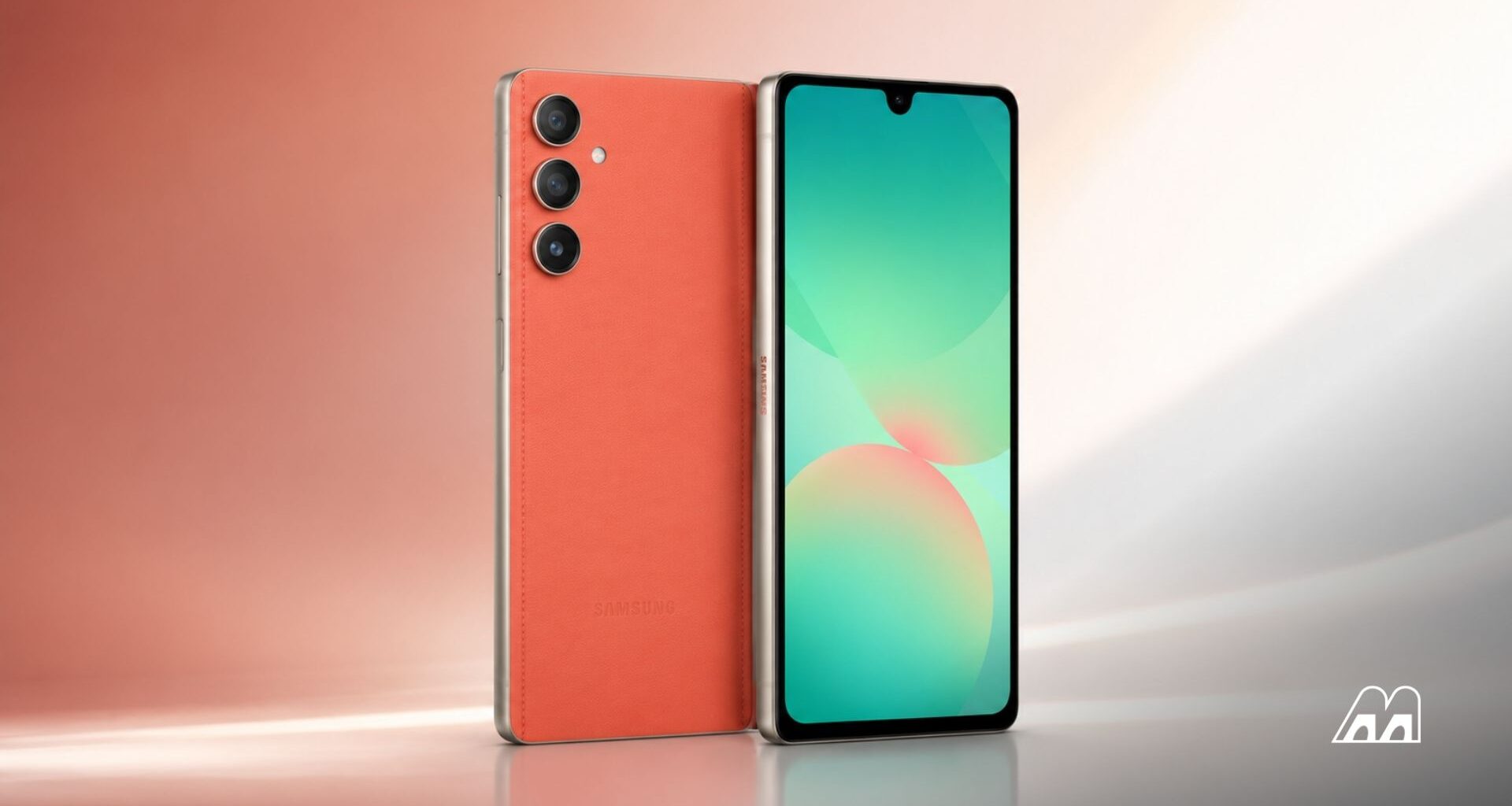
The Samsung Galaxy F70 Pro just showed up on Geekbench with model number SM-E476B — and if you’ve been tracking Samsung’s mid-range rollout this year, you’ve basically seen this phone before. It’s the Galaxy M47, repackaged for a different storefront. Here’s what the listing actually tells us and why Samsung keeps doing this.
What the Geekbench Listing Reveals
The benchmark entry confirms three things: the F70 Pro runs Qualcomm’s Snapdragon 6 Gen 3 processor, packs 8GB of RAM, and ships with Android 16 out of the box.
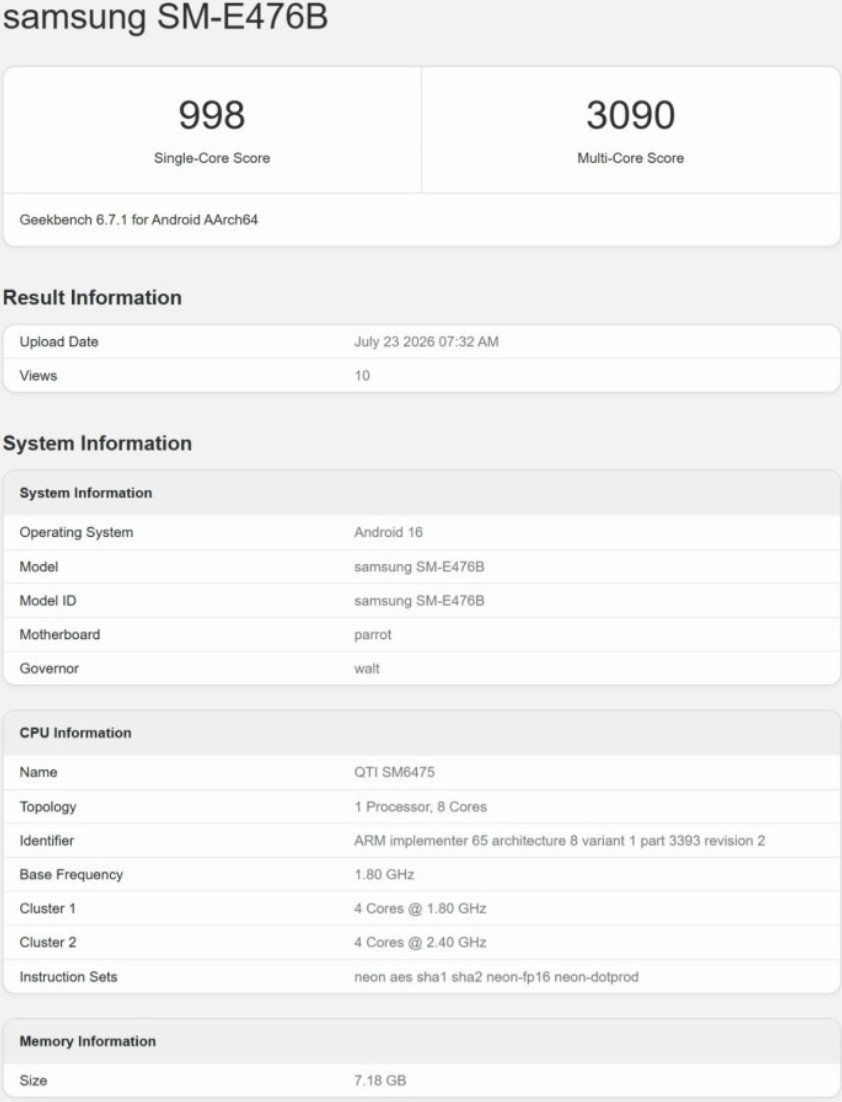
Performance numbers landed at 998 points single-core and 3,090 points multi-core. The motherboard codename “parrot,” along with the Adreno 710 GPU and octa-core CPU layout, all point to the same Snapdragon 6 Gen 3 silicon that debuted in the Galaxy M47 last month.
Those scores are solid for a mid-range phone — enough for smooth social media scrolling, multitasking between apps, and casual gaming. They won’t compete with flagship chips, but that’s not what this price tier is about.
Same Phone, Different Name
Here’s where things get interesting. The Galaxy M47 carries model number SM-M476B. The F70 Pro? SM-E476B. Swap the letter prefix, and the rest is identical. That’s not a coincidence — it’s Samsung’s playbook.
Samsung has been running this dual-brand strategy in India for years. The M-series sells through Amazon and Samsung’s own store. The F-series goes exclusively through Flipkart. Different marketing, different storefronts, same core hardware. If you already looked at the Galaxy M47’s full breakdown, you’ve essentially seen what the F70 Pro offers.
The strategy makes more sense than it looks on the surface. India’s two dominant e-commerce platforms — Amazon and Flipkart — each draw slightly different audiences. Samsung gets to run separate launch promotions, separate bank card deals, and separate pricing strategies on each platform without cannibalizing a single product listing.
Expected Specs Beyond the Benchmark
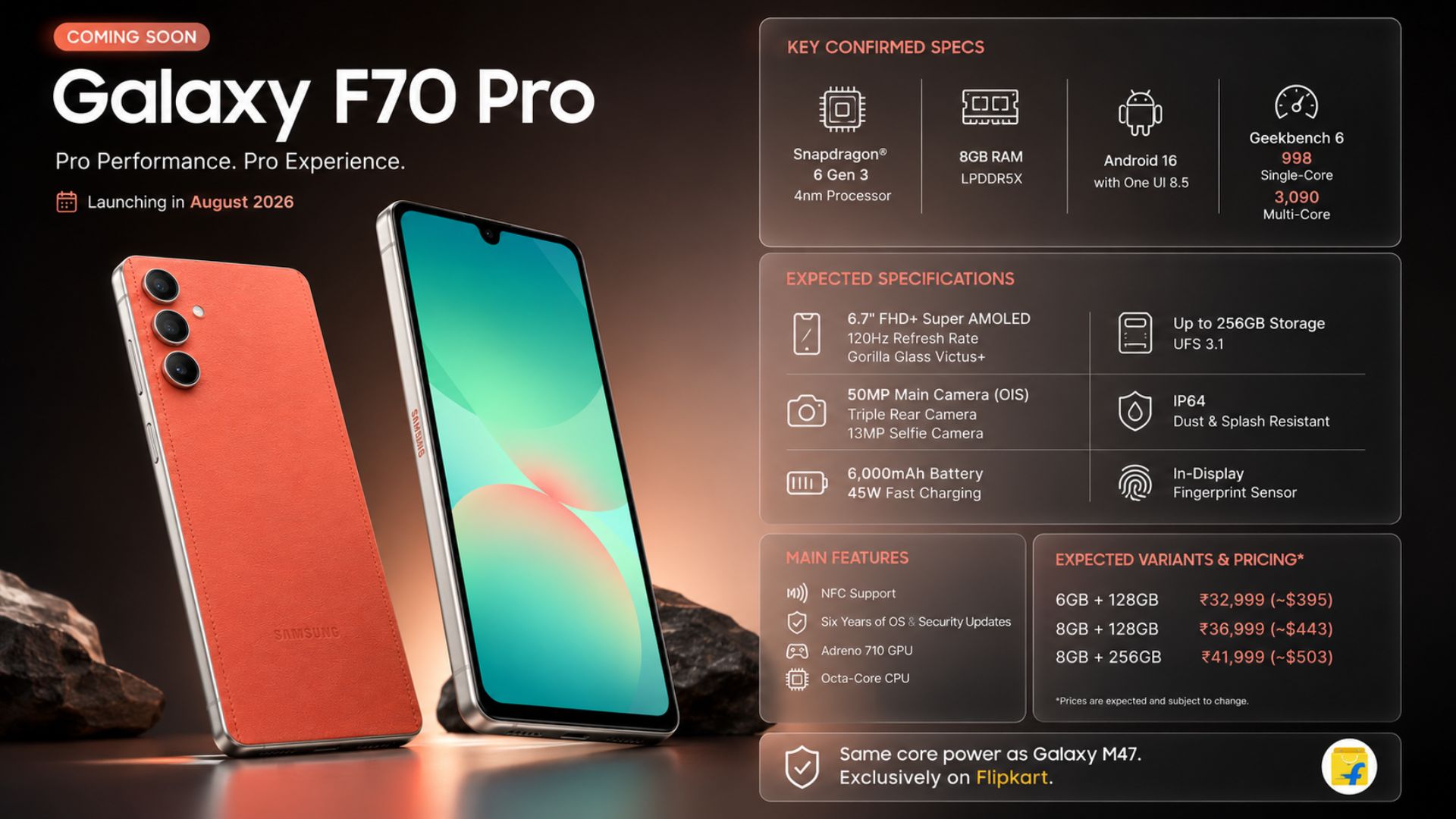
The Geekbench listing only confirms the chip, RAM, and OS. But leaks from SammyGuru and retailer communications fill in the rest:
Display: 6.7-inch FHD+ Super AMOLED, 120Hz refresh rate, Gorilla Glass Victus+ protectionBattery: 6,000mAh with 45W fast chargingCamera: 50MP main sensor with OIS, triple rear setup, 13MP selfieStorage: LPDDR5X RAM, UFS 3.1 storage — up to 256GBExtras: NFC, IP64 dust and splash resistance, in-display fingerprint sensorSoftware: One UI 8.5 based on Android 16, with six years of OS and security updates
That software commitment is worth highlighting. Six years of updates on a mid-range phone puts the F70 Pro on equal footing with Samsung’s flagships — and significantly ahead of what OnePlus, Xiaomi, or Realme offer at this price point.
Samsung has also been pushing the Snapdragon 6 Gen 3 across its 2026 mid-range lineup, including the Galaxy A27. The chip’s 4nm architecture delivers decent energy efficiency, though it’s worth noting this is technically a 2024-era processor. It handles everyday tasks well but doesn’t deliver the kind of GPU performance you’d need for graphically demanding games at high settings.
What It’ll Cost — And Why That’s Complicated
A leaked retailer communication earlier this year suggested three variants:
VariantExpected Price6GB + 128GB₹32,999 (~$395)8GB + 128GB₹36,999 (~$443)8GB + 256GB₹41,999 (~$503)
Compare that to the Galaxy M47, which launched at an effective ₹22,999 (~$275) with Prime Day coupons on Amazon. Even at its standard retail price, the M47 undercuts the F70 Pro by a significant margin for what appears to be the same hardware.
Samsung hasn’t confirmed F70 Pro pricing yet, so launch-day discounts and Flipkart bank offers could close the gap. But if these numbers hold, the value equation gets tricky. Buyers who do the research will find the same specs at a lower price under a different name — and that’s a problem Samsung has managed to get away with largely because most shoppers don’t cross-reference model numbers.
The Bigger Picture for Samsung’s Mid-Range Strategy
Samsung launched a staggering number of mid-range phones in 2026. The F70e came in February. The A37 and A57 landed in the spring. The M47 arrived in early July. Now the F70 Pro is incoming. And Galaxy Unpacked 2026 just dropped six premium devices on the same day.
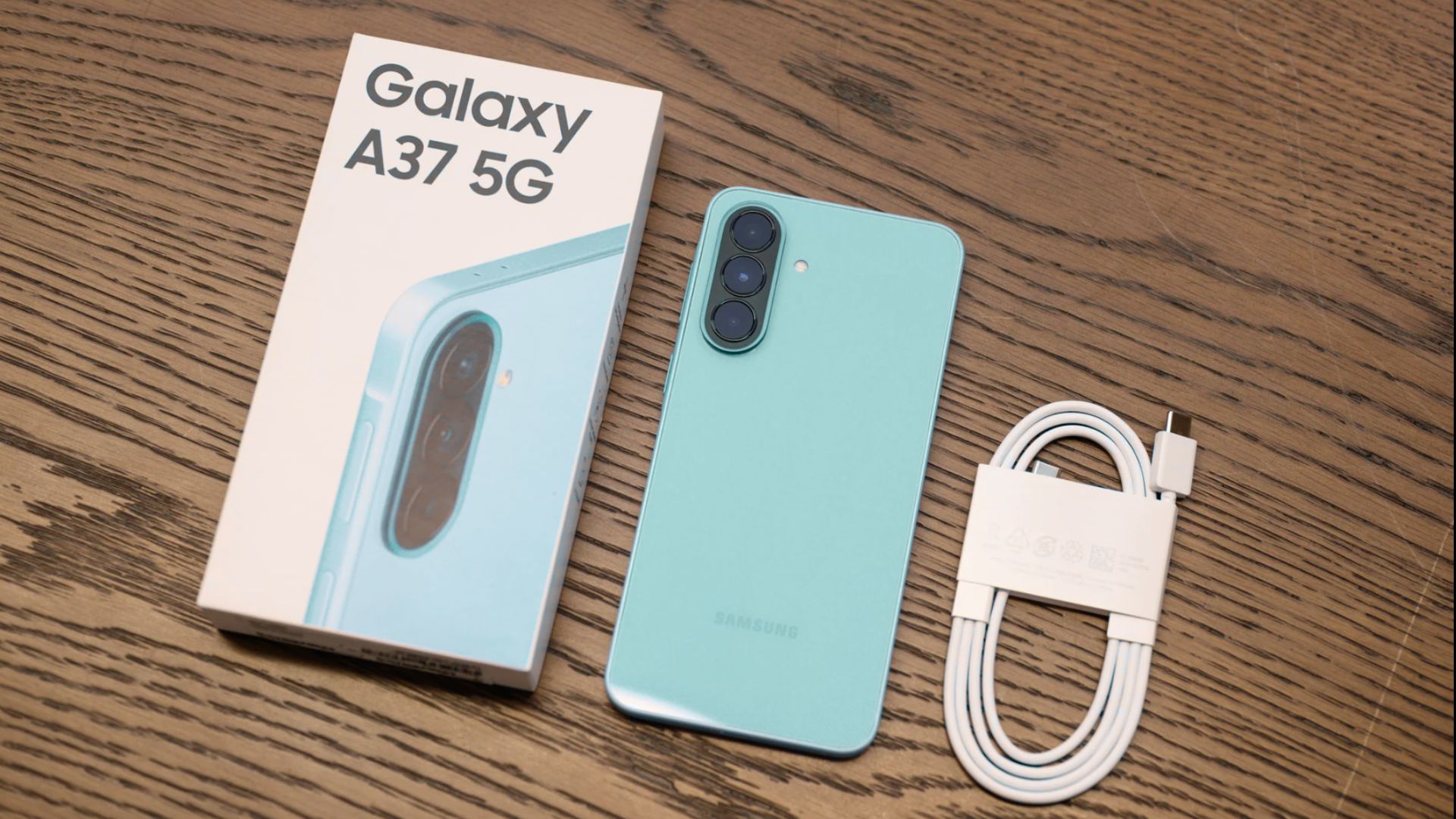
The sheer volume raises a question: is Samsung spreading itself too thin? When five or six phones share essentially the same chipset, display tech, and camera sensor, the differences come down to branding, retail channels, and minor design tweaks. That’s efficient from a supply chain perspective, but it makes shopping genuinely confusing for anyone trying to pick the right model.
Our take: if Samsung wants the F-series “Pro” label to mean something, the F70 Pro needs to offer a clear reason to pay more than the M47. Right now, based on everything that’s leaked, we’re not seeing one.
When to Expect the Launch
The F70 Pro has already cleared BIS certification, Bluetooth SIG, and Samsung India’s own website — the standard pre-launch checklist. With the Geekbench listing now public, an official announcement likely lands within weeks, probably in August 2026.
Samsung hasn’t confirmed a date. But the M47 launched July 4, and Samsung typically spaces M and F counterparts about four to six weeks apart.
FAQsHow does the Snapdragon 6 Gen 3 compare to flagship processors?
The Snapdragon 6 Gen 3 is a mid-range chip built on a 4nm process. It handles everyday multitasking and casual gaming smoothly, but its Adreno 710 GPU can’t match the graphical power of flagship silicon like the Snapdragon 8 Elite series. Think reliable daily driver, not powerhouse.
Is it worth waiting for the F70 Pro instead of buying the Galaxy M47 now?
If you shop on Flipkart and want launch-day bank offers exclusive to that platform, waiting makes sense. But the Galaxy M47 offers identical core specs at a lower price on Amazon — so the M47 is the better value pick today.
What does six years of OS updates actually mean for a budget phone?
It means the F70 Pro would receive Android updates through 2032 and security patches for the same period. That’s rare at this price — most competitors like OnePlus and Xiaomi cap out at three to four years of major Android updates.
Will the Samsung Galaxy F70 Pro support 5G?
Yes. The Snapdragon 6 Gen 3 includes a built-in 5G modem supporting both sub-6GHz and mmWave frequencies. Combined with Wi-Fi 6E and Bluetooth 5.2, connectivity is well-covered for a mid-range device.
How does the Galaxy F70 Pro’s camera stack up against competitors?
The 50MP main sensor with OIS is competitive for this segment. Combined with 4K HDR video capture and Samsung’s image processing, it should handle social media content and everyday shots well — though it won’t match the multi-lens setups on Samsung’s flagship phones.
Vincee Cole is a technology journalist with four years of experience covering the full spectrum of modern tech — from consumer devices, artificial intelligence, to quantum computing, blockchain, and digital assets. His reporting cuts through complexity to deliver stories that are sharp, grounded, and relevant to both general readers and industry insiders. Previously, he worked with fintech research teams across Southeast Asia, analysing how emerging technologies are reshaping financial systems at scale.