
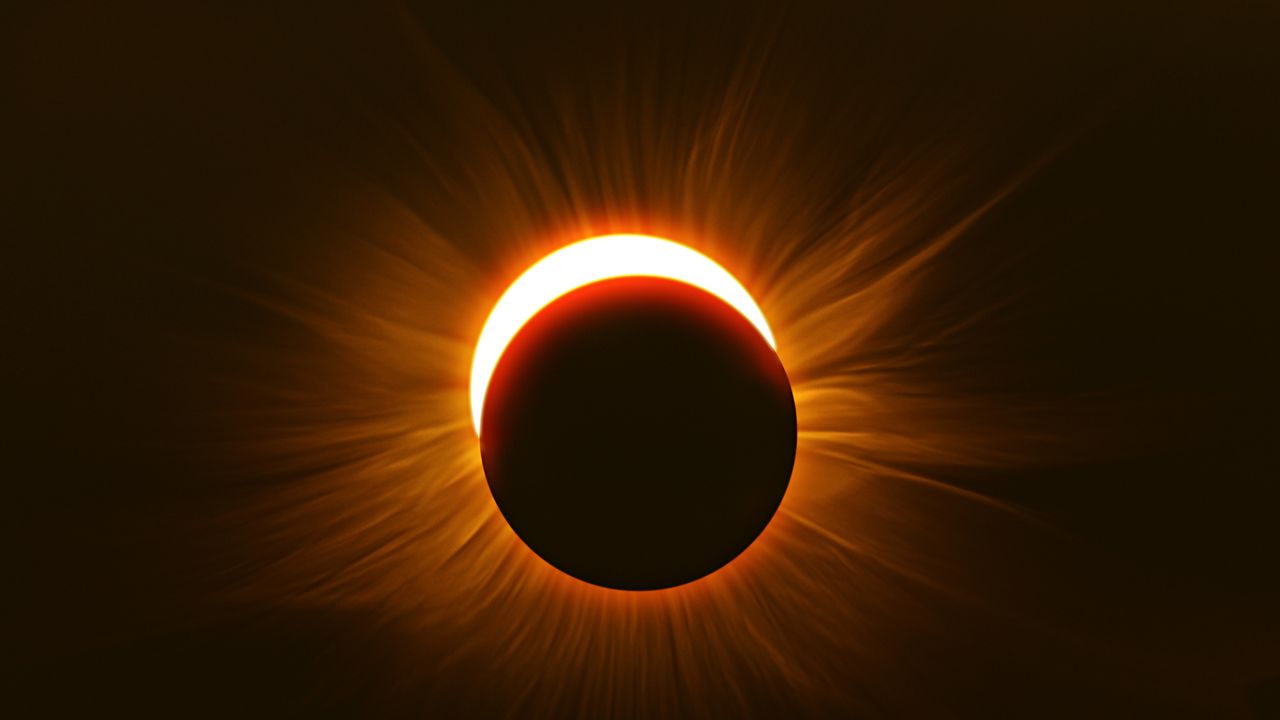
Set to be the year’s – perhaps even the decade’s – most-watched celestial event, the August solar eclipse is just around the corner, and the excitement is building. A solar eclipse is a relatively rare astronomical event, with this being the first total solar eclipse that’s been visible from mainland Europe since 1999. For UK stargazers, we will be able to see a partial eclipse – rather than a total like viewers in Spain and Iceland – on Wednesday 12 August.
Here’s everything you need to know about the upcoming solar eclipse in the UK, how to watch the cosmic event, and how to stay safe doing so.
What is a solar eclipse?
A solar eclipse is when the moon passes in front of the sun and blocks its light. It’s a rare cosmic event where the sun, moon and Earth all have to line up for an eclipse to occur.
Depending on how all three bodies line up, different types of eclipses are visible from Earth. The one happening on 12 August (in the UK) is a partial eclipse. This is where the moon covers part of the Sun, but this time, around 90 per cent of the Sun will be covered.
What time will the solar eclipse happen?
At 6.17pm from London (timings vary slightly for other parts of the UK), ‘first contact’ will happen, when the moon first covers part of the sun.
The moon will move slowly in front of the sun until roughly 90 per cent of the sun is covered (the solar eclipse’s maximum). This will be at 7.05pm in Edinburgh and Glasgow, 7.10pm in Manchester and Liverpool, 7.11pm in Norwich and Birmingham, 7.12pm from London, and 7.16pm in Cornwall.
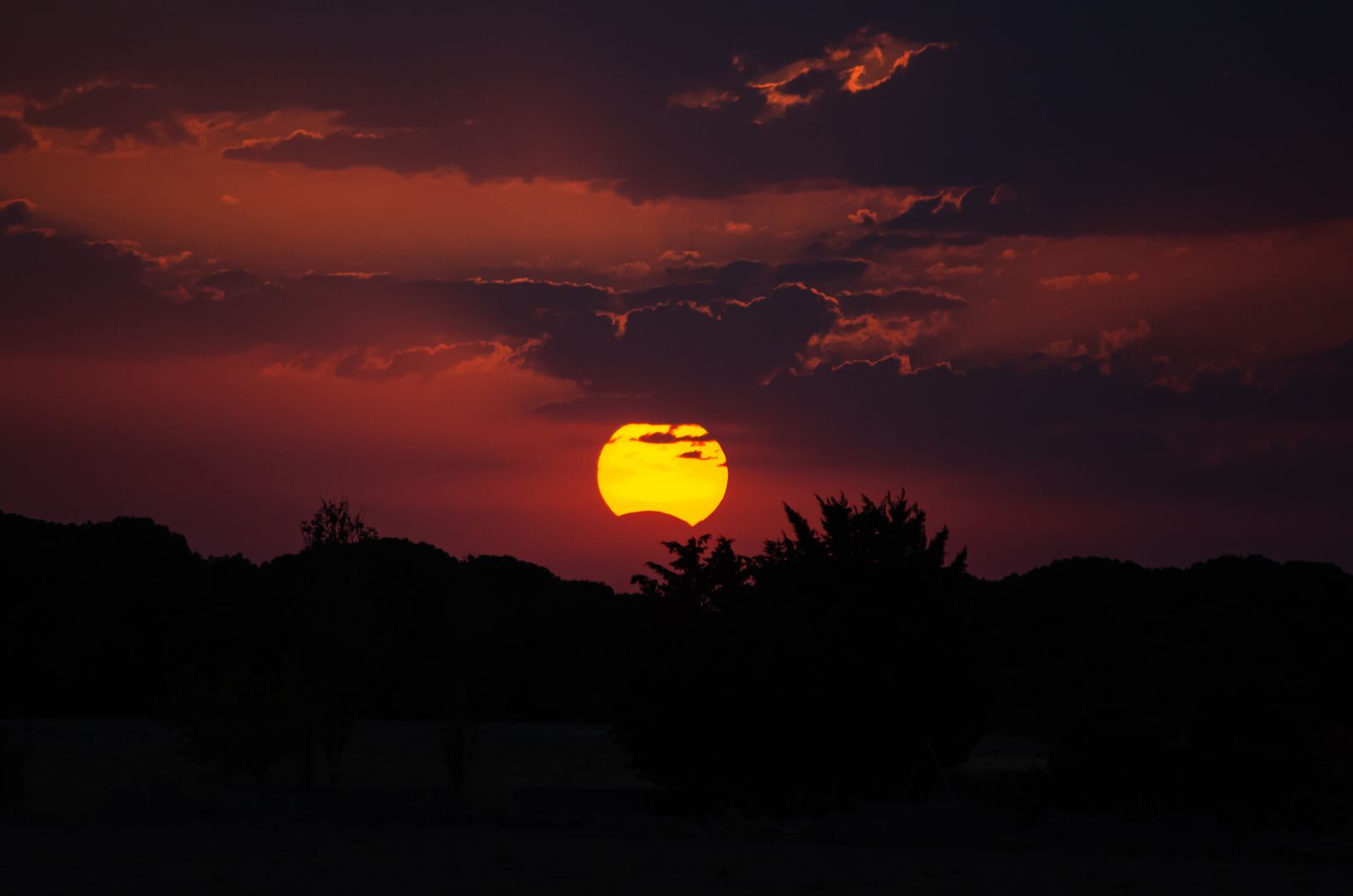
Partial eclipse of the sun, Castilla y leónAlberfb/Getty Images
Where can I see the solar eclipse?
The solar eclipse will be visible across the whole of the UK; however, people in the south west are most likely to see the greatest proportion of the sun covered by the moon. According to the Royal Observatory Greenwich, this will be the most extensive coverage seen in the UK and Ireland since the 1999 solar eclipse, which was total across most of Cornwall and Devon.
Viewers across parts of Europe including France, Belgium, Switzerland and northern regions of Italy will also be able to see around 88-95 per cent coverage, while people in parts of Greenland, Iceland and northern Spain will see a total eclipse.