
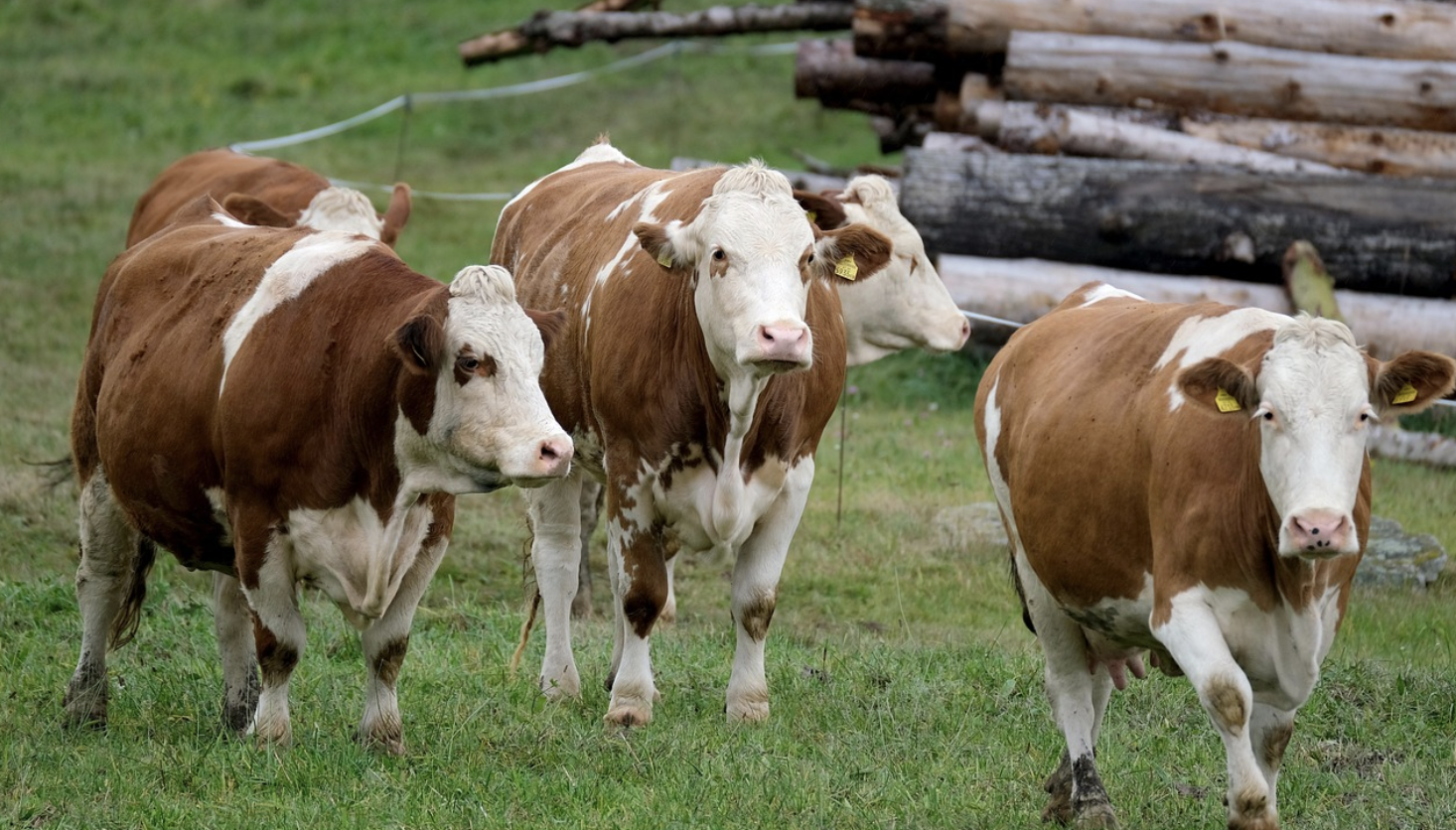
The farm effect refers to a phenomenon in which children who grow up in a rural environment are less likely to develop allergies or asthma compared to their urban counterparts. Multiple observational studies have found evidence for the farm effect around the world, but there has not yet been a conclusive explanation for it. Many researchers have suspected that children who are exposed to more bacteria or microbes found in barns obtain protection from excessive immune responses, which can otherwise lead to problems, like allergies.

A new report in NEJM Evidence has identified bacteria that may be responsible for the farm effect. This work also found the molecules that are produced by bacteria that lead to this effect, and where they bind in the human body.
“Girls and boys who grow up on farms and are exposed to a wider variety of microbes have the problem far less often,” said senior study author Professor Markus Ege of the Dr. von Hauner Children’s Hospital at LMU University Hospital and the Institute of Asthma and Allergy Prevention at Helmholtz Munich.
A different theory called the hygiene hypothesis has suggested that children in industrialized areas are more prone to allergies and asthma because their immune systems do not get enough stimulation; urban kids are not exposed to enough microbes, so their inflammatory reactions become excessive. Or so the hypothesis goes; but there has never been definitive evidence for it.
“But with our new study, we can make a much stronger case, because we can identify the individual links in the proposed causal chain: the bacteria, the relevant microbial metabolic products and the human receptors,” noted Ege.
In this work, the investigators assessed medical and health data from over 1,000 European children from rural areas. Nasal swabs and mattress dust samples were taken for these kids, along with dust samples from cowsheds for 47 of these children. The investigators identified the microbial species in these samples, and analyzed that along with genetic and metabolic data.
“We identified a small number of bacteria, which we can now pinpoint down to the species level, such as Romboutsia timonensis and Glutamicibacter arilaitensis. These Gram-positive bacteria together mediate two-thirds of the entire farm effect for asthma protection and half of the effect for hay fever and atopic eczema” revealed first study author Giulia Pagani, a bioinformatician at the Institute of Asthma and Allergy Prevention at Helmholtz Munich.
Protective bacteria grow in the digestive tracts of cows, generating or metabolizing various molecules including alpha-linolenic acid, stearidonic acid, kynurenine, and xanthine. These molecules can be inhaled easily inhaled and they bind to two human airway cell receptors. Ege explained that these receptors: AhR and PPARγ seem “to prevent excessive inflammatory responses.”
Now scientists can study this pathway in greater detail, and may eventually be able to create medications that can recreate these mechanisms to prevent allergies or asthma without requiring children to hang out in barns or on farms.
Sources: LMU Klinikum München, NEJM Evidence