

Published August 4, 2026 • By Staff
Analysis of more than 14,000 matched eyes found the association persisted even in uncomplicated procedures.
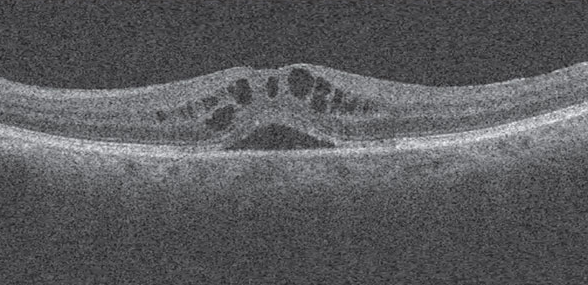
Eyes with a history of pars plana vitrectomy were found to have nearly a fourfold greater risk of developing CME than matched controls, suggesting these patients may require closer postoperative monitoring. Photo: Andrew S. Gurwood, OD. Click image to enlarge.
Eyes with a history of pars plana vitrectomy (PPV) are significantly more likely to develop cystoid macular edema (CME) in the months following cataract surgery than eyes without previous vitrectomy, according to a large retrospective cohort study published recently in JAMA Ophthalmology. The increased risk remained even after patients with intraoperative or postoperative surgical complications were excluded.
Researchers analyzed data from more than 615,000 patients who underwent cataract surgery in the TriNetX US Network. After propensity score matching, the final analysis included 7,318 patients with a history of PPV and an equal number of matched controls without prior vitrectomy. Patients with preexisting CME or other known risk factors for postoperative CME were not included in the analysis.
Within 30 to 90 days after cataract surgery, CME developed in 4.59% of eyes with prior PPV compared with 1.23% of control eyes, representing nearly a fourfold greater risk. The association persisted regardless of the indication for vitrectomy. Eyes that previously underwent PPV for retinal detachment experienced the highest incidence of postoperative CME (5.65%), while those treated for other indications also remained at increased risk (3.99%).
Among patients without intraoperative or postoperative cataract surgery complications, postoperative CME still occurred more frequently in eyes with prior PPV than in control eyes (4.59% vs. 1.26%).
The study authors cautioned that the retrospective, coding-based design and lack of OCT confirmation or visual acuity data limit the clinical interpretation of the findings. Nevertheless, they suggested the results support closer attention to eyes with a history of PPV during the perioperative period.
“These findings highlight the potential role of preoperative counseling and postoperative monitoring in these high-risk eyes,” the researchers wrote. They added that prospective studies are needed to determine the optimal prophylactic strategies for reducing postoperative CME risk in this population.
Click here for the journal source.
This article was developed by the editorial staff in conjunction with experts in the field. In the process, AI may have been among the editorial tools used to meet the goals of human editors, who approved all content.