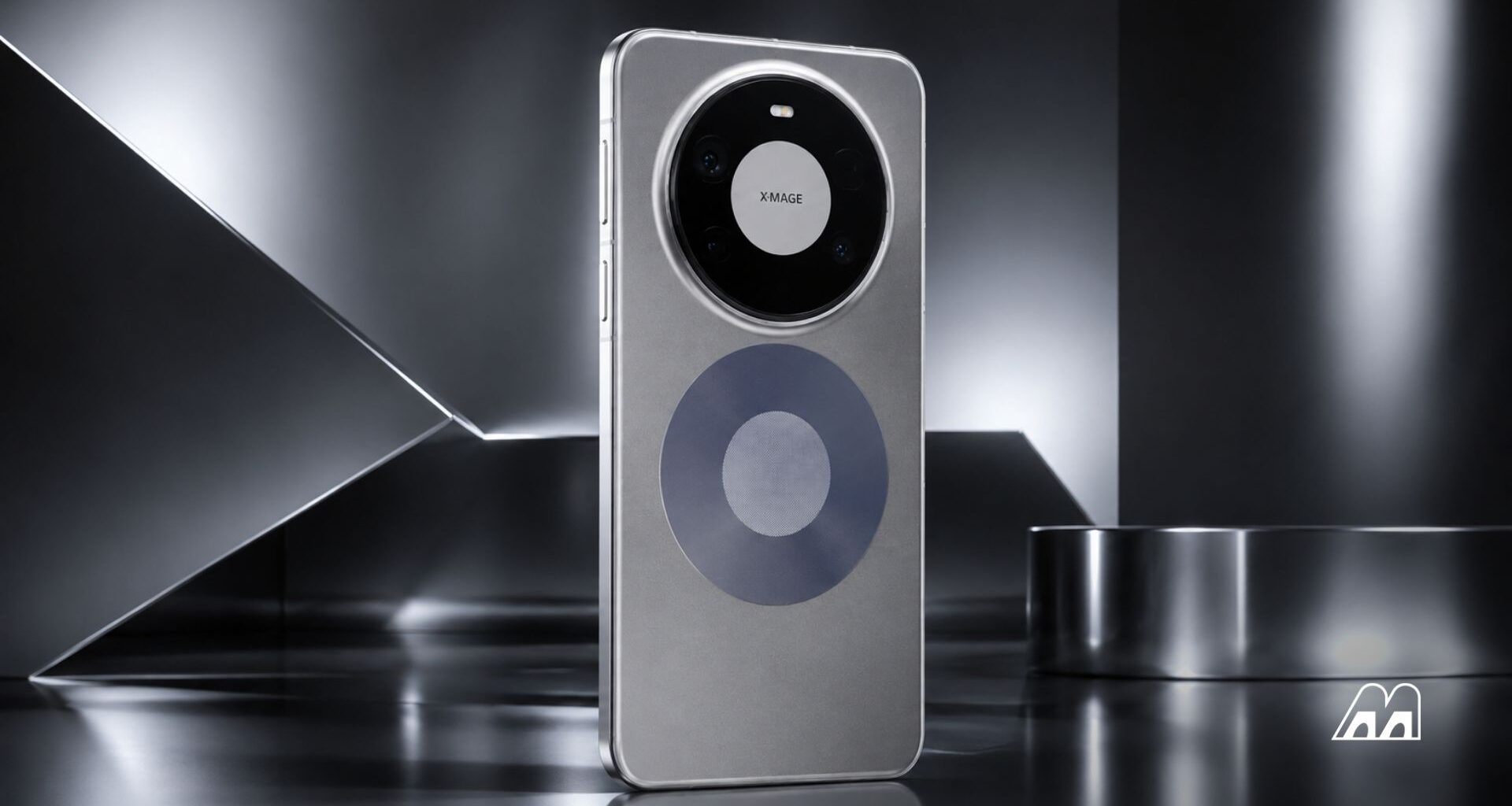
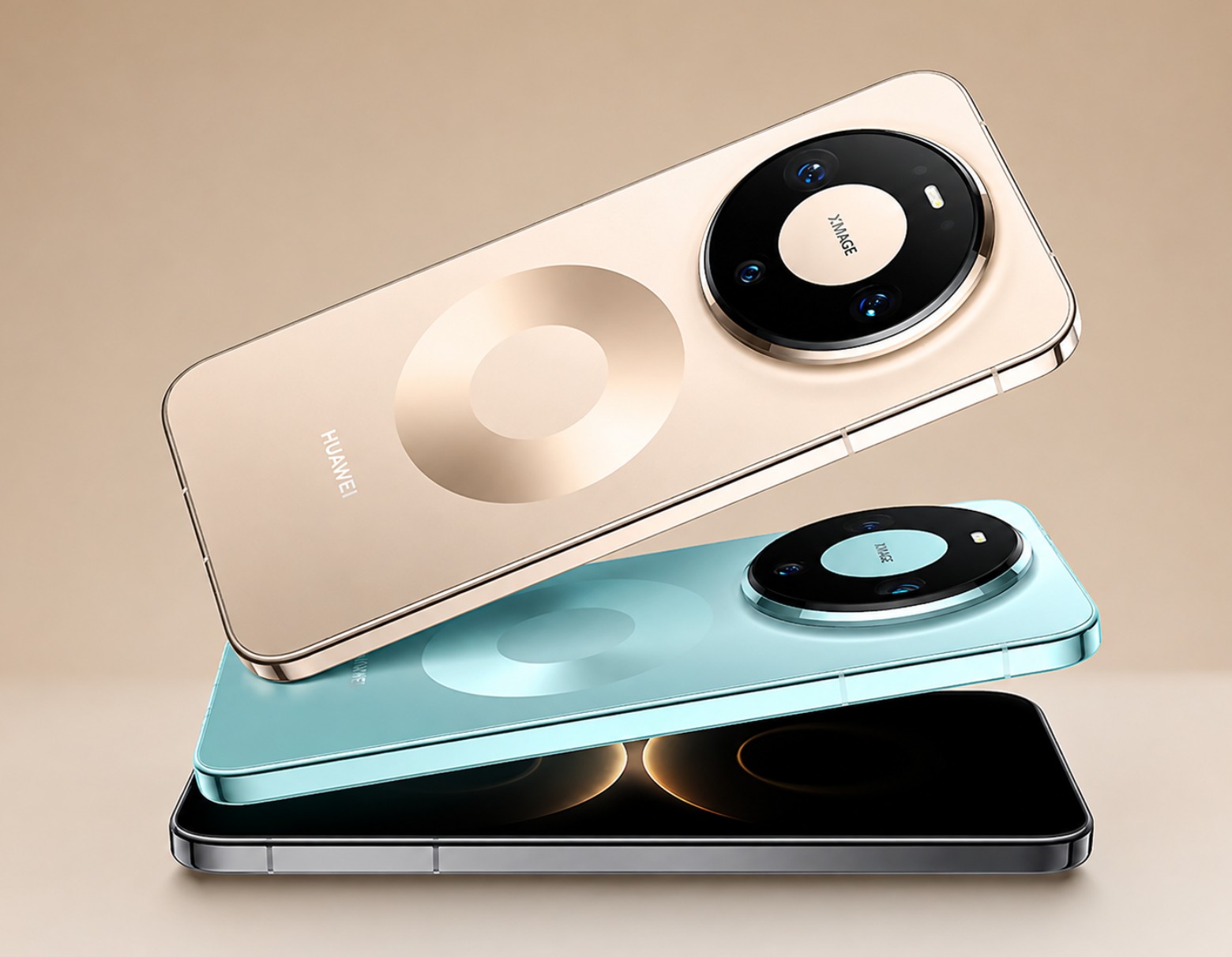
The Huawei Mate 90 Pro Max just leaked with specs that read less like a phone upgrade and more like a geopolitical statement. Instead of chasing smaller transistors — which requires machines Huawei can’t legally buy — the company stacked its chip circuits into a 3D tower. Here’s what the leak reveals and why it matters beyond the spec sheet.
The Chip That Rewrites the Playbook
At the center of every conversation about this phone is the Kirin 9050 Pro, and for good reason. Traditional chipmakers like TSMC and Samsung shrink transistors to pack more of them into a flat space. Huawei can’t do that — US sanctions block its access to EUV lithography, the ultra-precise printing technology that makes sub-5nm chips possible. So Huawei went vertical.
The approach is called LogicFolding. Instead of cramming transistors onto a single flat layer, Huawei folds and stacks logic circuits across two layers bonded together. Think of it like building a two-story house instead of a bigger single-story one. The result, according to leaked data: 53.5% more transistor density, 37.5% smaller chip area, and 41% lower power consumption compared to last year’s Kirin 9030 Pro.
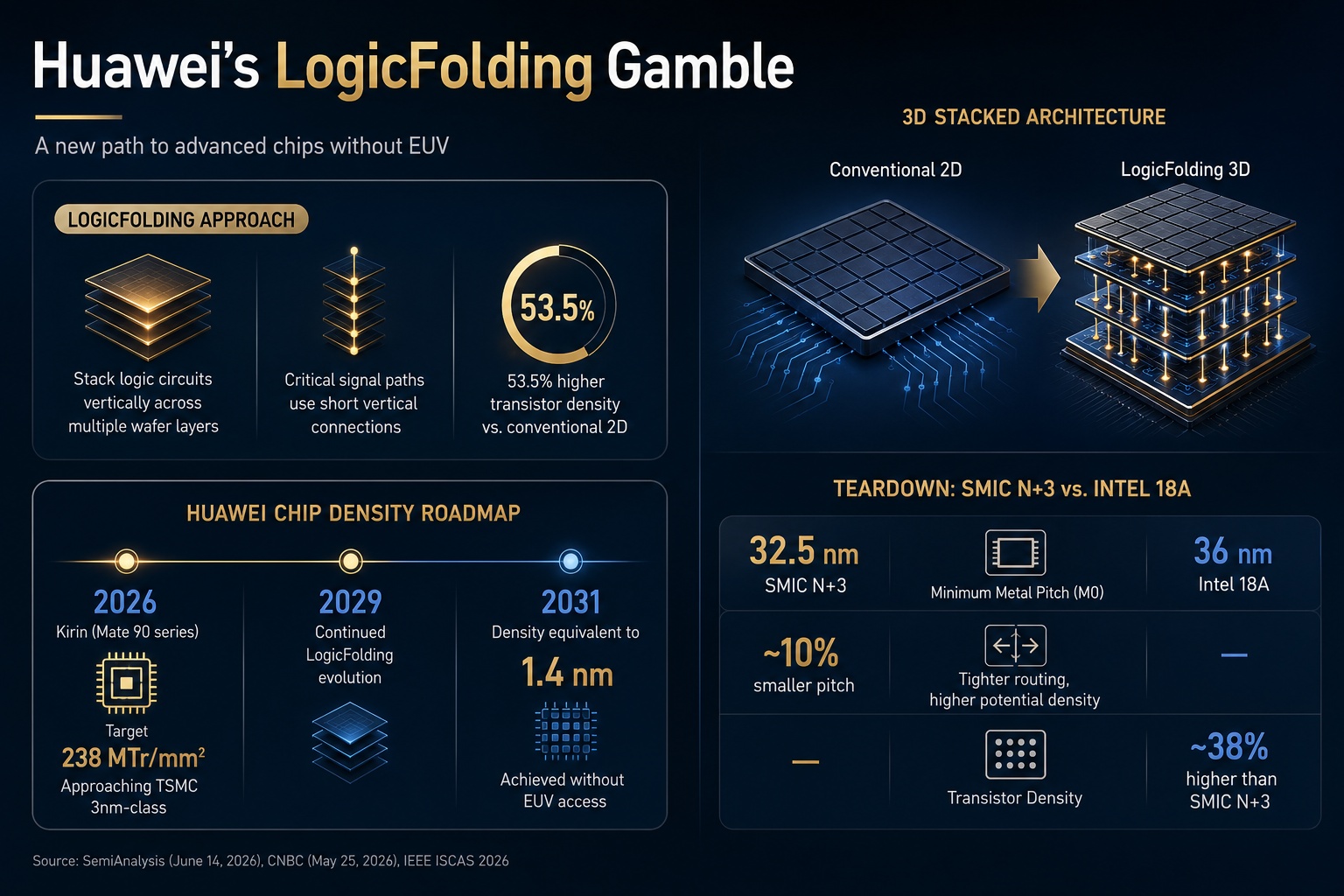
A recent teardown of the Kirin 9030 Pro showed that SMIC’s current process already beats Intel’s 18A node on one key metric — metal pitch. But that same analysis confirmed the chip still trails Qualcomm and Apple on overall performance. LogicFolding is Huawei’s bet that architectural creativity can close that gap without needing the machines Washington won’t let it have.
He Tingbo, Huawei’s semiconductor chief, unveiled LogicFolding at the IEEE International Symposium on Circuits and Systems in Shanghai this past May. She revealed that Huawei has quietly designed and mass-produced 381 chips using this framework over six years — the Kirin 9050 Pro is simply the first to go commercial.
What’s Under the Hood
Beyond the chip, the Mate 90 Pro Max shapes up as a serious endurance machine. The leaked battery capacity ranges from 6,800mAh to 7,000mAh — a massive jump from the Mate 80 Pro Max’s 6,000mAh cell. Pair that with 100W wired fast charging and WiFi 7, and you’ve got a phone that should comfortably last a full day of heavy use with power to spare.
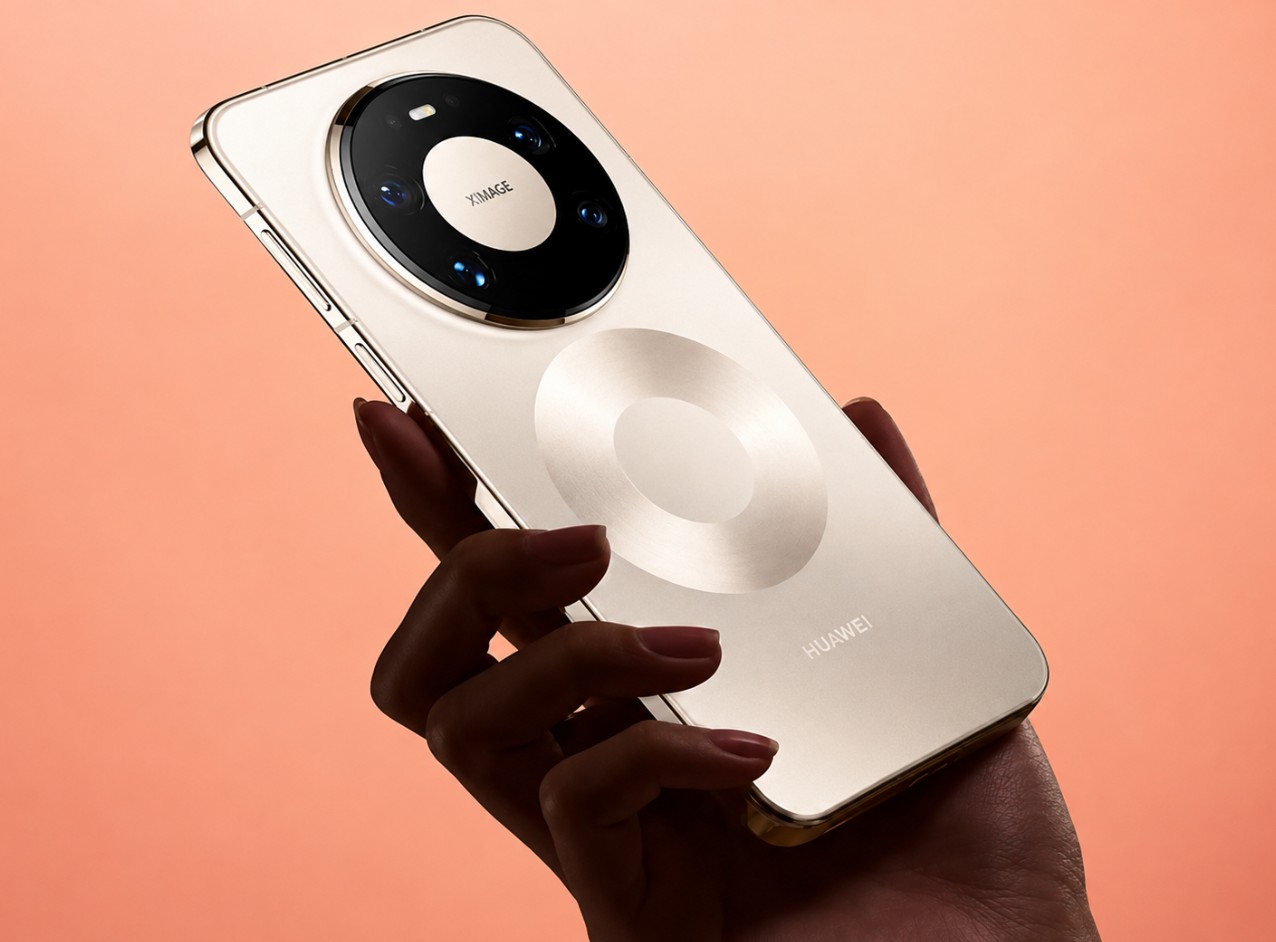
The display is a 6.9-inch flat dual-layer OLED at 1.5K resolution with LTPO adaptive refresh rates. Tandem OLED technology doubles the panel’s lifespan while pushing higher brightness with better power efficiency. It’s a premium setup — and flat-screen fans will appreciate that Huawei skipped curved edges this round.
Software-wise, expect HarmonyOS 7, which entered its developer beta in June. That means no Google Play Store, no Gmail, no YouTube out of the box. For buyers outside China, that trade-off remains the single biggest barrier, as Memeburn noted in our coverage of the Pura 90s global launch. For domestic buyers, HarmonyOS has matured into a genuinely capable ecosystem.
A Camera System Designed In-House
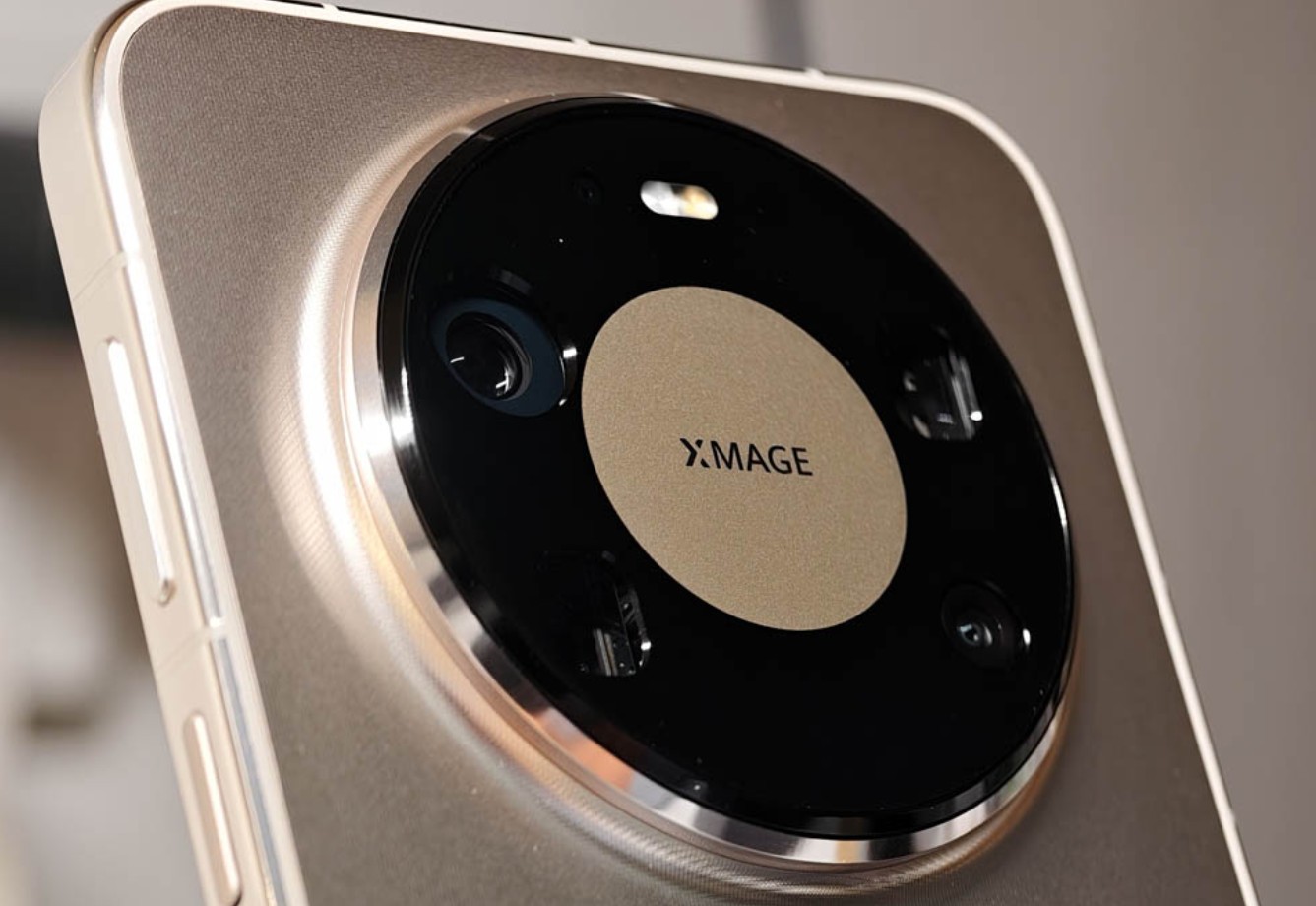
The rear camera setup headlines a 200MP main sensor — reportedly Huawei’s own custom CMOS design, not a third-party module from Sony or Samsung. That’s a significant shift. Alongside it sit a 40MP ultra-wide, dual 50MP telephoto lenses with up to 10x optical zoom, and Huawei’s third-generation red maple color camera, which fine-tunes color reproduction in real time.
Up front, a 15MP ultra-wide selfie camera supports 3D face recognition for biometric security. One surprise disappointment: the Mate 90 Pro Max will reportedly stick with a side-mounted fingerprint scanner rather than upgrading to an ultrasonic in-display sensor. For a flagship at this price point, that’s a curious omission.
Huawei’s camera ambitions have been accelerating in 2026 — the Pura 90 Pro Max already debuted the world’s first 200MP periscope telephoto with a 1/1.28-inch sensor earlier this year. The Mate 90 Pro Max appears to apply that imaging confidence to the primary lens instead.
Why September Matters
Huawei is expected to split its September launch into two events — the Mate XT2 tri-fold early in the month, followed by the Mate 90 series later. That timing puts the Mate 90 Pro Max directly against Apple’s anticipated iPhone 18 Pro Max launch, creating the most direct flagship collision between the two companies since Huawei’s sanctions-driven retreat from global markets in 2019.
Earlier Memeburn reporting on the Mate 90 launch timeline noted that a September debut would suggest Huawei has secured enough early chip production to ship ahead of its usual October-November window. That’s a meaningful signal — it implies SMIC’s LogicFolding yield rates are commercially viable, not just lab-ready.
The Bigger Picture
Huawei isn’t just making phones. Its Ascend AI chip business has captured roughly half of China’s $50 billion domestic AI processor market. LogicFolding is designed to scale from smartphones to data centers by 2030, with Huawei projecting transistor densities equivalent to 1.4nm by 2031.
Whether those projections hold up is a genuine open question. Independent analysts have been split — TSMC expects to mass-produce real 1.4nm chips by 2028, which would put Huawei several years behind even if LogicFolding works exactly as advertised. But “several years behind on the process, competitive on the product” has been Huawei’s operating reality since the Mate 60 shocked the industry in 2023. The Mate 90 Pro Max looks like the next chapter of that same story.
FAQsWhat is Huawei’s LogicFolding chip architecture?
LogicFolding stacks logic circuits vertically across two bonded layers, boosting transistor density without shrinking transistor size. Huawei developed it to advance chip performance despite lacking access to EUV lithography machines blocked by US export controls.
Does the Huawei Mate 90 Pro Max support Google services?
No. Since 2019, Huawei phones ship without Google Mobile Services. The Mate 90 Pro Max runs HarmonyOS 7 with Huawei’s AppGallery. Users outside China can sideload apps, but native Google support remains unavailable.
How does the Kirin 9050 Pro compare to Snapdragon 8 Elite?
Benchmark comparisons aren’t available yet, but Huawei claims 53.5% higher transistor density and 41% better power efficiency versus the Kirin 9030 Pro. Real-world performance testing will follow after the phone’s September launch.
Will the Huawei Mate 90 Pro Max be available globally?
Huawei hasn’t confirmed global availability. Recent flagships like the Pura 90s launched weeks after the China debut internationally, so a similar rollout is possible but unconfirmed.
What other devices will use the Kirin 9050 Pro?
The Mate XT2 tri-fold smartphone is also expected to ship with the Kirin 9050 Pro when it launches in September 2026, alongside the rest of the Mate 90 lineup.
Vincee Cole is a technology journalist with four years of experience covering the full spectrum of modern tech — from consumer devices, artificial intelligence, to quantum computing, blockchain, and digital assets. His reporting cuts through complexity to deliver stories that are sharp, grounded, and relevant to both general readers and industry insiders. Previously, he worked with fintech research teams across Southeast Asia, analysing how emerging technologies are reshaping financial systems at scale.