

As global art markets navigate a period of heightened economic selectivity, collectors are increasingly reallocating capital away from speculative flippers and toward mid-career stability. Within the post-1975 vanguard, this select group of creators has managed to transcend transient market trends, carving out secondary market footprints marked by institutional validation and sustained collector appetite. While macro-level auction totals fluctuate, auction houses routinely witness intense paddle wars when works by these mid-career leaders cross the podium.
Understanding this resilience requires looking beyond speculative hype to examine underlying transactional strength. The artists highlighted below exhibit unrivaled market liquidity, near-zero buy-in rates, and a proven ability to consistently defy pre-sale targets across major auction houses worldwide.
The Figurative & Pop Innovators
The ultra-contemporary figurative landscape has evolved far beyond conventional portraiture, incorporating graphic flattening, regional pop references, and complex interior narratives. Leading this movement is Jonas Wood, whose vibrant interior scenes, still lifes, and domestic spaces have secured a formidable secondary market presence. Wood’s auction performance illustrates an extraordinary level of absorption over the last decade, with annual sales reaching historic heights above $21 million in peak auction cycles. Wood’s sell-through rate consistently hovers between 70% and 90%, driven by monumental hammers such as Two Tables with Floral Pattern (2013), which fetched $6.51 million at Christie’s – more than triple its initial estimate.
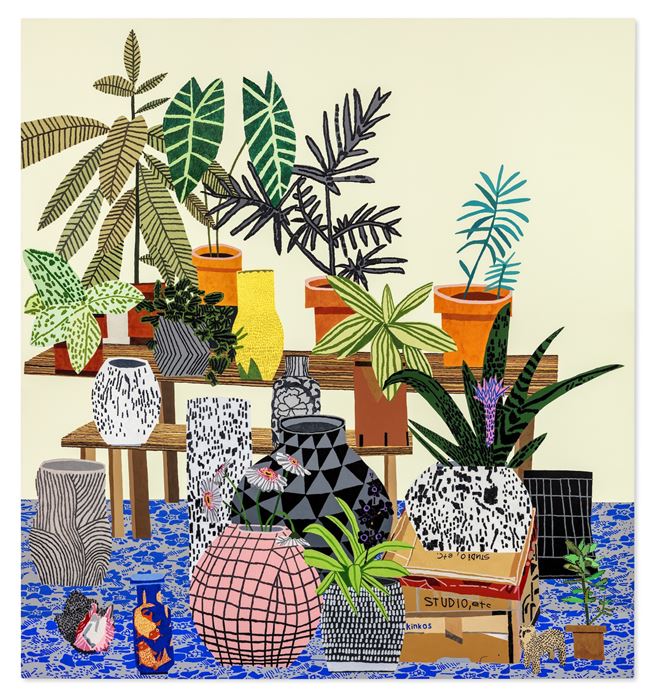
Jonas Wood, Two Tables with Floral Pattern, 2013, oil and acrylic on canvas. Courtesy of Christie’s
At the same time, East Asian contemporary figuration continues to ignite cross-continental bidding. Tomokazu Matsuyama fuses Japanese Edo-period iconography with Western abstract expressionism, creating dense visual tapestries that attract global capital. Matsuyama’s secondary market presence experienced a powerful acceleration, with annual turnover soaring past $3 million. His unsold rates have dropped to under 10% in active years, propelled by competitive bidding on works like Nice Quiet Hot Tears (2018), which hammered for HKD 5.08 million ($647,100) at Sotheby’s Hong Kong, nearly three times its high estimate.
CHECK AVAILABLE ARTWORKS BY JONAS WOOD
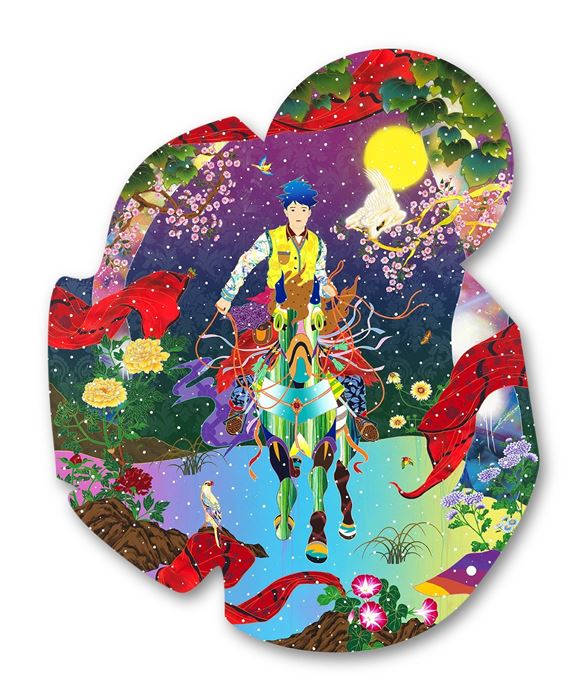
Tomokazu Matsuyama, Nice Quiet Hot Tears, Executed in 2018, acrylic and mixed media on canvas. Courtesy of Sotheby’s
In the Asian market, Chen Ke and Song Kun represent two additional pillars of painterly evolution. Chen Ke’s secondary market turnover reached multi-million dollar heights in recent years – hitting peaks above $2.8 million annually – as her reflective, narrative-driven canvases matured from early “Superflat” associations into deeply personal figurative studies. Song Kun’s career narrative mirrors a similar trajectory of strategic market absorption. Her visual language – spanning surreal figuration and translucent brushwork – generated substantial peaks exceeding $1.5 million in strong auction cycles. With consistent lot turnover and enthusiastic bidding from primary institutions and secondary collectors alike, these four painters demonstrate how graphic and figurative innovation continues to drive cross-border liquidity.
 Chen Ke, A CLOWN ON A HAYSTACK, 2011, acrylic on canvas. Courtesy of China Guardian Auctions