
August 11, 2026
TOKYO – Since the United States and Israeli launched attacks against Iran, attention in the Middle East has now shifted to focus on the situation surrounding the Strait of Hormuz, while international concern for the humanitarian crisis in the Palestinian territory of Gaza has waned.
In particular, it is deeply concerning that U.S. President Donald Trump’s administration, which brokered the ceasefire in Gaza, has been overwhelmed by the situation involving Iran and has effectively left behind dealing with Gaza’s plight.
Last autumn, Israel and the Islamist group Hamas agreed to a Gaza peace plan and a ceasefire took effect. The plan calls for the disarmament of Hamas and the complete withdrawal of Israeli forces following the cessation of hostilities.
In late July, Trump announced that a “historic agreement” had been reached on the disarmament of Hamas and claimed that the peace plan was moving forward. However, Hamas issued a statement that the withdrawal of Israeli forces is a prerequisite. The gap between the two sides’ positions remains wide.
Earlier this year, Trump set up an international organization called the “Board of Peace” and himself took on the role of chairman. He was likely aiming to lead the reconstruction of Gaza and become a key player in the peace process.
However, immediately after holding the first meeting of the board in February, the U.S. president launched attacks against Iran. Because Iran responded by blocking the Strait of Hormuz, a development that had a severe impact on the global economy, the United States was forced to prioritize addressing the situation regarding Iran.
During this time, the situation in Gaza has continued to deteriorate. Sporadic attacks have continued even after the ceasefire was reached, leaving more than 1,200 people dead. The death toll since the fighting began in October 2023 has exceeded 73,000.
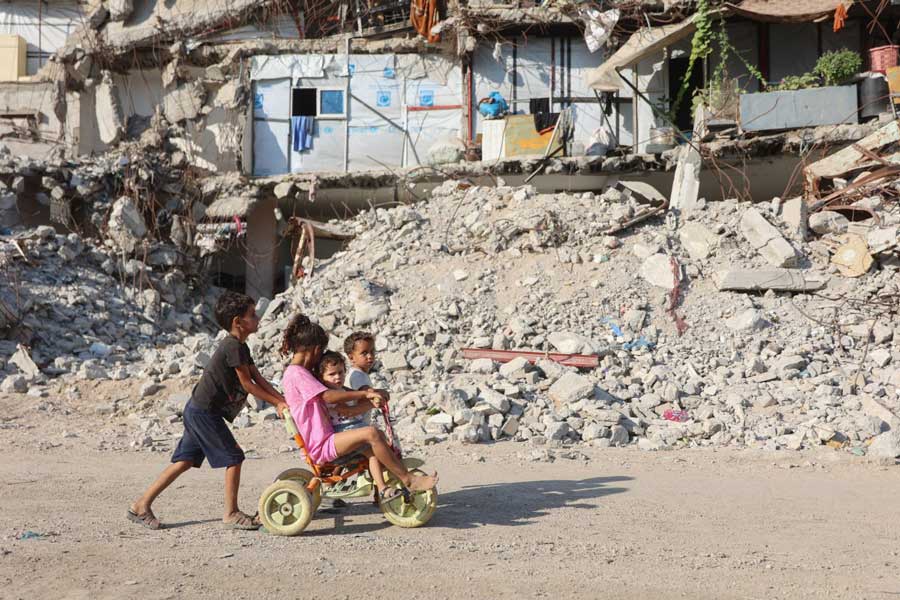
About 2 million residents have been forced to live in tents in Gaza, which has been reduced to ruins. Rats are multiplying in mountains of garbage, and sanitary conditions are very poor. Also, the removal of rubble and unexploded ordnance is not progressing.
The delayed growth of children due to insufficient nutrition is particularly noticeable. With a shortage of medicine and medical supplies, chronic conditions such as diabetes are reportedly worsening among a growing number of people.
In light of this situation, it is difficult to understand why Israel continues to obstruct humanitarian aid. Israel’s ban on activities of the U.N. Relief and Works Agency for Palestine Refugees in the Near East (UNRWA), which has staff with extensive practical experience, on the grounds that it serves as a smokescreen for Hamas, is having a significant impact.
This crisis cannot be overcome without the cooperation of the United Nations. Japan has been delivering food and supplies through international organizations and nongovernmental organizations. It is essential to continue and expand this aid.
It is also important for Japan to collaborate with Southeast Asian nations and others that are actively supporting Palestine to raise international awareness and ensure that Gaza is not forgotten.