
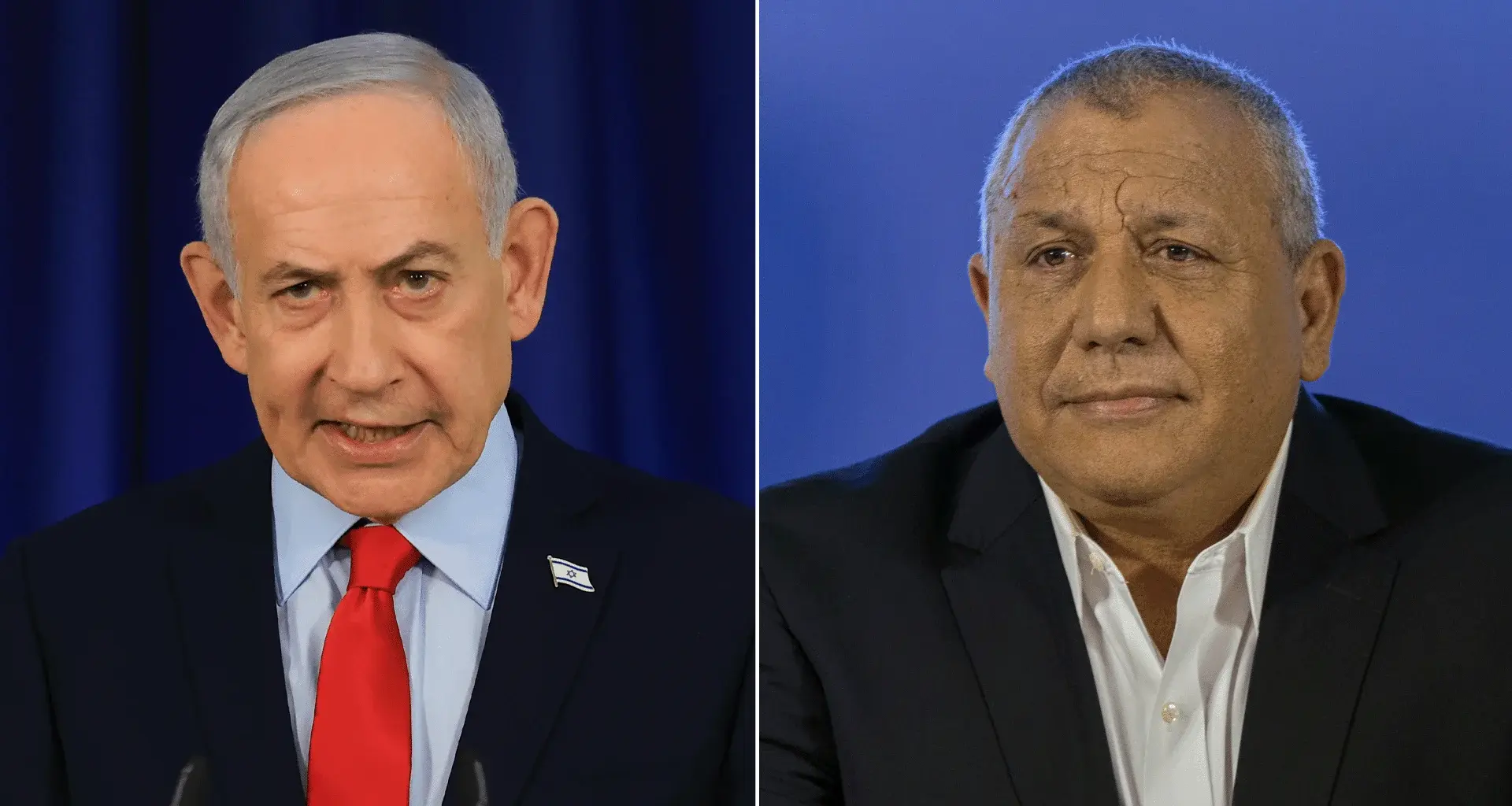
The sharp rise of Gadi Eisenkot, leader of Israel’s «Yashar» party, in opinion polls, and his emergence as Benjamin Netanyahu’s main challenger in next October’s elections, has fuelled growing debate over his Moroccan roots, as his family background becomes a factor in electoral calculations.
Israeli media outlets have cited Eisenkot’s Moroccan heritage as one of the «emotional» factors that could explain his growing support among voters. Knesset member David Bitan acknowledged that his background gives him an «interesting advantage», while Israel’s Diaspora Affairs Minister Amichai Chikli referred to a «sociological advantage», without elaborating.
The issue is particularly sensitive because of the historic ties between Mizrahi Jews, especially those of Moroccan origin, and Netanyahu’s Likud party. Since Menachem Begin came to power in 1977, these communities have formed a key part of Likud’s electoral base, and over the decades, Mizrahi identity has become closely associated with political loyalty to the party.
Eisenkot, however, disrupts that equation. He comes from a Moroccan family, grew up on Israel’s periphery, rose to become the army’s chief of staff and is now challenging Likud’s leadership itself.
One of the central questions is whether some voters of Moroccan origin, long accustomed to supporting Likud, could shift their allegiance to Eisenkot as «one of their own».
Eisenkot edges ahead of Netanyahu
Within Netanyahu’s camp, the debate has shifted from assessing the electoral impact of Eisenkot’s Moroccan roots to questioning his very «Moroccan-ness». Pro-Netanyahu right-wing commentator Yotam Zimri argued that if Eisenkot were truly «one of the Moroccans», he would never have become chief of staff.
Prominent right-wing journalist and broadcaster Yinon Magal demanded proof that Eisenkot represents Moroccan identity, while fellow right-wing journalist Noam Fathi asked: «What does Eisenkot have to do with Moroccans?»
A recent opinion poll published by the Israeli newspaper Maariv put Eisenkot ahead of Netanyahu in voter support for the first time, although neither man can currently secure a parliamentary majority. Forty-one percent of Israeli voters consider Eisenkot suitable to lead the country, compared with 40% who back Netanyahu.
Against this backdrop, Eisenkot’s Moroccan roots could shift from an identity marker historically associated with Likud’s base into an electoral asset for one of its main rivals. If he succeeds in appealing to Moroccan and Mizrahi voters without adopting a grievance-based discourse, he could begin to separate social identity from political loyalty to Likud, marking a profound shift in Israel’s identity politics.