
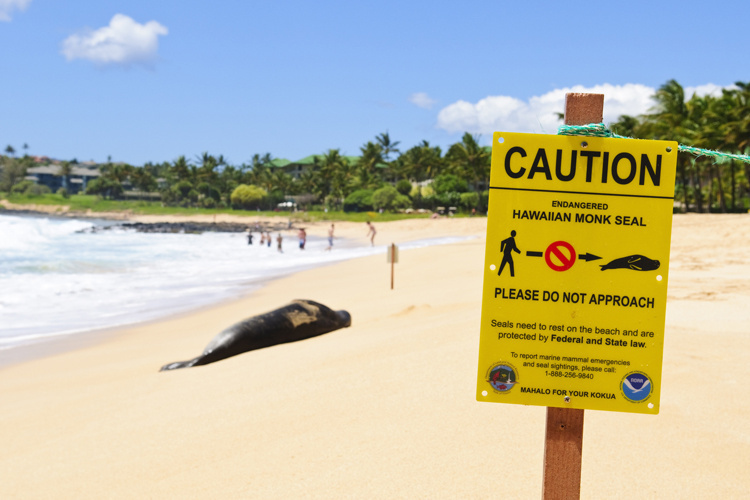
This weekend, many of us will take to the water and the beach to bask in the last days of summer. Whether you’re fishing, kayaking, swimming, or strolling along the shore, you may encounter marine animals. Watching wildlife in their natural habitat can be a positive way to promote conservation and respect for animals and their environment. But do you know how to safely enjoy these encounters?
For your safety and theirs, please do not approach, touch, harass, or feed marine animals. Doing so can disturb animals, damage important habitats, or cause injury to animals and people.
Proper Marine Life Viewing: It’s Good Stewardship—and It’s the Law
Many species of whales, dolphins, seals, sea lions, sea turtles, coral, and fish are protected under federal laws like the Marine Mammal Protection Act and the Endangered Species Act. Before spending time on or near the ocean, know the U.S. regulations and guidelines for viewing and approaching marine animals in your region.
Learn more about proper marine life viewing guidelines and regulations
What Can You Do to Share the Shore and Sea with Marine Life?
Credit: Marine Mammal Stranding Center
Look, But Don’t Touch
Do not attempt to interact with marine mammals or sea turtles in the wild—even if they approach you. It’s illegal to harass, feed, capture, or injure marine species. If you see a possible violation of a federal marine resource law, call our 24-hour enforcement hotline.
Credit: Adobe Stock
Give Space and Admire from a Distance
Observe marine animals from a safe, respectful, and legal distance. Move away cautiously if you observe behaviors that indicate the animal is stressed. Use binoculars or telephoto lenses for a better view of the animals.
Credit: Kim Raum-Suryan/NOAA Fisheries
Report Marine Life in Distress
Reporting a sick, injured, entangled, or dead animal is the best way to ensure that professional authorized responders and scientists know about the incident and can take appropriate action.
Credit: Adobe Stock
Keep Pets Home or on a Leash
Keeping pets leashed ensures both the safety of your pet and the wildlife. They can cause stress, harm, and sickness to one another.
Credit: NOAA
Take Trash Back with You
Marine animals can be entangled in trash or marine debris, accidentally eat it, and cause themselves harm. When you leave the beach grab a piece of trash, even if it isn’t yours!
Credit: NOAA Fisheries
Keep Snacks to Yourself
It’s illegal to feed marine life. Marine mammals are natural hunters, but if they are offered food, they start relying on handouts and become more likely to beg. This can lead to dangerous encounters with people and boats.
Learn more about what you can do when viewing wildlife
Local Guidelines and Regulations by Region
Be aware that guidelines and regulations can vary by area and by species. Learn local tips and safe viewing distances tailored to the specific species in your region:
Spotlight: Sharing the Shore with Seals and Sea Lions
As more people visit beaches and coastlines in the summer and holiday weekends, they may encounter growing wildlife populations such as seals and sea lions. When these animals share our shores, we need to give them space, especially mothers with pups.
In the Pacific Northwest, for example, human interaction with harbor seal pups has increased as more people visit habitats seals use to rest or care for their pups. Local rescue and rehabilitation centers are filling up with pups abandoned by their mothers due to human disturbance or taken from the beach by well-intentioned people who think the pups need help. Only professionally trained and authorized members of the Marine Mammal Stranding Networks should rescue marine mammals. Near Seattle, the SeaLife Response, Rehabilitation and Research (SR3) rescue center has nearly reached capacity, with only a few spaces available.
This is also the time when some wild pups begin to leave their mothers and set out on their own. They need even more space and rest as they learn to survive the ocean more effectively than they would in a captive facility. “Rehabilitation, while a great tool, is not as good as mom,” said Casey Mclean, SR3’s executive director and veterinary nurse.
NOAA Fisheries recommends staying at least 50 yards from seals and sea lions for their safety—and yours.