
Israel’s election campaign and unresolved Hamas disarmament are stalling a planned withdrawal and Gulf-financed rebuilding effort as the Iran war and Strait of Hormuz crisis consume regional attention
[CAIRO] Nickolay Mladenov, the Board of Peace’s high representative for Gaza, warned Monday that another Israeli offensive would shut Gulf states out of financing reconstruction and force Israel to reoccupy the territory.
It would certainly exclude anyone in the Gulf, be that the UAE, Qatar, Saudi Arabia, anyone else, [from] financing any reconstruction in Gaza
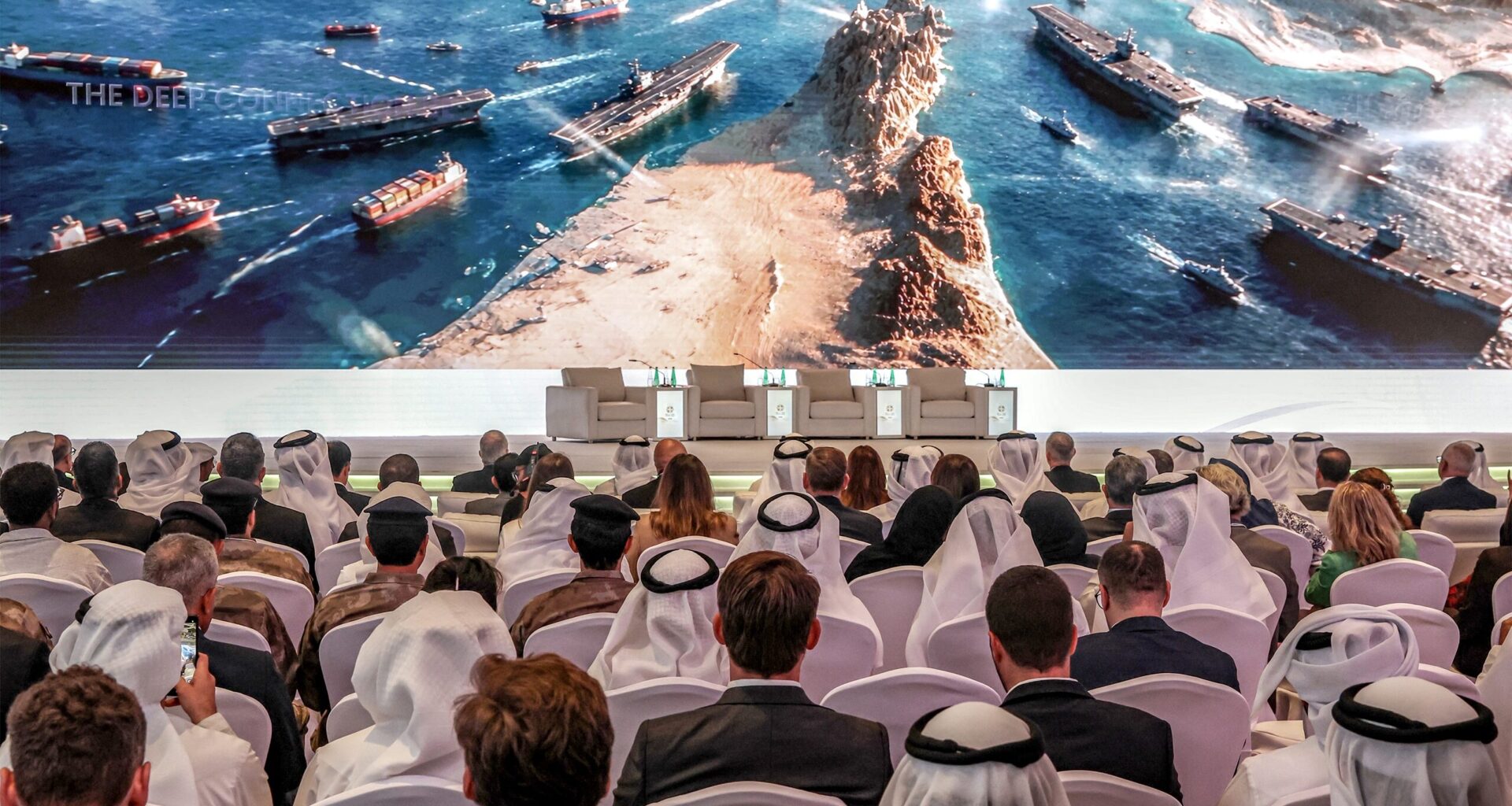
“It would certainly exclude anyone in the Gulf, be that the UAE, Qatar, Saudi Arabia, anyone else, [from] financing any reconstruction in Gaza,” Mladenov told the Hili Forum in Abu Dhabi.
Israel “would have to reoccupy Gaza and take full responsibility for everything that follows from that,” he said.
His warning came seven weeks before Israel’s Oct. 27 election. The plan ties Hamas’ disarmament to an agreed Israeli withdrawal, the transfer of civilian administration to a Palestinian technocratic committee, and the start of reconstruction. Mladenov said talks with Israel were continuing. Six months of war involving Iran have pushed Gaza down the Gulf’s priorities, and Iranian attacks, the Strait of Hormuz, and doubts about US security guarantees dominated Monday’s forum.
“Gulf countries no longer have an interest in what is happening in Gaza,” Adel al-Ghoul, a Palestinian political analyst who heads the Paris Center for Security Studies and International Relations, told The Media Line.
Since US and Israeli strikes on Iran on Feb. 28 triggered Iranian attacks across the Gulf, governments have focused on reopening Hormuz, alternative export routes, and air defenses, al-Ghoul said. Only the UAE retains substantial interest in Gaza, and even that has weakened, he said.
At the Board of Peace’s inaugural meeting in Washington on Feb. 19, the UAE pledged $1.2 billion, while Qatar, Saudi Arabia, and Kuwait each pledged $1 billion. President Trump said nine countries had promised $7 billion, and he announced a separate US pledge of $10 billion. Pledges are not disbursements, and little funding has moved. Even in full, $17 billion would cover less than a quarter of the $71.4 billion that the final Gaza Rapid Damage and Needs Assessment, released April 20 by the European Union and the United Nations and conducted jointly with the World Bank, estimated Gaza would need over the next decade.
There is also little on which to spend the money. Months after the Board was created, no reconstruction has begun, and the few contracts awarded have focused on clearing rubble.
Mladenov said Israel’s commitments under the Sharm el-Sheikh ceasefire agreement were “a little bit stuck right now.” He attributed the impasse partly to Prime Minister Benjamin Netanyahu’s election campaign.
Israeli military operations in Gaza “are still continuing,” Mladenov said, “and even more unfortunately, they are costing civilian lives as we speak.”
On Sunday, an Israeli airstrike on a vehicle in Gaza City killed a Palestinian father and his 8-year-old daughter, according to Gaza medical officials. The Israeli military said it had targeted a Hamas operative but was still reviewing the strike’s consequences.
US envoy Jared Kushner also linked Israel’s position to the election.
“I think we agree with the Israelis on the end state for Gaza,” Kushner said Sunday during a visit to Kyiv. “They just have crazy elections, and that makes them a little irrational in certain regards.”
Mladenov said he expected the vote to have the opposite effect. Israeli voters “actually believe,” he said, “that the country needs to move on from this constant tragedy in Gaza.”
Neither man was describing Netanyahu’s position. Both were referring to voters who will decide whether he keeps his job.
No international force could enter while armed groups retained their weapons, Kushner said, describing Gaza’s militarization as “beyond your comprehension.”
Netanyahu’s ministers have used the campaign to renew proposals for the “voluntary emigration” of Palestinians from Gaza, with Itamar Ben-Gvir proposing to remove 250,000 people in the first year. Eight Arab and Muslim countries, including the UAE, Qatar, and Saudi Arabia, condemned the proposals last week as contrary to the ceasefire agreement.
Mladenov presented the roadmap’s 15 principles to the Security Council on May 21. On July 30, President Trump and the Board said Hamas and other factions had accepted it after seven months of talks mediated by Egypt, Turkey, and Qatar. Hamas has described its acceptance as conditional and linked to phased disarmament. Netanyahu rejected the plan in August. Kushner flew to Israel with Mladenov, Tony Blair, and Board of Peace adviser Aryeh Lightstone on Aug. 17. Afterward, Israeli officials said the two sides had agreed that the Israeli military would not redeploy until Hamas was fully disarmed and that no reconstruction would begin before then, reversing the sequence Mladenov had negotiated. The Prime Minister’s Office did not publicly comment on Mladenov’s description of the talks.
Under the plan, civilian and security authority would transfer to the National Committee for the Administration of Gaza, a body of technocrats led by Ali Shaath. An International Stabilization Force would support Palestinian police, collect weapons, and separate the two sides.
The committee remains in Cairo, no force has deployed, and Israel controls more than half the territory while Hamas-linked institutions operate across much of the rest.
Two more countries would probably join the force “in the next weeks,” Mladenov said, and deployment planning was “going fairly on track.” He did not name the countries or give a date.
Leaving the current arrangement in place, with Hamas governing “in parts, at least, of Gaza,” would create another generation with “every reason to be radicalized, angry,” he said. A renewed offensive would end Gulf financing and leave Israel in occupation, a road he said he had “hardly heard anyone” in Israel favor, “and certainly I’ve heard no Palestinian wants to go down that road.” He called the Board’s roadmap “perhaps the only one that makes sense in stepping back from the brink.”
It is extremely difficult to create a sequencing between two sides who have every reason in the world not to trust each other
“It is extremely difficult to create a sequencing between two sides who have every reason in the world not to trust each other,” Mladenov said.
In May, he told the Security Council that the choice was between a deteriorating status quo and a new beginning. “There is no third option,” he said then. “There never was.”
“The Palestinians are not part of this,” said Dalal Iriqat, a diplomacy professor at the Arab American University in Ramallah. She said the Board had failed to give Palestinians ownership over decisions about Gaza.
Iriqat, who received more votes than any other candidate in May’s election to Fatah’s Revolutionary Council, said the Palestinian leadership had little choice but to welcome Resolution 2803, adopted in November 2025, which endorsed President Trump’s plan and created the Board. No Palestinian sits on it.
Palestinian leaders accepted it, she said, “for nothing but to stop the genocide that was ongoing in Gaza.”
She called the Board “basically a procrastination strategy.” “Even the administrative committee that is now in Cairo was not allowed to enter Gaza,” she said. “If we’re talking feasibility, if we’re talking practice, if we’re talking reality—there is nothing.”
“There is an emerging regional architecture,” Iriqat told The Media Line. “The new Middle East is being built around security, normalization, investments, reconstruction. My problem as a Palestinian is that Palestinians cannot afford to be absent from all those tables.” The danger, she said, is that Palestine becomes “a humanitarian spiral, or the reconstruction file alone” within a wider bargain.
If Palestinians are treated as beneficiaries of the reconstruction rather than the political owners of the future of Gaza, then we will be financing stability without resolving the conflict
“If Palestinians are treated as beneficiaries of the reconstruction rather than the political owners of the future of Gaza, then we will be financing stability without resolving the conflict,” she said.
On July 9, President Mahmoud Abbas issued a decree setting Nov. 28 for Palestinian legislative elections, according to the Palestinian Central Elections Commission. The vote would be the first since 2006 and comes one month after the Israeli election. Israel has not said whether it will allow voting in East Jerusalem, and it remains unclear how a vote could be held in Gaza.
The Emirates Center for Strategic Studies and Research and the Anwar Gargash Diplomatic Academy organized the forum. Mladenov leads the academy and the Board’s Gaza work. An hour after he spoke, Anwar Gargash, diplomatic adviser to the Emirati president, devoted almost his entire address to Iran and Hormuz, mentioning Gaza once as the place where the wider war began.
Iran launched about 3,300 missiles and drones at the UAE, most aimed at civilian infrastructure, Gargash said. He called the attacks “a premeditated war of choice waged against its neighbors in direct violation of international law” and “a profound failure of strategy and statecraft.”
Tehran destroyed the presumption of good faith behind Gulf engagement “in a matter of hours,” Gargash said, and rebuilding it could take decades. The UAE is expanding port capacity, pipelines, railways, and alternative cargo routes. “Our energy exports will not be held hostage,” he said.
“I do not believe that collectively we rose strategically to the magnitude of the threat in the way the Gulf did following the invasion of Kuwait, or when confronted by the turmoil of the Arab Spring,” Gargash said. Gulf governments understood the threat but failed to turn that understanding “into a sufficiently united and strategic response.”
The United Nations “has struggled to play an effective role,” he said, whether in preventing escalation, containing the conflict, or protecting the principles that underpin the international order.
Majed Al Ansari, an adviser to Qatar’s prime minister and spokesperson for its Foreign Ministry, warned that prolonged instability surrounding the Strait of Hormuz risked becoming a “new normal.” The crisis caused a 90% decline in Gulf liquefied natural gas supplies and a 77% decline in oil shipments, he said. A single drone costing no more than $100,000 reduced Qatar’s liquefied natural gas production capacity by 17%, he added. Al Ansari also said global powers no longer hold perpetrators of crimes against humanity to account “even in the symbolic sense that they used to 20 or 30 years ago,” referring to the international system rather than any particular government.
Self-sufficiency when it comes to security is the only way forward
“We need to realize in the Gulf that having international forces in the region, having a strategic alliance with the US, is very important but is not enough,” Al Ansari said. “Self-sufficiency when it comes to security is the only way forward.”
A Gulf analyst who attended the forum, speaking on background, said Mladenov’s session showed the region had not abandoned Gaza. The forum was one of the largest gatherings hosted by a Gulf state since the Iranian campaign began, making Iran the inevitable focus, the analyst told The Media Line. The Gulf remains broadly united but needs stronger collective action, he said. He described the criticism from Gargash and Al Ansari as an effort to encourage cooperation, not evidence of a breakdown. Jasem Mohamed AlBudaiwi, the Gulf Cooperation Council’s secretary-general, outlined plans for cooperation on water, electricity, and strategic reserves.
“There remains a gap between the discussions behind closed doors and the formal conclusions and commitments,” said Nir Levitan, a researcher at the Begin-Sadat Center for Strategic Studies and a lecturer in political studies at Bar-Ilan University.
Israel still demands monitoring and enforcement mechanisms that the Board has not established, Levitan told The Media Line, and the campaign “may signal a more hawkish policy line, as also noted by the American mediators.”
Al-Ghoul pointed to the Board’s leadership, saying influential members stand closer to Netanyahu and the Israeli right than to the roadmap they are meant to implement.
President Trump named Aryeh Lightstone, an Abraham Accords negotiator who helped establish the Gaza Humanitarian Foundation, as one of two senior advisers running the Board’s day-to-day operations. Netanyahu sits on the Board himself, al-Ghoul said, so President Trump could hold him to its terms rather than wait out the Israeli election.
“If Gaza does not move forward,” Mladenov said, “the two-state solution will become practically impossible.”
With Israel controlling more than half of Gaza and Hamas-linked structures operating across much of the rest, he said, “there is no credible pathway forward to a political resolution of the conflict.”
Palestinians must also end their own division, Iriqat said, and renew institutions that have lacked an electoral mandate for two decades.
“We cannot continue to criticize the Arab world or the Gulf or the international community for designing arrangements without us on board, while we fail ourselves to renew our own institutions—stopping the division, restoring democratic legitimacy, going into elections, and reform,” she said.
“It’s time we as Palestinians take agency.”
“I think we need a Palestinian leadership,” she added, “and I really hope we will have elections that will produce courageous leadership that will make sure our future is not designed only in neighboring capitals.”