
At a time when so many patients are waiting months for care, there are those who deserve thanks for helping remove barriers to specialist care.
A commentary by Dr. Paul Winston, a clinical professor who is a specialist in physical medicine and rehabilitation.
According to Consultant Specialists of British Columbia, wait times for initial specialist consultations in the province are among the longest in Canada.
At a time when so many patients are waiting months for care, I would like to thank the leadership of the College of Physicians and Surgeons of British Columbia (CPSBC), particularly Dr. Christine Hall, for helping remove barriers to specialist care.
When I moved to B.C. more than 19 years ago, there were no UBC Physical Medicine and Rehabilitation (PMR) residency graduates practising outside the Lower Mainland.
I have presented data on how B.C. is funded to train remarkably few physicians in my specialty compared to every other region of Canada; only two are funded to graduate this year and will eventually increase to three.
Over time, however, we successfully recruited six UBC-trained PMR physicians to serve patients on Vancouver Island at least part-time, showing that specialists will build careers outside Metro Vancouver when they are mentored and encouraged.
To my knowledge, over the past 20 years, no UBC neurology residency graduate, which graduates triple the number of PMR doctors every year, has established a current new practice within Island Health, a region that cares for nearly one million people.
Without UBC-trained physicians supplying the whole province, regions across B.C. must also be able to recruit qualified specialists from elsewhere in Canada and internationally.
A year ago, more than 5,000 Island residents were waiting for nerve testing, or EMG, performed by physiatrists alone. At the time, 13 PMR physicians and three neurologists were providing this care.
Our own Victoria division was facing parental and medical leaves, with no B.C. trained physicians available to recruit and no Canadian applicants. We simply could not adequately cover our patients. The wait time in Northern Health was three years, and two years at Interior Health.
One major obstacle was a credentialing requirement unique to B.C. that was not required elsewhere in Canada. It kept out both Canadian and American physicians.
Hall and the CPSBC were willing to examine that long-standing requirement, listen to physicians and modernize the pathway for PMR physicians to practice EMG.
It allowed us to recruit an outstanding American-trained physician who had trained under one of North America’s leading experts in EMG and help us cover the inpatients in our hospital.
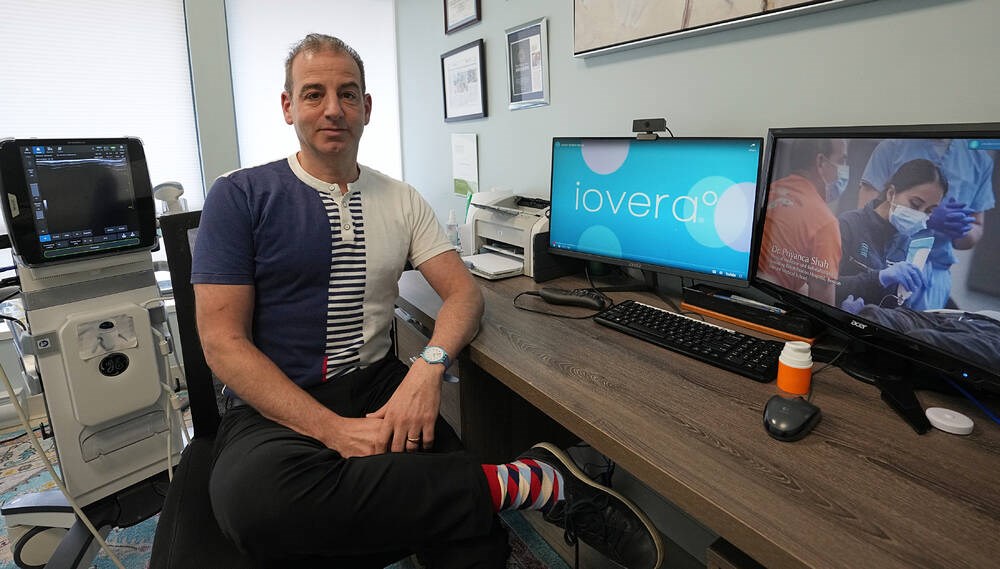
At the same time, the neurologists of Kelowna announced they were closing to all non-urgent care due to a lack of physicians. Ironically, a Global News B.C. story on the closure used stock video footage of me treating patients to represent neurology.
The College’s willingness to reconsider established processes while maintaining rigorous standards demonstrated that regulatory excellence includes adapting when change benefits patients.
The recent updated practice standards and privileging pathways have also allowed us to bring many more areas of specialized care directly into our community, including inside long-term care homes.
This was not my first experience of that philosophy. More than a decade ago, when video telehealth was still novel in B.C., physicians were expected to use a special health-authority portal.
Many of my patients live with significant disabilities and injuries, sometimes in remote communities, across mountain passes or on islands. The system was difficult for both patients and physicians to access.
I wrote to the CPSBC and asked whether we could instead use readily available video phone and personal computer-based technology; it was Skype back then.
I received a thoughtful, evidence-based response emphasizing that safe patient access mattered.
My practice changed almost immediately. I could follow patients with disabilities in their own homes.
Years later, when COVID-19 made virtual medicine essential, B.C. entered the pandemic ready to fly, while other provinces had no infrastructure or payment models.
I have seen the same approach in medical education. Physicians from around the world have travelled to Victoria to train with our team.
The CPSBC has worked steadfastly to credential these physicians and provide educational licences, allowing international learners to participate in clinical education in B.C. Americans are being licensed efficiently and quickly.
B.C. relies on one medical school and its residency programs to train specialists for a population of more than 5.5 million people, mostly in the Lower Mainland.
A scan of physician practice locations listed by the CPSBC directory shows an overwhelming number of specialists in Vancouver Coastal Health, where only 25% of the population lives. Communities outside that area continue to struggle with recruitment, long waits, service disruptions and hospital closures.
For years, I was led to believe that many of the rigid restrictions preventing recruitment, education and innovative models of care originated with the CPSBC.
I have learned instead that the College is responsible for administering standards developed and created by physicians — and that, under thoughtful leadership, it is an important forum for examining whether those standards continue to serve patients.
That distinction matters. B.C. is enormous.
We cannot afford barriers created by physicians in oversupplied Vancouver that prevent excellent physicians trained elsewhere in Canada or internationally from caring for British Columbians, or that maintain outdated procedural privileging.
When patients are waiting for specialist care, regulation must simultaneously protect patients from unsafe care and protect their ability to access excellent care.
My experiences with Dr. Christine Hall and the CPSBC have shown me that those principles do not have to compete.
For their willingness to listen, modernize longstanding practices, support responsible innovation and keep both patient safety and access at the centre of their decisions, Hall and the CPSBC deserve our sincere thanks.