
Erdiwansyah et al. A critical review of the integration of renewable energy sources with various technologies. Protect. Control Modern Power Syst. 6 https://doi.org/10.1186/s41601-021-00181-3 (2021).
Zhao, J. et al. The determinants of renewable energy sources for the fueling of green and sustainable economy. Energy 238, 122029 https://doi.org/10.1016/j.energy.2021.122029 (2022).
Halkos, G. E. & Gkampoura, E.-C. Reviewing Usage, Potentials, and Limitations of Renewable Energy Sources. Energies 13, 2906 https://doi.org/10.3390/en13112906 (2020).
Behabtu, H. A. et al. A Review of Energy Storage Technologies’ Application Potentials in Renewable Energy Sources Grid Integration. Sustainability 12, 10511 https://doi.org/10.3390/su122410511 (2020).
Kebede, A. A., Kalogiannis, T., van Mierlo, J. & Berecibar, M. A comprehensive review of stationary energy storage devices for large scale renewable energy sources grid integration. Renew. Sustain. Energy Rev. 159, 112213 https://doi.org/10.1016/j.rser.2022.112213 (2022).
Nishi, Y. Lithium ion secondary batteries; past 10 years and the future. J. Power Sources 100, 101–106, https://doi.org/10.1016/S0378-7753(01)00887-4 (2001).
Whittingham, M. S. Lithium batteries and cathode materials. Chem. Rev. 104, 4271–4301 https://doi.org/10.1021/cr020731c (2004).
Nitta, N., Wu, F., Lee, J. T. & Yushin, G. Li-ion battery materials: present and future. Mater. Today 18, 252–264, https://doi.org/10.1016/j.mattod.2014.10.040 (2015).
Ahmad, T. & Zhang, D. A critical review of comparative global historical energy consumption and future demand: The story told so far. Energy Rep. 6, 1973–1991, https://doi.org/10.1016/j.egyr.2020.07.020 (2020).
Semieniuk, G., Taylor, L., Rezai, A. & Foley, D. K. Plausible energy demand patterns in a growing global economy with climate policy. Nat. Clim. Change 11, 313–318, https://doi.org/10.1038/s41558-020-00975-7 (2021).
Davidsson Kurland, S. Energy use for GWh-scale lithium-ion battery production. Environ. Res. Commun. 2, 12001, https://doi.org/10.1088/2515-7620/ab5e1e (2020).
Degen, F., Winter, M., Bendig, D. & Tübke, J. Energy consumption of current and future production of lithium-ion and post lithium-ion battery cells. Nat. Energy 8, 1284–1295, https://doi.org/10.1038/s41560-023-01355-z (2023).
Liu, Y., Zhang, R., Wang, J. & Wang, Y. Current and future lithium-ion battery manufacturing. iScience 24, 102332 https://doi.org/10.1016/j.isci.2021.102332 (2021).
Yuan, C., Deng, Y., Li, T. & Yang, F. Manufacturing energy analysis of lithium ion battery pack for electric vehicles. CIRP Ann. 66, 53–56, https://doi.org/10.1016/j.cirp.2017.04.109 (2017).
Erakca, M. et al. Energy flow analysis of laboratory scale lithium-ion battery cell production. iScience 24, 102437 https://doi.org/10.1016/j.isci.2021.102437 (2021).
Ahmed, S., Nelson, P. A., Gallagher, K. G. & Dees, D. W. Energy impact of cathode drying and solvent recovery during lithium-ion battery manufacturing. J. Power Sources 322, 169–178, https://doi.org/10.1016/j.jpowsour.2016.04.102 (2016).
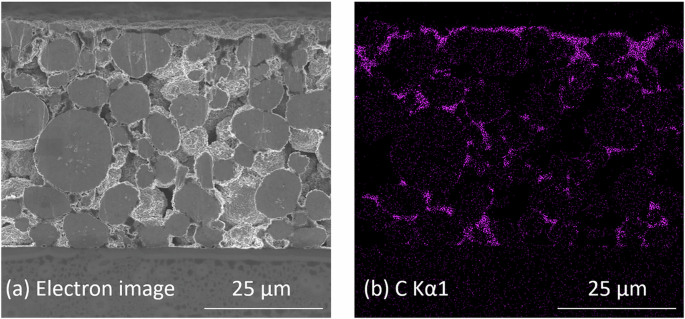
Kumano, N. et al. Migration of binder and conductive agent during drying process of Li-ion battery cathodes. J. Power Sources 591, 233883 https://doi.org/10.1016/j.jpowsour.2023.233883 (2024).
Zhang, H. et al. Self-catalyzed exothermic binder enables ultrafast processing and migration-resistant binder networks for high-performance lithium battery cathodes. Angew. Chem. (Int. Ed. Engl). 65, e2030. https://doi.org/10.1002/anie.202520301 (2026).
Chang, J. H. et al. Binder migration: Frequently observed yet overlooked phenomena in electrode processing for lithium-ion batteries. J. Energy Storage 83, 110729 https://doi.org/10.1016/j.est.2024.110729 (2024).
Jaiser, S. et al. Investigation of film solidification and binder migration during drying of Li-Ion battery anodes. J. Power Sources 318, 210–219 https://doi.org/10.1016/j.jpowsour.2016.04.018 (2016).
Font, F., Protas, B., Richardson, G. & Foster, J. M. Binder migration during drying of lithium-ion battery electrodes: modelling and comparison to experiment. J. Power Sources 393, 177–185 https://doi.org/10.1016/j.jpowsour.2018.04.097 (2018).
Lombardo, T., Ngandjong, A. C., Belhcen, A. & Franco, A. A. Carbon-Binder Migration: A Three-Dimensional Drying Model for Lithium-ion Battery Electrodes. Energy Storage Mater. 43, 337–347 https://doi.org/10.1016/j.ensm.2021.09.015 (2021).
Lee, J.-H. et al. Visualization of styrene-butadiene rubber (SBR) latex and large-scale analysis of the microstructure of lithium-ion battery (LIB) anodes. J. Power Sources 557, 232552 https://doi.org/10.1016/j.jpowsour.2022.232552 (2023).
Zankowski, S. P. et al. Chemical staining for fundamental studies and optimization of binders in Li-ion battery negative electrodes. Nat. Commun. 17, 1438 https://doi.org/10.1038/s41467-026-69002-1 (2026).
Greczynski, G., Haasch, R. T., Hellgren, N., Lewin, E. & Hultman, L. X-ray photoelectron spectroscopy of thin films. Nat. Rev. Methods Primers 3 https://doi.org/10.1038/s43586-023-00225-y (2023).
Oswald, S. & Reiche, R. Binding state information from XPS depth profiling: capabilities and limits. Appl. Surf. Sci. 179, 307–315, https://doi.org/10.1016/S0169-4332(01)00299-9 (2001).
Harrison, W. W., Hess, K. R., Marcus, R. K. & King, F. L. Glow discharge mass spectrometry. Anal. Chem. 58, 341A–356A, https://doi.org/10.1021/ac00293a002 (1986).
Hoffmann, V., Kasik, M., Robinson, P. K. & Venzago, C. Glow discharge mass spectrometry. Anal. Bioanal. Chem. 381, 173–188, https://doi.org/10.1007/s00216-004-2933-2 (2005).
Evertz, M., Schwieters, T., Börner, M., Winter, M. & Nowak, S. Matrix-matched standards for the quantification of elemental lithium ion battery degradation products deposited on carbonaceous negative electrodes using pulsed-glow discharge-sector field-mass spectrometry. J. Anal. At. Spectrom. 32, 1862–1867, https://doi.org/10.1039/C7JA00129K (2017).
Diehl, M., Evertz, M., Winter, M. & Nowak, S. Deciphering the lithium ion movement in lithium ion batteries: determination of the isotopic abundances of 6Li and 7Li. RSC Adv. 9, 12055–12062, https://doi.org/10.1039/C9RA02312G (2019).
Pisonero, J., Fernández, B., Pereiro, R., Bordel, N. & Sanz-Medel, A. Glow-discharge spectrometry for direct analysis of thin and ultra-thin solid films. Trends Anal. Chem. 25, 11–18, https://doi.org/10.1016/j.trac.2005.04.019 (2006).
Pisonero, J., Feldmann, I., Bordel, N., Sanz-Medel, A. & Jakubowski, N. Depth profiling with modified dc-Grimm and rf-Grimm-type glow discharges operated with high gas flow rates and coupled to a high-resolution mass spectrometer. Anal. Bioanal. Chem. 382, 1965–1974, https://doi.org/10.1007/s00216-005-3357-3 (2005).
Moirana, R. L., Kivevele, T., Mkunda, J., Mtei, K. & Machunda, R. Trends towards Effective Analysis of fluorinated compounds using Inductively Coupled Plasma Mass Spectrometry (ICP-MS). J. Anal. Methods Chem. 2021, 8837315. https://doi.org/10.1155/2021/8837315 (2021).
Ganeev, A. et al. Time-of-flight mass spectrometry with a pulsed glow discharge-A versatile tool in modern analytical chemistry: From elemental and isotopic analysis of solids to determination of VOCs and inorganic compounds in ambient air. Eur. J. Mass Spectrom. 31, 3–20, https://doi.org/10.1177/14690667251328836 (2025).
Bodnar, V. et al. Pulsed glow discharge enables direct mass spectrometric measurement of fluorine in crystal materials – Fluorine quantification and depth profiling in fluorine doped potassium titanyl phosphate. Spectrochimica Acta Part B: At. Spectrosc. 145, 20–28, https://doi.org/10.1016/j.sab.2018.04.002 (2018).
Ganeev, A. et al. Direct quantification of major and trace elements in geological samples by time-of-flight mass spectrometry with a pulsed glow discharge. Anal. Lett. 52, 671–684, https://doi.org/10.1080/00032719.2018.1485025 (2019).
Wagatsuma, K., Hirokawa, K. & Yamashita, N. Detection of fluorine emission lines from Grimm-type glow-discharge plasmas — use of neon as the plasma gas. Analytica Chim. Acta 324, 147–154, https://doi.org/10.1016/0003-2670(95)00623-0 (1996).
Gusarova, T. et al. Calibration of double focusing Glow Discharge Mass Spectrometry instruments with pin-shaped synthetic standards. Spectrochimica Acta Part B: At. Spectrosc. 66, 847–854, https://doi.org/10.1016/j.sab.2011.12.001 (2011).
Prohaska, T., Irrgeher, J., Zitek, A. & Jakubowski, N. (eds.). Sector Field Mass Spectrometry for Elemental and Isotopic Analysis (The Royal Society of Chemistry, 2014).
Taylor, C. E., Garvey, S. D. & Pemberton, J. E. Carbon contamination at silver surfaces: surface preparation procedures evaluated by Raman Spectroscopy and X-ray photoelectron spectroscopy. Anal. Chem. 68, 2401–2408, https://doi.org/10.1021/ac950753h (1996).
Fernández, B., Pereiro, R. & Sanz-Medel, A. Glow discharge analysis of nanostructured materials and nanolayers-a review. Analytica Chim. Acta 679, 7–16, https://doi.org/10.1016/j.aca.2010.08.031 (2010).
Köhler, R., Hellrung, D., Tasche, D. & Gerhard, C. Quantification of Carbonic Contamination of Fused Silica Surfaces at Different Stages of Classical Optics Manufacturing. Materials 14; https://doi.org/10.3390/ma14071620 (2021).
Fairley, N., Bargiela, P. & Baltrusaitis, J. Surface analysis insight note: Illustrating the effect of adventitious contamination on Pt photoemission peak intensities. Surf. Interface Anal. 56, 122–125, https://doi.org/10.1002/sia.7276 (2024).