
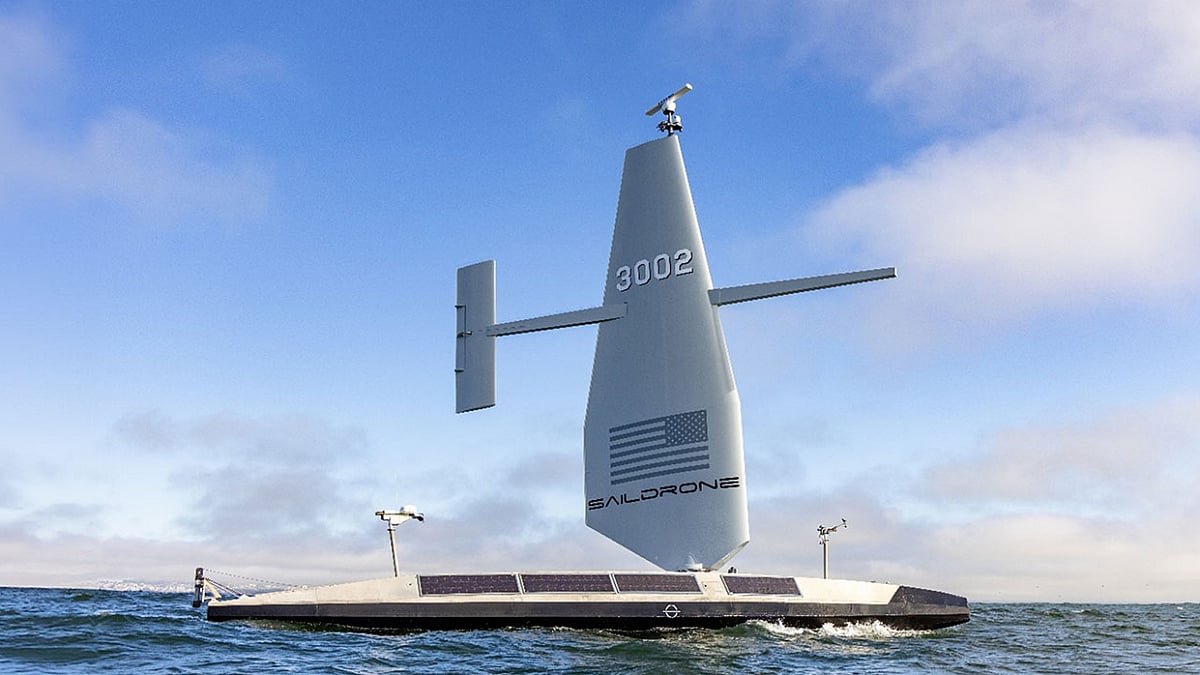
Australia’s national science agency CSIRO has sent out a fleet of unmanned surface vehicles (USVs) out of Hobart as part of a mission monitoring the Southern Ocean to better understand how much carbon dioxide from the atmosphere is absorbed by the ocean surface.
The USVs, made by US-based unmanned systems specialist Saildrone, will be deployed every quarter over five years to circumnavigate Antarctica, operating through the challenging conditions of the Southern Ocean.
The Saildrone USVs are autonomous mobile research platforms powered by wind and solar energy. They will operate in remote waters for months at a time, recording data in real time to better understand ocean carbon sinks.
The project is part of an international collaboration between CSIRO, the National Oceanic and Atmospheric Administration (NOAA), South Africa’s Southern Ocean Carbon-Climate Observatory, Columbia University, the University of Washington, and Schmidt Sciences, through the Virtual Institute for the Carbon Cycle program, and Saildrone, to capture data on ocean carbon sinks.