
Accessible infectious disease knowledge is something Alex Sundermann, Dr.P.H., and Assistant Professor Faculty in Epidemiology at the University of Pittsburgh, is passionate about. Through relatability and storytelling, he hopes that prevention and treatment will proactively impact public health outcomes.
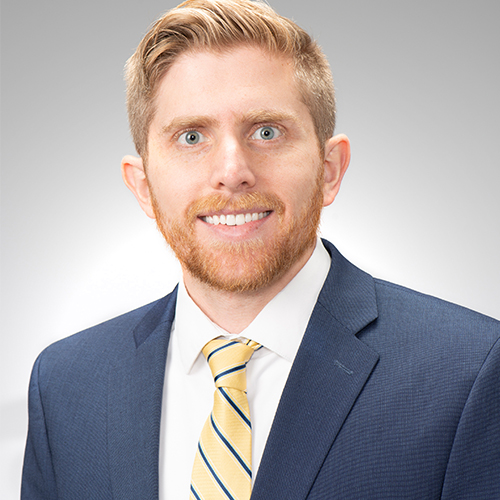 Alex Sundermann, Dr.P.H.
Assistant Professor Faculty in Epidemiology at the University of Pittsburgh
What first drew you to studying infectious diseases, and what inspired you to focus on tracking outbreaks in hospitals?
I’ve always been fascinated by the idea of tracking infectious diseases since first learning microbiology in college. It wasn’t until graduate school in public health that I discovered hospital infection prevention and epidemiology — a field dedicated to tracking infectious diseases where patients are most at risk. According to the Centers for Disease Control and Prevention (CDC), about one in 31 hospitalized patients will develop a healthcare-associated infection. These infections are, by definition, preventable, and that statistic felt unacceptable to me.
Working in hospital infection prevention, I was part of many outbreak investigations — clusters of infections traced back to a common source or practice. These outbreaks occurred across all healthcare facilities, yet were widely assumed to be rare. That assumption drove me to join a research team applying genomic fingerprinting to hospital infections for my doctoral work. Rather than waiting until an outbreak was suspected, we tested whether we could find them proactively.
What we found was striking. Healthcare outbreaks are far more common than previously recognized, go completely undetected without genomic surveillance, but can be stopped when you catch them early. That gap between what we miss and what we could prevent is what continues to inspire this work.
What do you feel we can learn from hospital outbreaks that can help all of us stay safer during future threats?
Hospitals are places of healing, and everyone working in one is dedicated to getting you better. But infections can and do happen, and our research is working to detect them faster and more accurately so that all hospitals can prevent them more effectively than current methods allow.
Beyond individual institutions, hospitals serve as early warning systems for future threats. The sickest patients show up there first, which means hospitals are often where we detect emerging dangers earliest whether that is a novel pathogen or a new pattern of antibiotic resistance spreading through a community. This is why investing in infectious disease surveillance infrastructure within healthcare is so critical to protecting the public’s health broadly, not just patients inside hospital walls.
For individuals, the evidence on hand hygiene is simple and overwhelming. Handwashing remains one of the most effective ways to prevent infection both inside and outside the hospital. During a hospital stay, patients can protect themselves by washing their hands at key moments and by advocating for themselves, asking questions, and staying informed about their care.
As someone who uses your social media platform to share infectious disease updates online, how do you approach making science easier for the public to understand?
Scientists are skilled at communicating with each other, but that happens through peer-reviewed manuscripts in paywalled journals, written in a language that rarely translates to the general public. I have long believed that scientists have an obligation to communicate more broadly, especially given that so much of this research is publicly funded.
My approach centers on two things: relatability and storytelling. Microbes are everywhere once you start looking. They’re in the food we eat, the water we drink, the everyday objects we touch without thinking. I try to meet people where they are by connecting complex science to experiences they already have. The goal is to make it feel relevant, even a little unsettling, while also reassuring them that good public health practices keep those risks low.
The other tool is narratives. Academic papers are actually stories at their core, because they have a mystery, a method, and a reveal. I try to translate that structure into something digestible and genuinely interesting for a general audience by stripping away the jargon while keeping the intellectual honesty intact.
Looking ahead, what impact do you hope your videos and storytelling have on protecting public health?
My hope is that the stories I tell, the education I share, and the policy deep dives I do have two kinds of impact. First, that they reach everyday people and give them accurate, accessible information to make better decisions about their health. Second, and maybe more importantly, that they inspire other scientists to come online and share their own expertise, and that they inspire the next generation of students to enter public health.
The problem is that academic institutions offer no real incentive for scientists to engage on social media. If anything, many actively discourage it. That needs to change, because when credible voices stay silent, that vacuum gets filled by others who often have malicious intent, pushing misinformation and disinformation to massive audiences.
More scientists online means a better informed public, and that matters enormously for how we navigate future health threats. If even a handful of researchers are inspired to start sharing their work because of something I posted, that multiplies the impact far beyond anything I could achieve alone.