
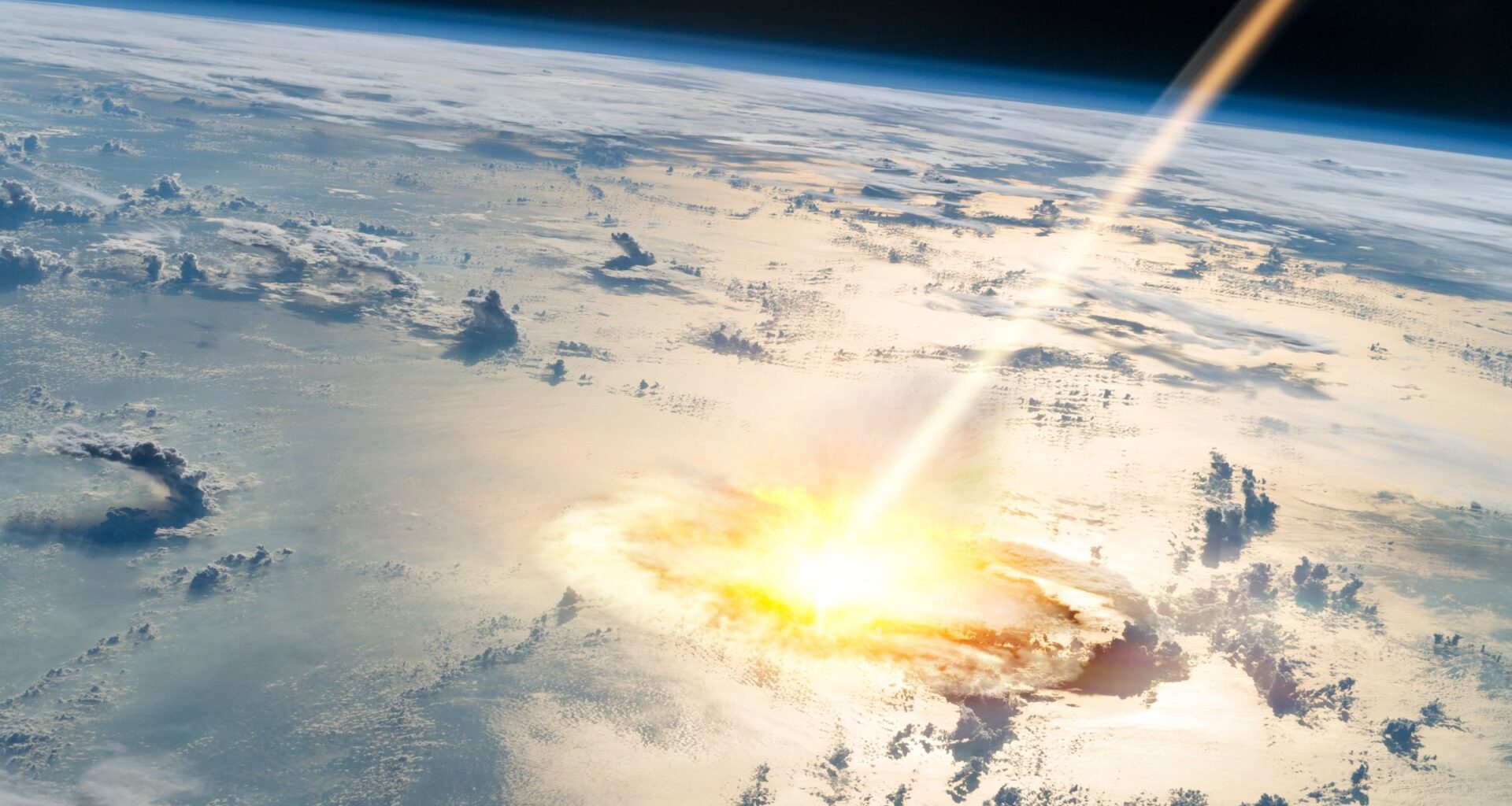
One of America’s largest meteor craters is around 100 million years younger than scientists thought, which means the ancient impact coincided with — and potentially contributed to — one of the biggest global extinction events in Earth’s history, according to a new study.
The underground impact structure, known as Ames crater, is located in northern Oklahoma and is named after a small town that sits above the submerged crater. At around 10 miles (16 kilometers) wide, it is the fourth-largest impact structure in the U.S.
Latest Videos FromLive Science
You may like
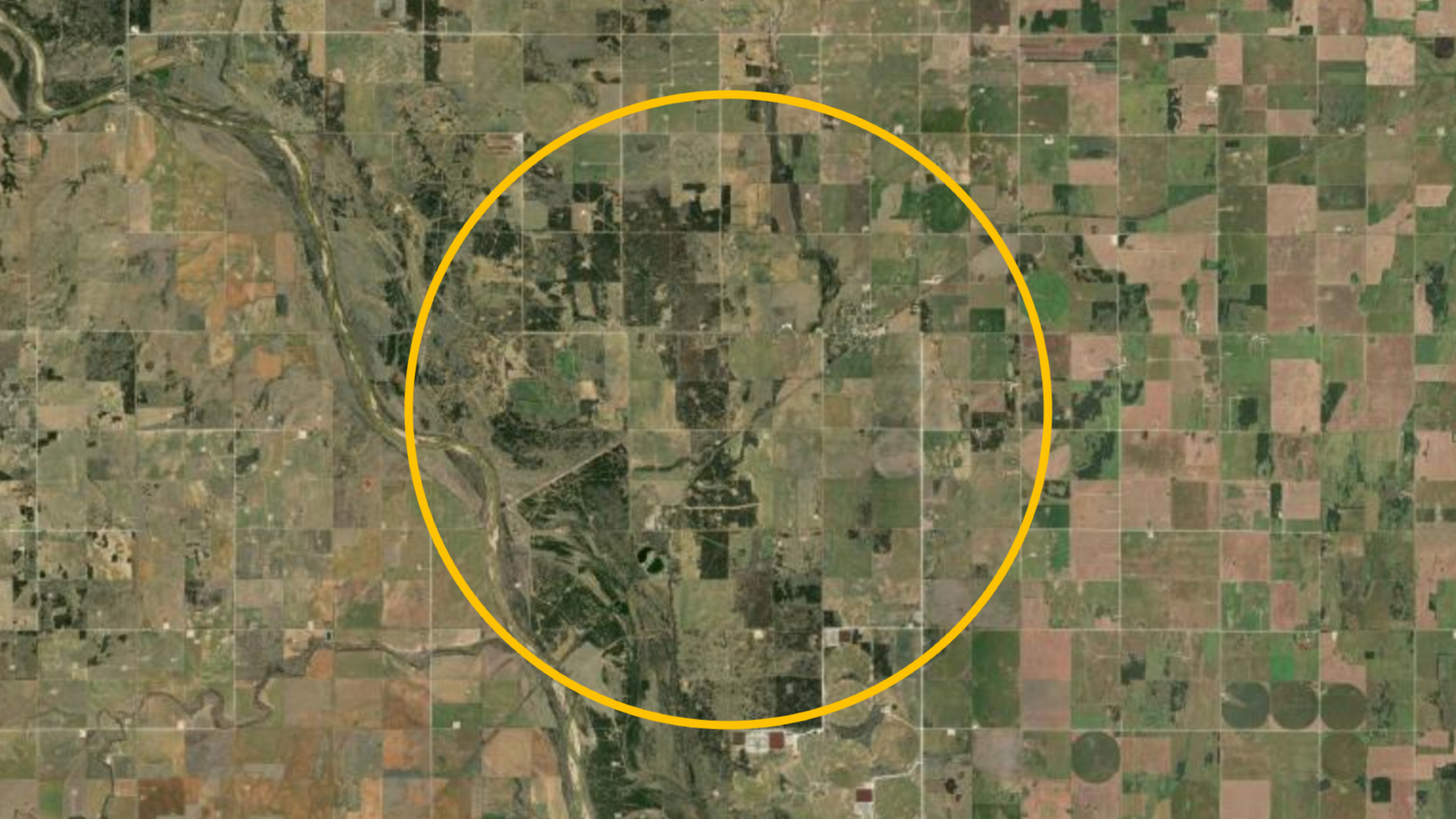
There are no visible signs of the Ames crater today. However, scientists have been able to map out its size and shape using ground-penetrating radar. This circle represents the rough outline of the the submerged structure.
(Image credit: EarthExplorer/USGS/Landsat with annotations Harry Baker)
Reading crystals
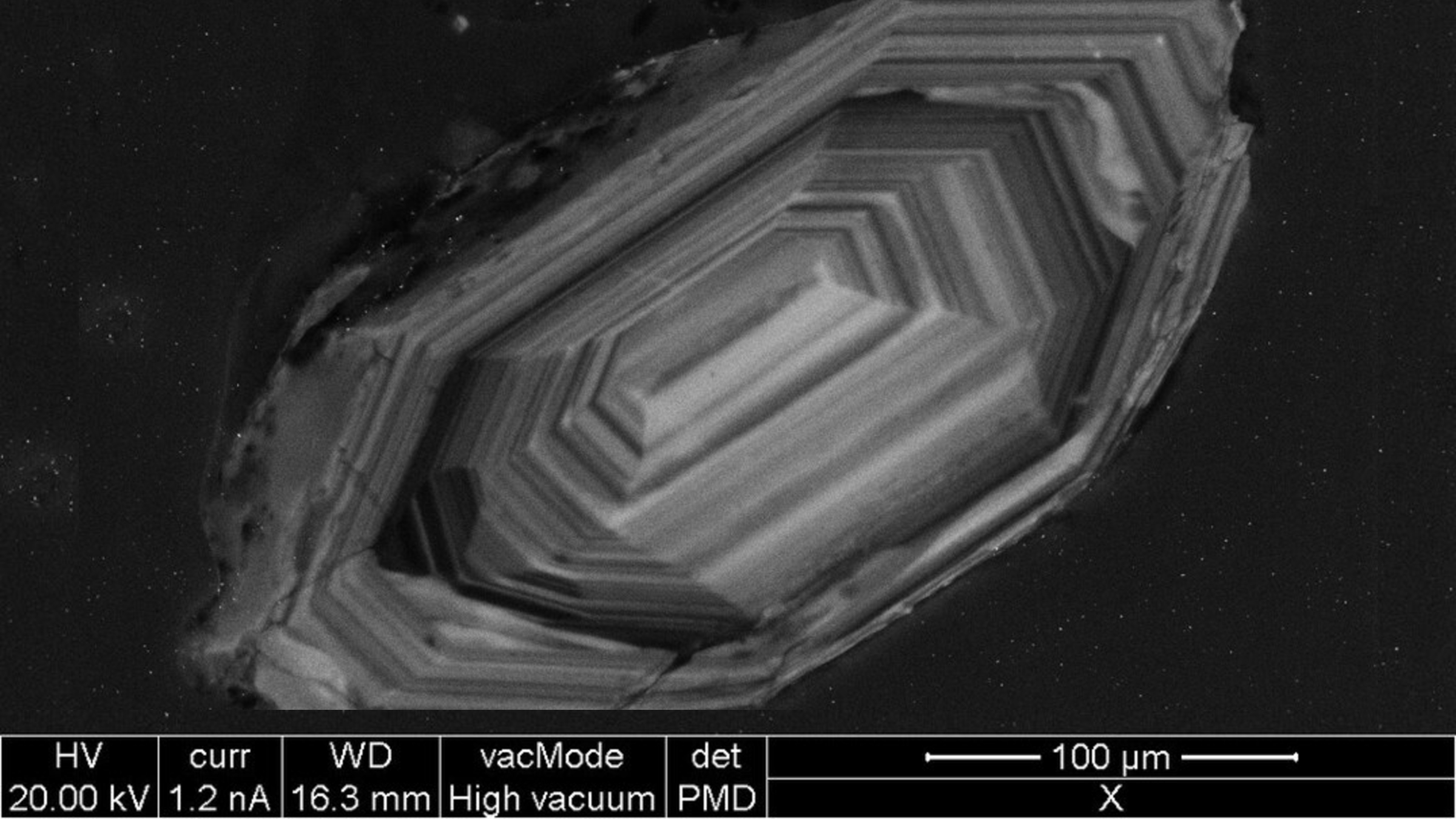
The internal structure of zircon crystals preserves evidence of being exposed to extreme conditions, such as high temperature and pressure, making them ideal for exploring ancient impacts. This photo, captured during a completely unrelated study, shows one such crystal under an electron microscope.
(Image credit: Emmanuel Roquette via Wikimedia)
What to read next
“This is where the impact belongs”
Catlos, E. J., Parisi, A. F., Brookfield, M. E., Erickson, T., Gulick, S. P., Schmitt, A. K., Stockli, D. F., Miggins, D. P., Ruchte, B., & Cloos, M. (2026). The Ames impact structure, Oklahoma: New radioisotopic constraints and implications for North American impact chronology. Meteoritics and Planetary Science, 61(8), 2103–2139. https://doi.org/10.1111/maps.70191