
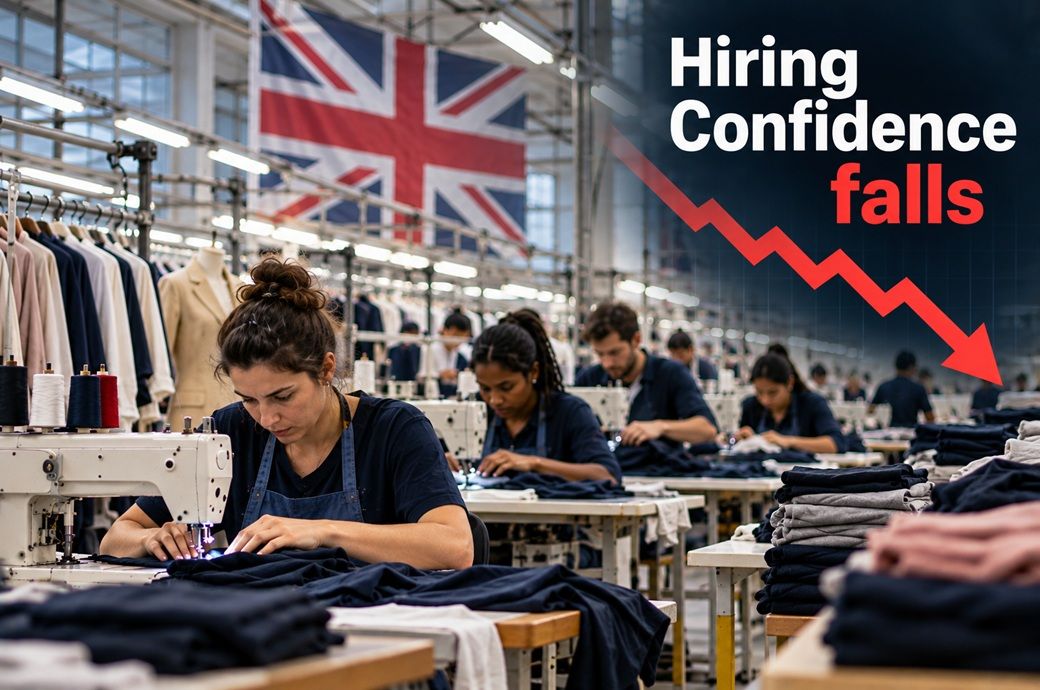
UK businesses have become more cautious about hiring and training, with only 15 per cent of firms confident about hiring, down from 24 per cent in 2025, raising pressure on job opportunities for young people ahead of the Milburn Review’s final recommendations, according to the CBI/Pertemps Employment Trends Survey 2026.
Labour costs were identified as the top threat to the competitiveness of the UK labour market by 73 per cent of businesses, while employment regulation was the second-biggest risk at 72 per cent. Four in five businesses said the government’s Make Work Pay plan was unaffordable without negatively affecting growth, investment, jobs or other employee benefits. Wider cost pressures meant 53 per cent of firms were offering fewer apprenticeships than they would like to, the survey showed.
The pressure is expected to be felt strongly by young people as firms have less headroom to create entry-level roles. Rising recruitment and onboarding costs were pushing 44 per cent of businesses towards experienced hires, reducing entry-level opportunities, while 45 per cent said they did not have the demand to justify creating additional jobs for entry-level roles. Half of employers said cutting the regulatory burden on apprenticeships would make the system work better for their business, and 35 per cent said cost pressures were squeezing training budgets, leading them to recruit people who need no additional training for entry-level roles, the CBI/Pertemps Employment Trends Survey 2026 found.
UK hiring confidence has fallen to 15 per cent from 24 per cent in 2025, with labour costs and regulation weighing on job creation and training routes, the CBI/Pertemps survey says.
Labour costs were cited by 73 per cent as the top labour-market competitiveness threat; regulation followed at 72 per cent.
Firms also reported fewer apprenticeships and tighter entry-level opportunities.
The survey also pointed to weaker investment attractiveness. Just 1.7 per cent of businesses said the UK labour market had become a more attractive place to invest and do business over the past five years, while 65.3 per cent said it had become much less attractive. Nearly four in five, or 79 per cent, expected the position to worsen without action to improve competitiveness.
Employers’ National Insurance contributions were now the biggest cost pressure, while costs were set to rise again when the next minimum wage rate takes effect in April. In response to the estimated 2027 increase of 3.7 per cent in the National Living Wage to £13.18 (~$17.57), 39 per cent of firms expected to raise prices, 29 per cent expected to reduce employment and 22 per cent expected to cut business investment. Only 47 per cent of firms expected to increase pay rates in line with, or above, inflation at their next review, compared with 70 per cent in 2024, the survey said.
“Britain’s businesses want to invest, grow and create good jobs, but these findings are a clear signal that the cost and confidence equation in the labour market needs to change. Higher employment costs and growing regulatory pressures are making firms more cautious about hiring and investment. That matters not just for businesses, but for living standards and particularly for young people trying to get their first foot on the career ladder,” Rain Newton-Smith, chief executive officer, CBI, said in a press release.
Carmen Watson, chairperson of Pertemps, said: “Across the employment market, businesses are becoming increasingly cautious about recruitment. Employers still want to grow and invest in their people, but rising employment costs, subdued demand and continued uncertainty are putting greater pressure on decisions around hiring, pay and workforce investment.”
Fibre2Fashion News Desk (KD)