

House prices have fallen 4.7 per cent, the steepest quarterly drop on record, according to new data from Domain.
Prices dropped in every capital city in the September quarter, the first time in 15 years and only the second time on record.
The real estate platform’s data showed the sharpest decline was in Perth, where prices dropped 7.4 per cent.
Combined capital city house prices fell to $1,226,566. Domain said markets that started the year in very different positions “are now moving in the same direction”.
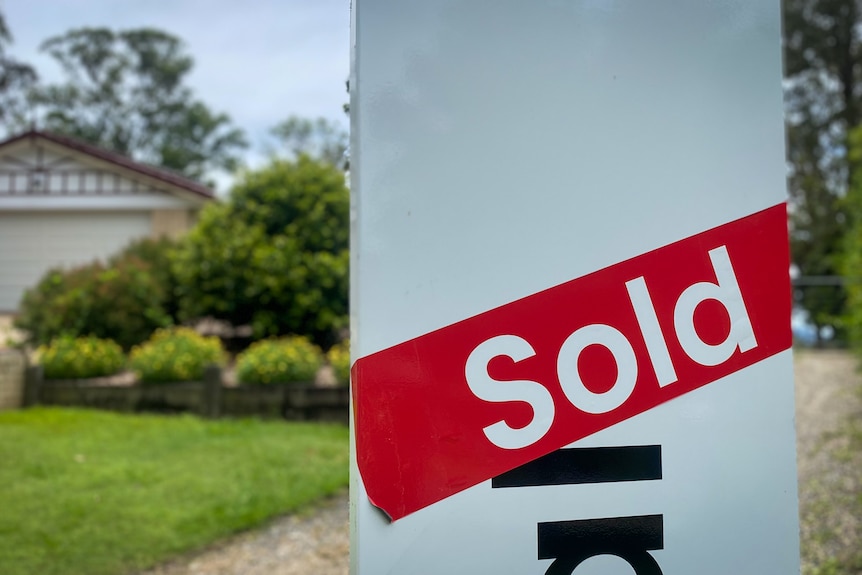
Houses and units dropped in price for a second consecutive month. (ABC News: Steve Keen)
Australia’s biggest property markets, Sydney and Melbourne, recorded their largest quarterly house price drop in four years, falling 4.7 per cent and 3.3 per cent, respectively.
Unit prices also fell 3.5 per cent, marking the second consecutive quarter both property types declined.
It marked a clear shift in the housing cycle, according to Nicola Powell, Domain’s chief residential economist.

Nicola Powell says conditions have shifted to be more favourable for buyers. (Supplied)
“What began as weakness concentrated in some cities has broadened considerably,” Dr Powell said.
“The balance of power has shifted towards buyers.
“Homes are taking longer to sell, there is greater scope to negotiate, and sellers are having to be more realistic about price expectations.”
The cumulative impact of rising rates, lower affordability, and cost-of-living pressures has reduced demand, according to Gerard Burg of data firm Cotality.
“It’s been a demand-led downturn,” Mr Burg said.

Gerard Burg says the fall in prices has been driven by lower demand. (ABC News: Darryl Torpy)
Australia’s most valuable homes falling the most
While all major markets across the country have joined the downturn, prices have not been dropping equally within cities.
Australia’s most valuable homes are dropping the most, while lower value homes were relatively stable in three months to September, according to property data firm Cotality.
In Sydney, the most valuable quartile of homes dropped more than twice as much as the least valuable quartile.
Nationwide, lower-value homes have seen a much slower price drop, Cotality said.
Prices grew in Darwin’s lowest value quartile.
The sharper downturn in more expensive properties reflects fewer buyers and higher borrowing costs, according to property economist Cameron Kusher.
“They’ve typically seen larger increases in values over recent years and when you see that market slowdown, there’s overall fewer buyers for those properties,” he said.

Cameron Kusher says fewer buyers and higher interest rates are pushing down the prices of more expensive properties. (ABC News: Lucas Hill)
However, he said the ultra-top end of the market had remained largely stable.
Mr Burg agreed, saying lower-priced homes remained affordable to more buyers.
“The median house really appears kind of out of reach of the median income household across much of the country,” he said.
Prices were falling before federal budget
The federal budget was a factor, but not the only factor, in house price falls, according to Mr Kusher.
House prices peaked last year and had already begun to drop before the changes to investment taxes in May’s federal budget, Mr Kusher and Mr Burg both noted.
Mr Burg said prices were already falling in many capital cities, and three consecutive interest rate hikes had dampened market confidence.
New underquoting laws take effect
Auction activity, a common gauge of market confidence, has roughly halved from last year, with 1,423 auctions across capital cities last week, according to Cotality.
“Confidence has really evaporated. Affordability is very stretched and borrowing capacity is reduced dramatically,” Mr Kusher said.
“People just aren’t in a position or able to pay the prices that a lot of these properties are worth at the moment.”
He said home ownership rates had not moved much since the May budget changes, due to lower buyer confidence and stretched affordability.
“The first time is pretty scary as it is, and I think a lot of them are looking at it and saying, ‘Well, prices are falling, why would I jump in now when there’s quite a lot for sale, if I wait another six or 12 months properties will probably be cheaper,'” he said.
“I just don’t think first home buyers have that urgency anymore.”
He said prices would be unlikely to return to their previous heights, at least not in the short term.
“I think this downturn is probably going to drag on a bit longer than people expect, and it probably will until it looks like interest rates are going to actually be reduced again,” he said.
Loading…