
Colorectal cancer (CRC) represents one of the most urgent yet addressable oncology challenges confronting Latin America (LATAM). In Mexico, digestive tract cancers remain a leading contributor to cancer mortality, while CRC ranks as the second-most common malignant neoplasm among Latino populations in the Americas.
This crisis stems less from a lack of therapeutic advances than from severe diagnostic bottlenecks. The median interval from initial symptom onset to definitive treatment stretches to 7 months. The delay occurs between initial clinical evaluation and diagnostic confirmation. When health systems rely on late stage symptomatic presentation, oncology care becomes reactive, expensive, and frequently palliative. BGI Genomics’ COLOTECT® demonstrates how non-invasive epigenetic methylation screening can intercept disease early, bridging this diagnostic gap before curable windows close.
The Diagnostic Triage Dilemma
While colonoscopy remains the gold standard for CRC evaluation, public healthcare infrastructure across Latin America faces acute shortages of endoscopy suites and specialist gastroenterologists. Long waiting lists tie up clinical resources with low-yield, symptomatic cases rather than preventative intervention.
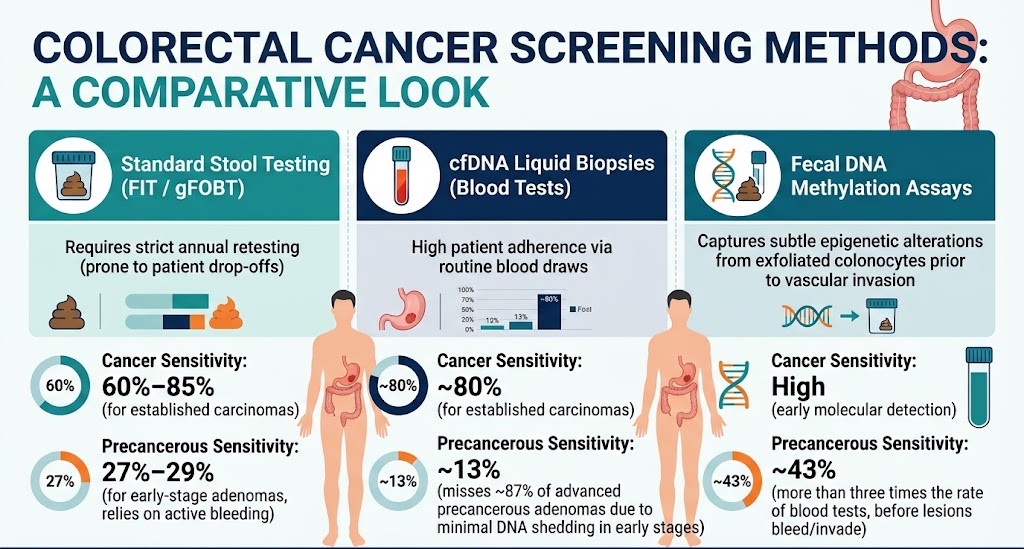
To bridge this gap, non-invasive early detection has gained regulatory momentum worldwide, driven by approvals for advanced multi-target stool DNA assays and emerging blood-based liquid biopsies. However, clinical performance varies by screening tier.
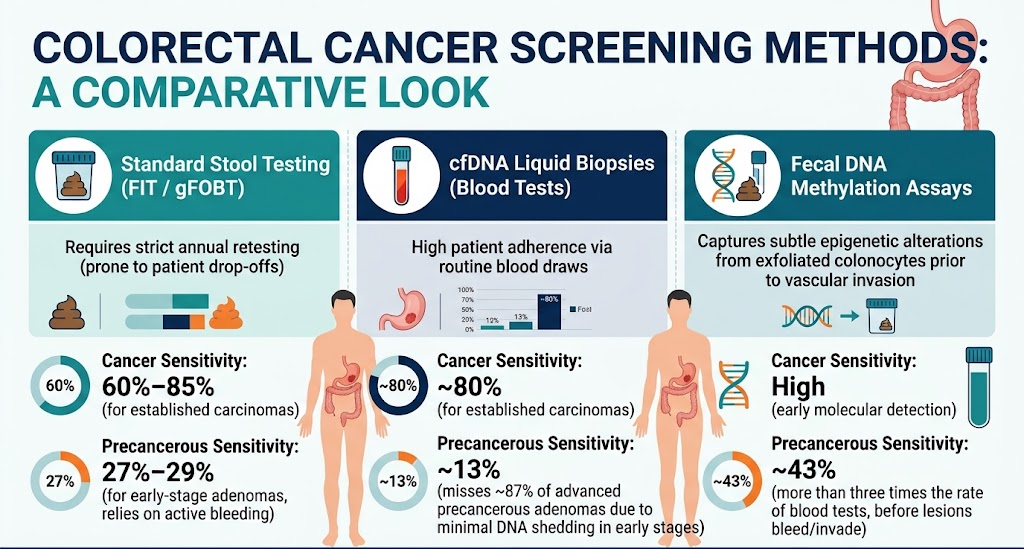
Image Credit: BGI Genomics
Between 2014 and 2026, the FDA approved multiple advanced molecular tests across both cell free DNA blood assays and fecal DNA methylation platforms. These successive clearances demonstrate that molecular early detection has matured into a mainstream clinical standard.
Scaling Molecular Screening in Primary Care
To alter population-level survival curves, molecular screening must be operationally viable outside tertiary hospitals. When designed for decentralized deployment, epigenetic assays transform the clinical workflow. COLOTECT® is a case in point:
Earlier Biological Interception: Assays targeting hypermethylation across validated biomarkers – such as SDC2, ADHFE1, and PPP2R5C – detect cellular alterations in precancerous adenomas long before visible bleeding triggers traditional fecal immunochemical tests (FIT).
Community-Level Accessibility: Painless, non-invasive stool collection requires no bowel preparation, fasting, or sedation. This eliminates major social and logistical barriers that depress screening compliance in rural and underserved districts.
Endoscopy Suite Optimization: Rather than screening unselected populations via colonoscopy, health systems can deploy molecular testing as an objective gatekeeper. Real-world data show that approximately 80% of individuals with positive results who underwent colonoscopy had confirmed colorectal abnormalities.
Integrating non-invasive molecular testing transforms reactive oncology into proactive prevention. By triaging high-risk individuals before specialist referral, LATAM health systems can eliminate severe colonoscopy backlogs, shorten dangerous diagnostic delays, and detect CRC at curable stages. It turns an overburdened screening infrastructure into an equitable, life-saving reality.
About BGI Genomics
BGI Genomics, is the world’s leading integrated solutions provider of precision medicine, headquartered in Shenzhen, China. Its services cover more than 100 countries and regions and involve more than 2,300 medical institutions. In July 2017, as a subsidiary of BGI Group, BGI Genomics (300676.SZ) officially began trading on the Shenzhen Stock Exchange.