
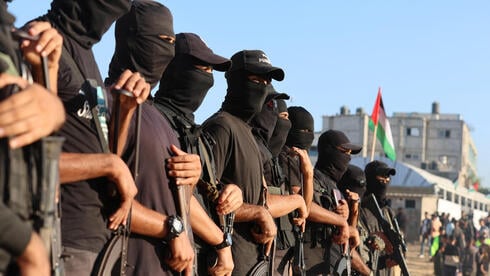
The assessment follows ynet’s revelation earlier Thursday that senior Hamas officials had delivered an unusually direct warning to Israel through U.N. humanitarian coordinator Ramiz Alakbarov, threatening renewed attacks inside Israel, in the West Bank and abroad. The warning has intensified concerns within Israel’s security establishment that Hamas is preparing for another confrontation rather than merely seeking to exert political pressure.
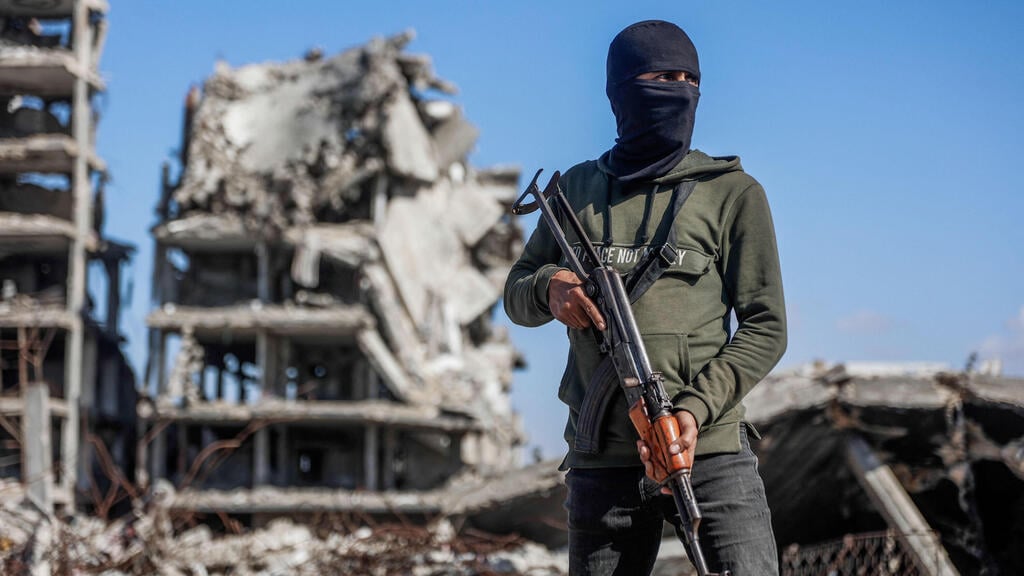
Hamas terrorist carrying a Kalashnikov rifle in Jabaliya, Gaza. Israeli assessments put the organization’s armed wing at tens of thousands of members
(Photo: Omar Al-Qattaa/AFP)
According to assessments recently presented to the security cabinet, Hamas has stepped up preparations for renewed fighting, accumulating weapons and personnel and transferring military equipment into civilian areas. Israeli officials believe the organization assumes that Israel’s ability to undertake major military operations is constrained by the October 27 Israeli election and the November 3 U.S. midterms, giving Hamas an opportunity to strengthen its position.
At a cabinet meeting earlier this month, Military Intelligence chief Maj. Gen. Shlomi Binder addressed the thousands of attackers who crossed into Israel on October 7, 2023. “Of the 6,000 who crossed the fence on October 7, 4,000 have been eliminated. Two thousand remain. We will get every last one of them,” he said, according to the account of the meeting.
Senior officials say Hamas is deliberately buying time to manufacture additional weapons and recruit new fighters, while recognizing that its opportunity to do so may be narrowing. Against that backdrop, Israeli intelligence has identified several significant changes in the organization’s behavior.
One of the most noticeable developments is Hamas’s increasingly open presence above ground. Whereas its members previously tended to remain concealed or move around in civilian clothing, they are now more frequently seen wearing uniforms and openly exercising authority over Gaza’s population.
Israeli officials also report that Hamas is transferring weapons from underground tunnels into civilian facilities, including hospitals and schools. According to the military, similar practices were identified during earlier stages of the war, when Israeli troops regularly discovered weapons in civilian buildings and populated areas.
Another change concerns Hamas’s public statements. Since the Gaza agreement was announced, the organization had at times suggested that it would surrender its weapons and respect its obligations. That language has increasingly been replaced by more confrontational rhetoric, culminating in the threat reported Thursday.
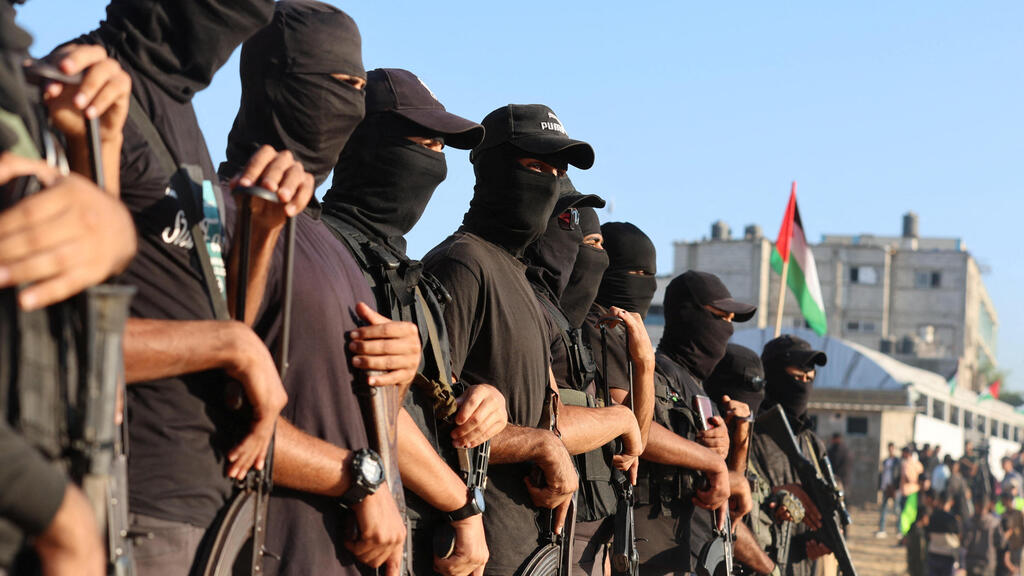
Hamas terrorists in Gaza. Israeli officials report an increasingly visible presence of armed members above ground
(Photo: Ramadan Abed/Reuters)
Israeli officials say they have not encountered a warning of comparable force, boldness and directness from Hamas since the October 7 massacre.
There are also reports that Hamas has begun distributing weapons to civilians. Israeli officials suspect the move is intended to preserve part of the organization’s arsenal ahead of any disarmament process, allowing it to hide weapons while claiming to have surrendered those in its possession.
The developments have reinforced an Israeli assessment that Hamas no longer believes the current agreement has a realistic chance of succeeding and is preparing for a possible return to fighting.
Officials also believe Hamas may not wait for Israel to initiate hostilities. Instead, once it concludes that Israel is about to receive a green light for renewed military operations, the organization could attempt to strike first.
Israeli officials also point to a widening gap between the international perception of Hamas and the picture emerging from Israeli intelligence assessments.
Since the Gaza agreement was announced, Hamas has benefited from the impression that it is prepared to relinquish its weapons and surrender political control of the territory. Israel, meanwhile, has increasingly been portrayed as the party obstructing implementation of President Donald Trump’s Gaza plan.
Israeli officials believe Hamas has exploited its apparent willingness to cooperate with the American initiative to buy time and preserve its remaining military and political power.
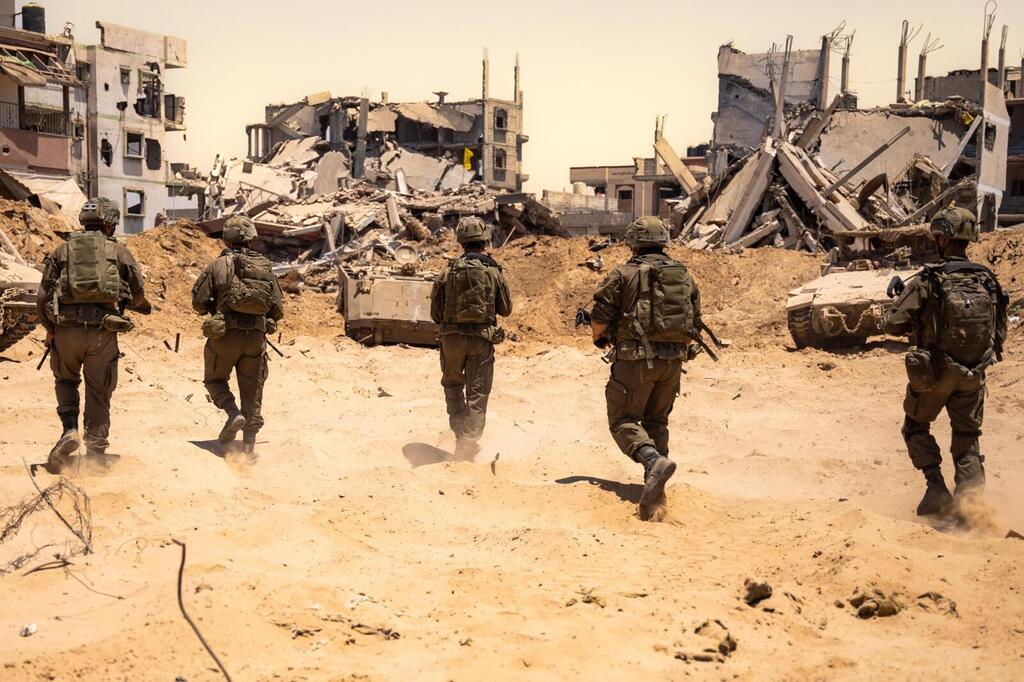
Soldiers from the IDF’s Givati Brigade operating in Beit Hanoun, Gaza. The military believes it may eventually have to return to areas deep inside the territory to disarm Hamas
(Photo: IDF)
The significance of the latest threat, they argue, is that Hamas may now be signaling that it is no longer prepared to maintain that appearance.
According to assessments by the IDF and Shin Bet, the central condition for advancing the Gaza plan, Hamas’s disarmament, is not being fulfilled. Israeli officials say the organization continues to violate the understandings and has shown no genuine willingness to surrender its weapons.
Officials familiar with the intelligence acknowledge that there is no known date for renewed hostilities and no information about a finalized operational plan for an attack. However, they describe the assessment that Hamas will not voluntarily disarm as unequivocal.
That assessment has also been presented to Israel’s political leadership. The military’s position is that Israeli ground forces will eventually have to return to areas deep inside Gaza to dismantle Hamas’s remaining military infrastructure, a task officials believe cannot be accomplished by an international force.
Israeli officials also anticipate that Hamas would attempt to manipulate any disarmament process. They believe the organization could surrender weapons that are defective or already known to Israeli intelligence, claim to have fulfilled its obligations and conceal a substantial portion of its remaining arsenal and personnel.
Despite the extensive damage inflicted on its military infrastructure, Hamas retains considerable manpower. Israeli estimates place the organization’s armed wing at tens of thousands of members, with some assessments suggesting approximately 30,000, not dramatically different from its estimated strength before October 7.
An additional estimated 50,000 employees work in government ministries controlled by Hamas. The organization continues to dominate civilian administration in Gaza and has prevented the proposed technocratic government from beginning its work.
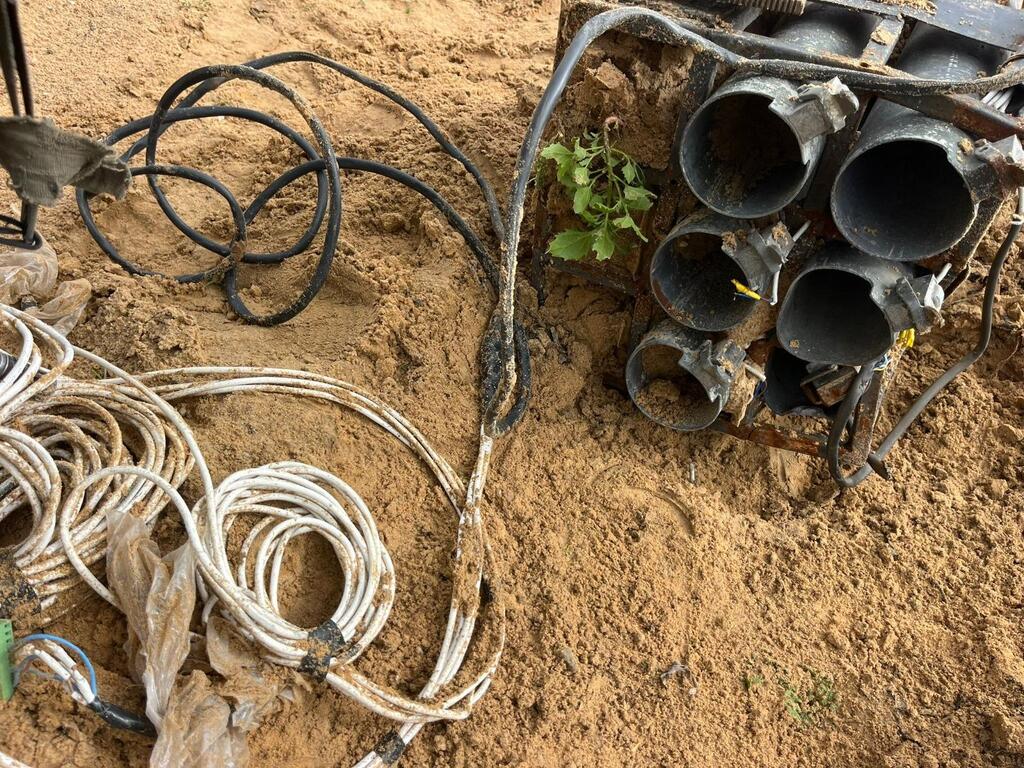
Rocket launchers discovered in southern Gaza. Israeli officials say not all remaining launch sites are known to the IDF
(Photo: IDF)
Recruitment also remains relatively easy. Israeli officials attribute this partly to years of indoctrination among young Gazans and partly to Hamas’s ability to offer salaries higher than those available through most other employment opportunities in the territory.
The organization also retains members of its elite Nukhba force, which played a central role in the October 7 attack.
Nevertheless, cabinet ministers say Hamas’s current fighters are generally less skilled and less thoroughly trained than their predecessors, while the weapons available to them are often of lower quality.
Much of their training is now theoretical because conducting practical exercises in open areas would expose them to Israeli strikes.
Hamas’s command-and-control capabilities have suffered particularly severe damage. According to senior Israeli officials, some key positions have changed hands six or seven times since October 7, with each replacement generally possessing less experience and training than the person who preceded him.
Targeted Israeli strikes against Hamas commanders and fighters have continued during the ceasefire, further disrupting the organization’s leadership structure.
Its rocket arsenal has also been severely degraded. Israeli assessments indicate that hundreds of rockets remain in Gaza, although many are not capable of reaching distant targets.
Officials believe Hamas has almost no ability to rebuild this capability and that its capacity to cause significant damage inside Israel through rocket fire is now extremely limited, if it exists at all.
There are, however, gaps in Israeli intelligence. The IDF has not identified every rocket-launching shaft or position remaining in the territory.
Another concern involves areas of Gaza where Israeli ground forces have not operated extensively. These include the humanitarian zone in Al-Mawasi, the central Gaza refugee camps of Al-Bureij, Al-Maghazi and Nuseirat, and parts of Gaza City.
Israeli officials believe Hamas retains weapons depots, manufacturing workshops and underground tunnels in those areas. The IDF also assesses that the organization has restored a substantial portion of its tunnel network in territory outside Israeli control.
Targeting these facilities presents additional difficulties because they are situated in densely populated areas where military operations could result in extensive civilian casualties.
In the West Bank, Hamas retains the capability to attempt terrorist attacks, although Israeli officials assess that the security situation is more tightly controlled because of intensive IDF and Shin Bet operations and continued security coordination with the Palestinian Authority.
Nevertheless, attempts to organize attacks cannot be ruled out.
The organization has also threatened to operate abroad, partly because carrying out attacks inside Gaza has become more difficult.
Israeli officials believe that, with no Israeli hostages remaining in Gaza, Hamas has lost a major bargaining chip. This may help explain the organization’s renewed references to abducting soldiers.
According to the Israeli assessment, any Hamas attack, whether inside Israel or overseas, would also provide Israel with considerably greater freedom to launch military operations against the organization.
Beyond its military capabilities, Hamas’s financial position is another important factor in assessing whether it can sustain a renewed confrontation.
Israeli security officials believe the organization’s finances have improved in recent months through money transferred from outside Gaza and its control over humanitarian aid entering the territory.
Security sources identify Iran and Turkey as Hamas’s principal sources of funding. According to those officials, much of the money arrives through digital currencies, which Hamas subsequently converts into cash to pay members of its military wing and civilian administrative structures.
Hamas also remains the dominant governing force in Gaza, according to Israeli assessments, with no significant local rival currently capable of challenging its authority.
That assessment persists despite the presence of armed clans and militias supported by Israel as potential alternatives to Hamas rule.
Israeli officials believe those groups have lost much of their influence as larger quantities of aid have entered areas controlled by Hamas, reinforcing doubts about whether a viable alternative government can be established through local Palestinian factions.
Meanwhile, meaningful reconstruction of Gaza has yet to begin because of insufficient funding. Neither the proposed technocratic administrative committee nor the international stabilization force is operating inside the territory.
As winter approaches, Israel is preparing to gradually restore coordination for commercial goods entering Gaza, following reports from Palestinian merchants that Hamas has canceled substantial payment demands previously imposed on traders.
The development prompted requests from merchants to resume the import coordination process, but Israeli officials remain concerned that Hamas could continue exploiting commercial activity to generate revenue and preserve its grip on the territory.
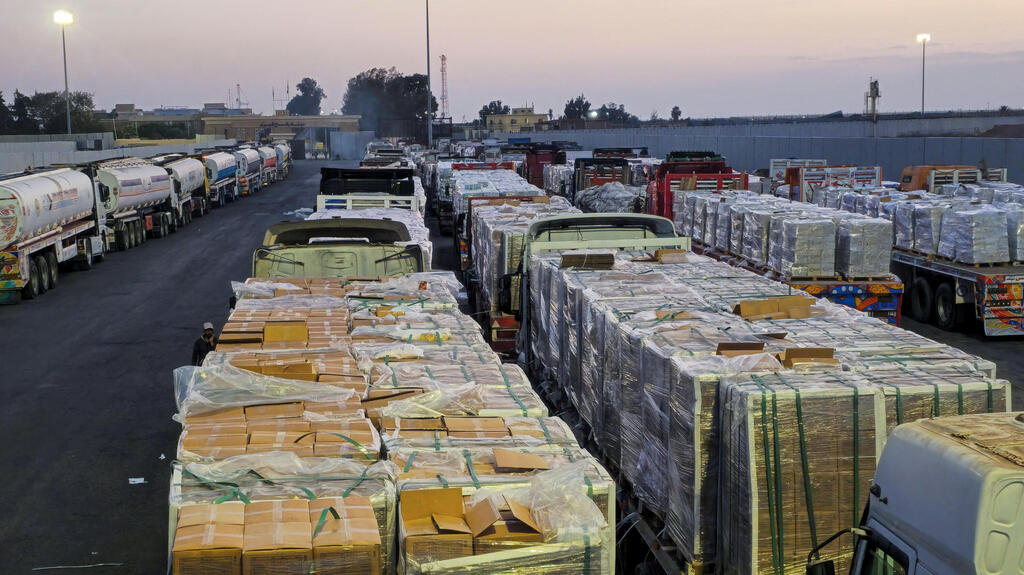
Humanitarian aid trucks waiting to enter Gaza at the Rafah crossing with Egypt
(Photo: Reuters/Stringer)
According to Israel’s Coordinator of Government Activities in the Territories (COGAT), merchants reported that Hamas had withdrawn demands for approximately 10,000 shekels per truck entering Gaza, alongside requirements that goods be sold for cash and that the organization receive 30% of each truck’s cargo value.
At a rate of approximately 600 trucks entering Gaza each day, a charge of 10,000 shekels per truck would theoretically generate 180 million shekels a month. That calculation illustrates the potential value of the mechanism rather than establishing how much Hamas actually collected.
COGAT has stressed that the merchants’ reports do not independently confirm that Hamas has stopped collecting taxes or demanding payments.
The Israeli authority therefore intends to restore coordination gradually, giving priority to essential supplies ahead of winter while increasing oversight of the traders involved.
Under the arrangements, merchants will be required to make and receive payments exclusively through documented bank transfers. Any trader found to have transferred money to Hamas will lose authorization to operate under the import mechanism.
COGAT says the purpose is to prevent the organization from using commercial imports to strengthen its military and economic capabilities.
The financial stakes are substantial. Previous ynet reporting, based on Israeli security assessments, estimated that approximately 30,000 Hamas personnel across a range of military and administrative roles receive salaries averaging 3,000 shekels a month, creating an estimated monthly payroll of 90 million shekels.
Israeli officials believe Hamas imposed substantial taxes on Gaza merchants, including those receiving goods from outside the territory, partly to finance these payments and prevent the organization from disintegrating.
The question now is whether the reported cancellation of the organization’s tax demands is genuine or whether Hamas has simply changed how it collects money from commercial activity.
The dispute over truck payments and cash transactions reflects a broader Israeli concern that Hamas can continue operating extensive financial and administrative networks even as Israel seeks to weaken its military and political control over Gaza.
As winter approaches, Israeli authorities face a dual challenge: allowing essential supplies to reach Gaza’s civilian population while preventing Hamas from using the same commercial channels to generate revenue and rebuild its capabilities.
COGAT has emphasized that restoring coordination does not constitute confirmation that Hamas has stopped collecting payments. Officials say the tighter banking requirements and transaction monitoring are intended to reduce the possibility of the organization benefiting financially from incoming goods.
Another component of the Gaza reconstruction effort is also stalled. A company expected to begin clearing areas as part of a pilot project in Rafah has so far completed only a survey and mapping of the territory, with no further progress reported.
The unresolved question is how Israel can ensure that goods and resources entering Gaza reach their intended civilian recipients rather than reinforcing Hamas’s control over the territory.
For Israeli security officials, that economic challenge is inseparable from the military threat. Their assessment is that Hamas has lost much of its conventional strength but retains substantial manpower, underground infrastructure, financial resources and the ability to organize smaller attacks.
The central concern is therefore not that Hamas can reproduce the October 7 massacre on the same scale. Israeli officials believe it cannot. It is that the organization, convinced the diplomatic process is approaching failure, may attempt to use the capabilities it still possesses before Israel moves to dismantle them.