
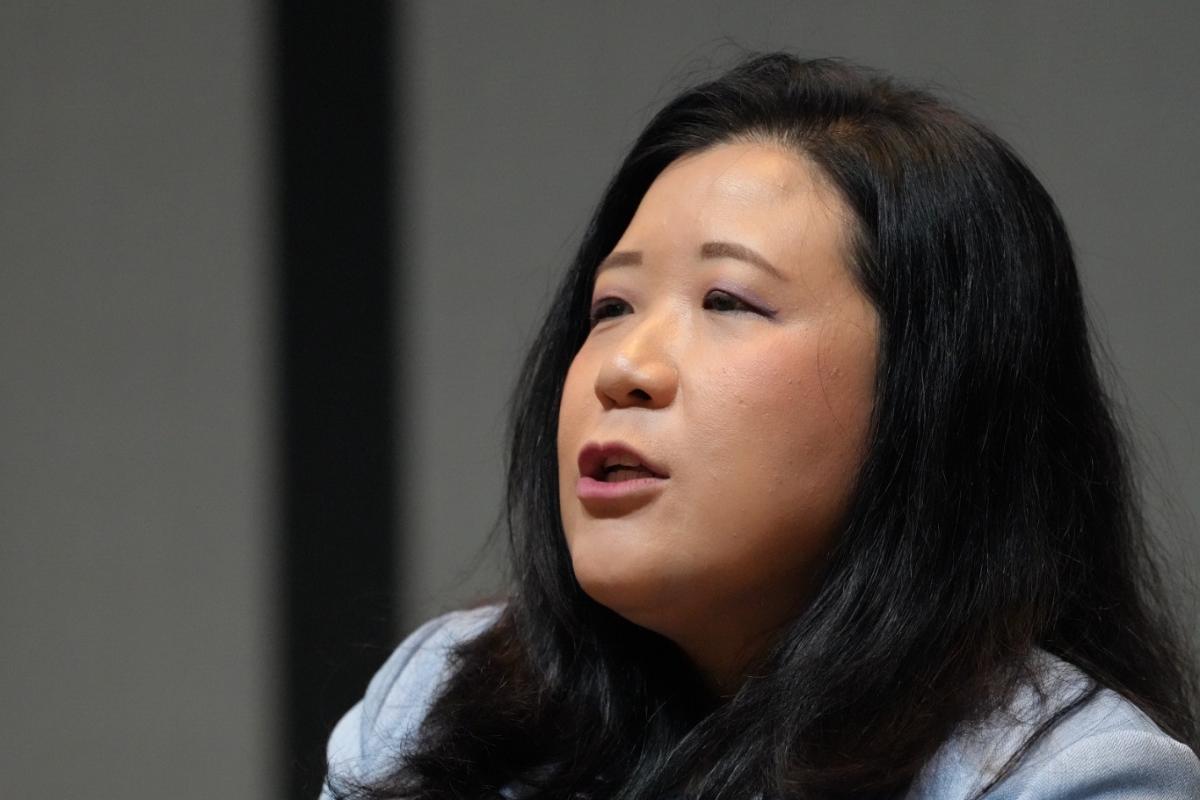
At the Hubbis Investment Forum Singapore 2026, a panel titled Inside the Engine Room examined how leading institutions are investing in their platforms to deliver better advice at scale. The discussion, chaired by Brett Kennedy, Managing Director for Investments at Hubbis, brought together investment leaders from across private banking and independent wealth management. Wei Mei Tan, Managing Director and Global and Asia Head of Advisory at HSBC Bank, described how the firm is approaching the hybrid advisory model across its private bank and retail bank, what a recent client survey revealed about attitudes towards AI, and how the advisory function may evolve as agentic AI capabilities mature.
Key Takeaways
HSBC has been developing a fee-for-advice model for a number of years, and the current focus is on how the balance between human expertise and technology should differ across client segments, according to Tan.
A recent HSBC survey found that only 12 per cent of respondents cited AI as the most influential factor in their last major investment decision, while professional advisers remained more influential, supporting Tan’s argument that human judgement continues to matter.
The scale to offer customised solutions differs significantly between the private bank and the retail bank, and Tan said this drives further innovation in the retail segment while preserving the importance of human expertise and judgement in private banking.
AI is already being used across the advisory lifecycle, from meeting preparation and research through to summarising conversations and generating portfolio reviews, according to Tan.
A Hybrid Model Across Segments
Tan framed HSBC’s approach around a question that she said the firm has been working on for several years: what the right hybrid advisory model looks like, and how it should vary depending on the client. The two components, as she described them, are human expertise on one side and technology or platform capability on the other. “That mix makes it exciting what’s going to evolve and what will set us apart from competitors, and we do need to get it right for our clients,” she said.
In the private bank, Tan said the expectation for human expertise has historically been higher, and clients continue to value that relationship-led approach. She pointed to a recent survey conducted by HSBC in which most respondents indicated a clear preference for human judgment in investment decisions. Only around 12 per cent of respondents said they would rely on AI almost fully when it comes to making investment decisions. “I think we can tell clients still want reassurance and professional judgement,” she said.
At the same time, Tan acknowledged that technology will play a key role in scaling hyper-customised advisory services in the private bank, while the human element remains central. For the retail bank, Tan said there would be more scenarios for identifying and developing use cases to continually improve service quality and deliver personalised investment experience for more retail customers.
The distinction Tan drew was not between firms that adopt technology and those that do not, but between firms that calibrate the technology deployment approach for different stages of the customer journey. “Getting this strategy right would be that differentiating factor as we move forward,” she said.
Discretionary Mandates and Client Preferences
When the discussion turned to the growth of discretionary portfolio management, Tan offered a view shaped by the diversity of HSBC’s client base. She said discretionary mandates serve two purposes for private banking clients: building a core portfolio around stability and long-term objectives, and providing a structured framework for wealth preservation.
However, she noted that many private banking clients still prefer to retain control of their portfolios, and that this preference has not changed significantly. Tan said first-generation clients focused on legacy and preservation may be more inclined to use discretionary mandates. But for the next generation, Tan said the dynamic is different. “The next gen right now, who are a lot more technologically savvy, they actually prefer to manage their own investments and also utilise digital technology, especially in terms of platform access, to be able to put their ideas into fruition.”
Overall, Tan said HSBC anticipates continued growth in mandates broadly, whether discretionary or advisory, with the general direction being a move away from purely transactional brokerage models.
AI Across the Advisory Lifecycle
Tan described AI as a significant development for the advisory function and said the immediate objective is to increase relationship manager productivity. On the question of trust, she argued that qualified advisers remain responsible for validating the output, applying context and judgement based on HSBC’s responsible AI principle. “Trust is our foundation. We use AI to come up with proposals, so our advisers can drive deeper conversations and recommendations with clients,” she said.
She then walked through specific use cases that HSBC is already deploying or developing across the advisory lifecycle.
In the pre-meeting stage, Tan said advisers are using AI tools to conduct research, generate portfolio summaries and obtain investment ideas, including relevant data such as target prices. During the meeting itself, AI is being used to record conversations and identify potential action points so the adviser can focus on understanding the client’s goals and guiding on decisions than administration. After the meeting, AI supports the generation of proposals, portfolio reviews and follow-up documentation. “It takes you through that end-to-end journey in which you can fully focus on providing customized solutions for the client,” she said, adding that she was speaking specifically about the investment advisory component rather than other areas such as KYC, where separate use cases also exist.