
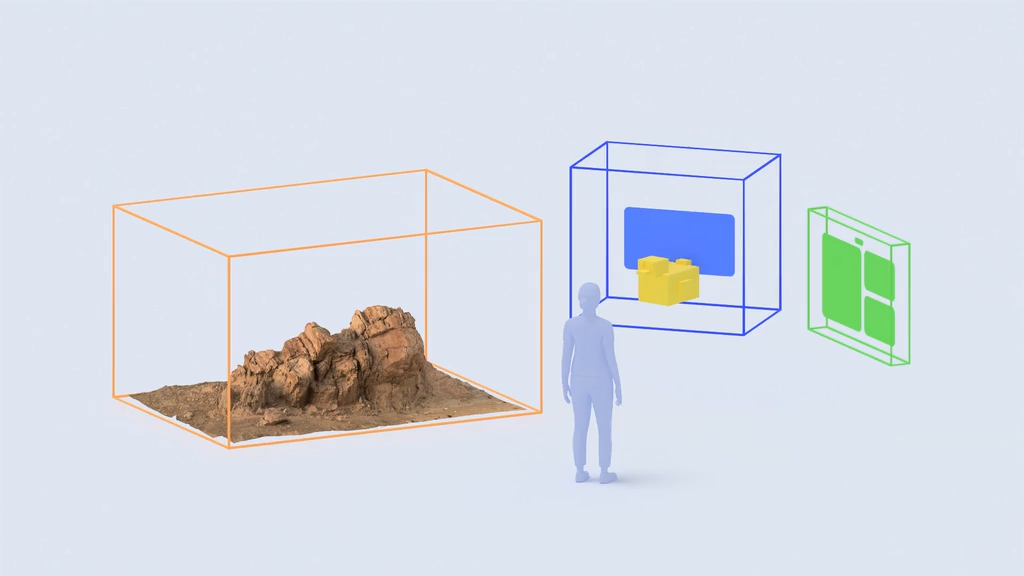
The newly released OpenXR Spatial Container extensions standardize system-managed spaces in which applications can display volumetric 3D content, similar to how traditional systems place 2D content within windows on a desktop.
OpenXR is the open standard API for AR/VR/MR app development and runtimes. It’s managed by Khronos, the same non-profit industry consortium that manages OpenGL, Vulkan, and WebGL.
The ideal of OpenXR is that developers can build apps that run on any headset, without needing to use vendor-specific core APIs for different hardware. Almost every headset, engine, and runtime supports OpenXR today, except for Apple Vision Pro and PlayStation VR2 on PS5.
Spatial Containers
Spatial Containers extend OpenXR beyond fully immersive apps and allow developers to build apps that can move between multitasking and full-space experiences. Apps can have multiple Spatial Containers, each capable of switching between:
A bounded display mode, suitable for simultaneous multitasking across multiple apps.A full-screen immersive display mode.
A Spatial Container’s position is controlled by the system. This allows you to choose its preferred location or enables the system to have a Spatial Container that follows you during movement.
The initial Spatial Container extensions that have been ratified and published in the OpenXR Registry are as follows:
The Khronos OpenXR Working Group says that it is also actively building extensions to enable apps to leverage a system-provided renderer that is optimized for the particular hardware that an app is running on, from high-performance headsets to lower-power devices.
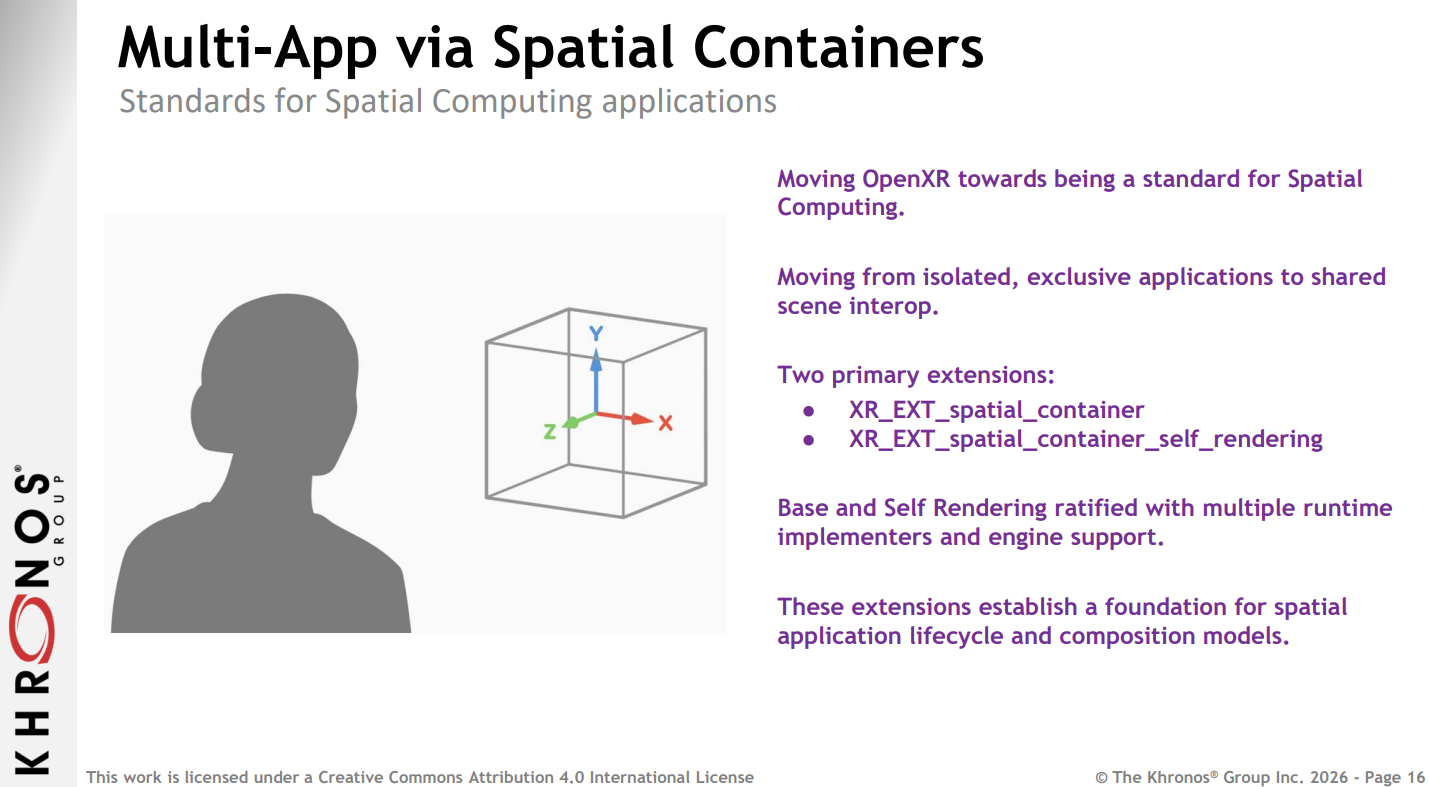 OpenXR Spatial Containers, as shown at SIGGRAPH 2026.
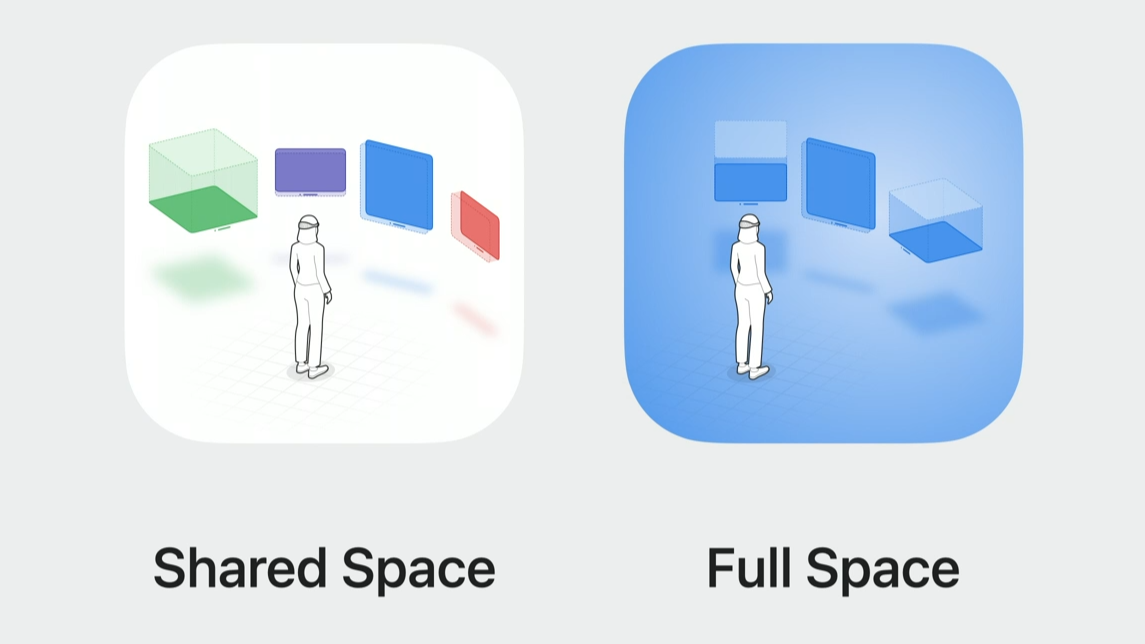
In essence, Spatial Containers allow for apps broadly similar to those enabled by the core concepts of visionOS on Apple Vision Pro, where the “Shared Space” architecture and RealityKit framework allow for both windowed and volumetric 3D apps to run alongside each other in a system-managed environment and transition into “Full Space” immersive experiences.
Notably, Pico OS 6 on the upcoming Pico Space Pro is also built around this concept, using a new system-level compositor with a unified rendering architecture called the Pico Spatial Engine to allow both 2D and 3D apps to run alongside each other, with either a virtual environment or passthrough as the background.
Pico’s Next Headset Has 4000 PPI Micro-OLEDs, Powerful New Chip & Next-Gen OS
ByteDance’s Pico announced the key display and compute specs of its next headset, coming later this year, and detailed the revamped XR operating system it will run.
This is in stark contrast to the current state of Google’s Android XR and Meta’s Horizon OS, which allow for 2D app multitasking but only support running a single 3D app at a time.
That could change soon, however, as Google XR platform and SDK lead Jared Finder stated in Khronos’s official announcement for the extensions that the company is “excited to bring Spatial Container support to Android XR.”
While Meta did not explicitly commit to supporting the extensions in its statement, they interestingly present an opportunity for the company to ship a revised version of the effectively cancelled “Augments” app category announced for Quest 3 at Meta Connect 2023.
Quest 3 Augments Are Persistent Digital Objects In Your Space
Meta will introduce a series of spatially-aware digital objects to your living space next year on Quest 3.
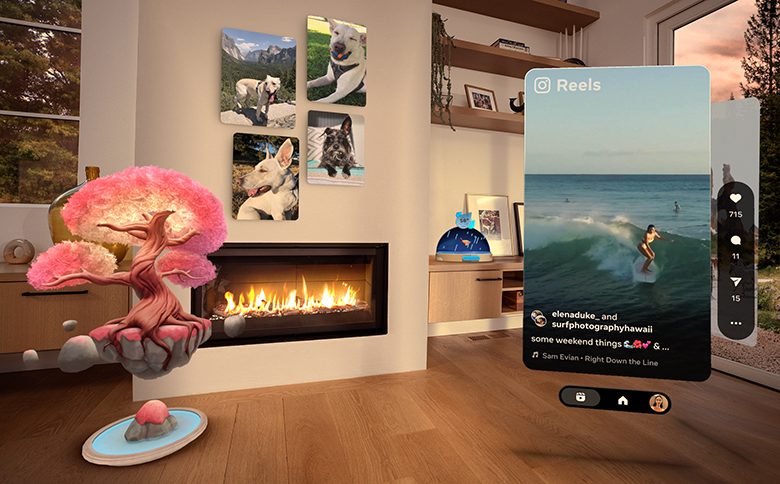
Augments would have been system-managed 3D apps created in Meta Spark Studio, a now-defunct Windows and macOS app for making smartphone AR filters and experiences for the camera in Instagram, Facebook, and Messenger. Spark Studio supported importing and animating 3D assets, and implementing advanced functionality with JavaScript.
In June 2024, Meta CTO Andrew Bosworth revealed that the Augments feature was being rebuilt from scratch as the original approach “wasn’t good enough,” and then in August 2025 he reiterated similar points, adding that the company was in the process of rebuilding the system from the ground up.
Given that recent updates to Horizon OS and developer tooling have centered on overhauling spatial window management and improving spatial apps, it’s possible the company will leverage the Spatial Container extensions to deliver on the original vision of Augments, but that remains to be seen.
Meta Expands SDKs To Boost Spatial Apps On Quest & VR Glasses, Including NBA, Disney+
Meta announced several new SDKs and features to enhance spatial apps on Quest and Meta VR Glasses, alongside major spatial updates for the NBA and Disney+ apps.
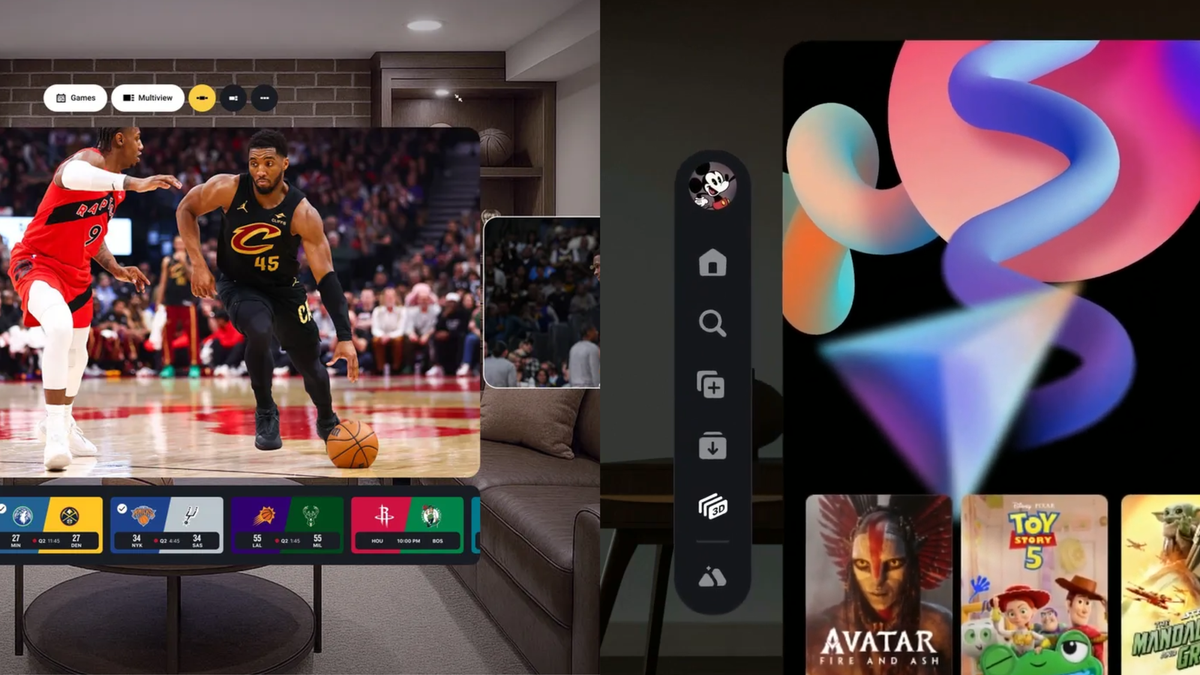
The extension specs and sample code for OpenXR Spatial Containers are out now, and the Khronos OpenXR Working Group says it expects implementations to start rolling out across the OpenXR ecosystem this year.