
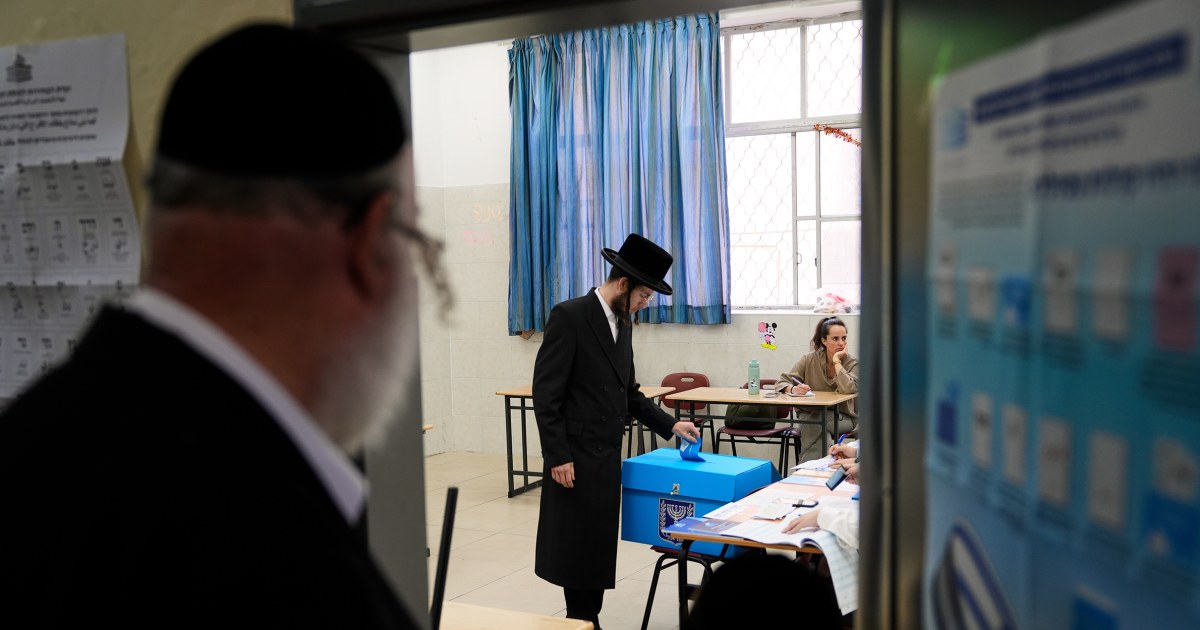
For Arab voters, today’s election is especially charged, coming after years in which the war in Gaza, soaring violence in the West Bank and tightening restrictions have been front of mind.
“This is a critical turning point,” said interior designer Fadi Najjar, 62, a voter in the northern city of Haifa, who is hoping for an end to “a government of displacement, oppression, violence, and criminality.”
Palestinian citizens of Israel make up a fifth of the country’s population. A high voter turnout among them could be a key factor in today’s election and the horse-trading that follows, though both Netanyahu and Eisenkot have ruled out governing with Arab-led parties that typically draw strong support from Palestinian Israelis.

Fadi Najjar. NBC News
Najjar said he voted for the Joint List, an Arab-led coalition, saying he did not see any other viable options.
“Every seat occupied by an Arab representative meant one less seat available for the far right,” he said. “We hope to go to sleep tonight and wake up to good news — a government that respects all its citizens, and something truly new.”
Michel Shufani, 65, also in Haifa, said the election is “fateful” for Israel’s Arab population, calling the current government “a racist administration that seeks to undermine the rights of Arabs.”
He said he voted for left-wing Israeli party The Democrats, not believing that the Arab parties could bring about change and describing Eisenkot’s anti-Netanyahu alliance as “the lesser of two evils.”
Fadwa Sarouji, 55, did not say who she voted for, but said: “We all need a change that fosters joint action, promotes unity among people, restores mutual respect for others — including those who are different from us.”
While Arab-Israeli citizens can vote in the election, the majority of Palestinians in the occupied West Bank and Gaza do not hold Israeli citizenship.