
“As the RBNZ [Reserve Bank of New Zealand] will not be presenting new forecasts we will not see an updated OCR forecast track,” Eckhold said.
“Rather we expect the RBNZ will aim to leave their options open at the next meeting in December.”
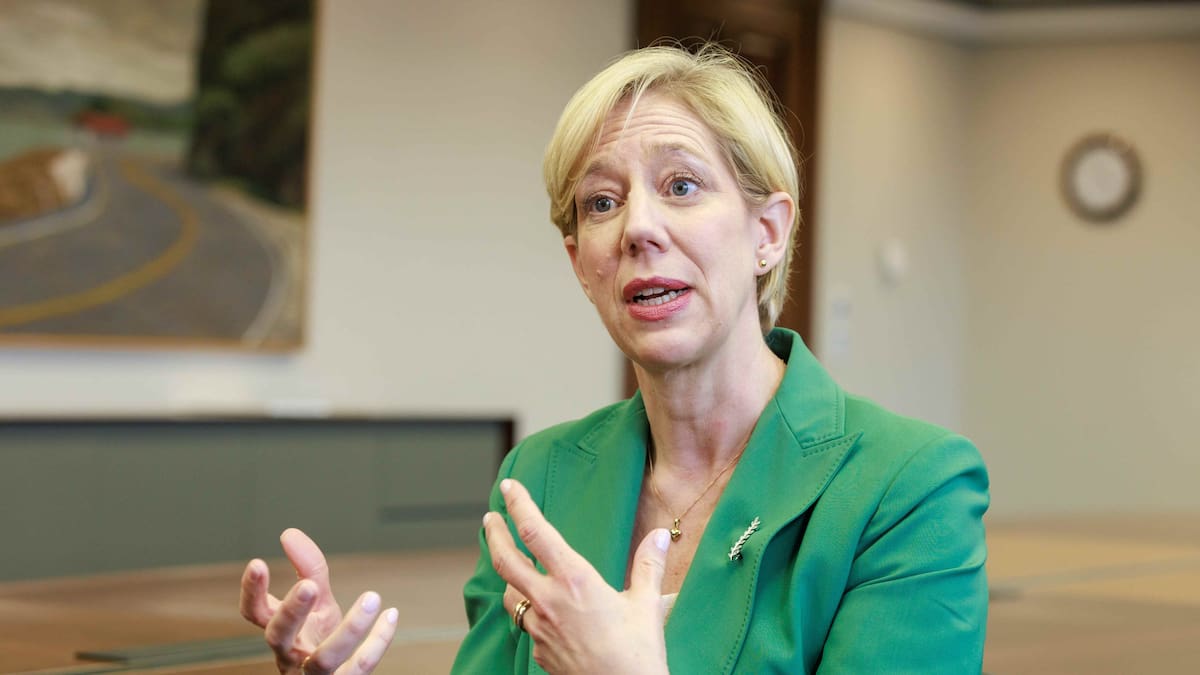
RBNZ Governor Anna Breman and the Monetary Policy Committee are expected to announce another Official Cash Rate rise this week. Photo / NZME
ANZ chief economist Sharon Zollner was expecting “a relatively short statement that sounds open-minded about what comes next”.
“We have pencilled in a pause in December at the slightly more comfortable perch of ‘neutral’, but we are also very open-minded.
“Our base assumption is that it will be a consensus decision to hike, but we wouldn’t read a great deal into a split vote,” she said.
“Times are very uncertain, there are risks on both sides, and different views are entirely valid. We should state upfront here that we don’t think that the election timing is a consideration for the committee.”
BNZ head of research Stephen Toplis is also picking a hike and expects the RBNZ to signal more to come.
“When the world changes, you must change with it,” he said.
Last week Stats NZ released third-quarter inflation figures, showing the headline rate dipped but core inflation rose.
“The real point of interest is [fourth-quarter] inflation, not due until January next year, which we are now forecasting to be 4.7% compared with an RBNZ assumption of 3.9%,” Toplis said.
“Sure, the miss is largely via an oil price spike that should be looked through and one which will ultimately put further downward pressure on real disposable incomes (lowering medium term inflation) but the medium-term upward pressure on the general level of prices cannot be overlooked.”
With this in mind, Toplis noted that at least one member of the Monetary Policy Committee, Prasanna Gai, had already published research highlighting “the enduring risks of supply driven price shocks if not met with a central bank response”.
ASB senior economist Mark Smith also expected the hike would come with warnings of more to follow.
“Even with 75 basis points of hikes delivered since July, we expect the RBNZ to acknowledge that they have more work to do and to maintain a conditional tightening bias,” he said.
“We are concerned that inflation over 2027 could prove slow to recede despite favourable base effects.”
The low NZ dollar would not be helpful for containing NZD-denominated costs and imported inflation, he said.
“The uplift in NZ fuel prices is looking increasingly persistent, with much greater risk that this follows through into wider wage and price setting.”
ASB now expects consecutive 25-basis-point hikes in October, December and February and a 3.5% OCR peak.
Meanwhile, at Kiwibank, where economists have been the least hawkish this year, Jarrod Kerr expects a hike even though he “would prefer to allow the economy to recover, allow the economy to grow, and allow businesses to adapt”.
Kerr argues the RBNZ should get the hike over with and then signal a long pause, as this would offer “some certainty amidst global uncertainty”.
Liam Dann is business editor-at-large for theNew Zealand Herald. He is a senior writer and columnist, and also presents and produces videos and podcasts. He joined the Herald in 2003.
Stay ahead with the latest market moves, corporate updates, and economic insights by subscribing to our Business newsletter – your essential weekly round-up of all the business news you need.