
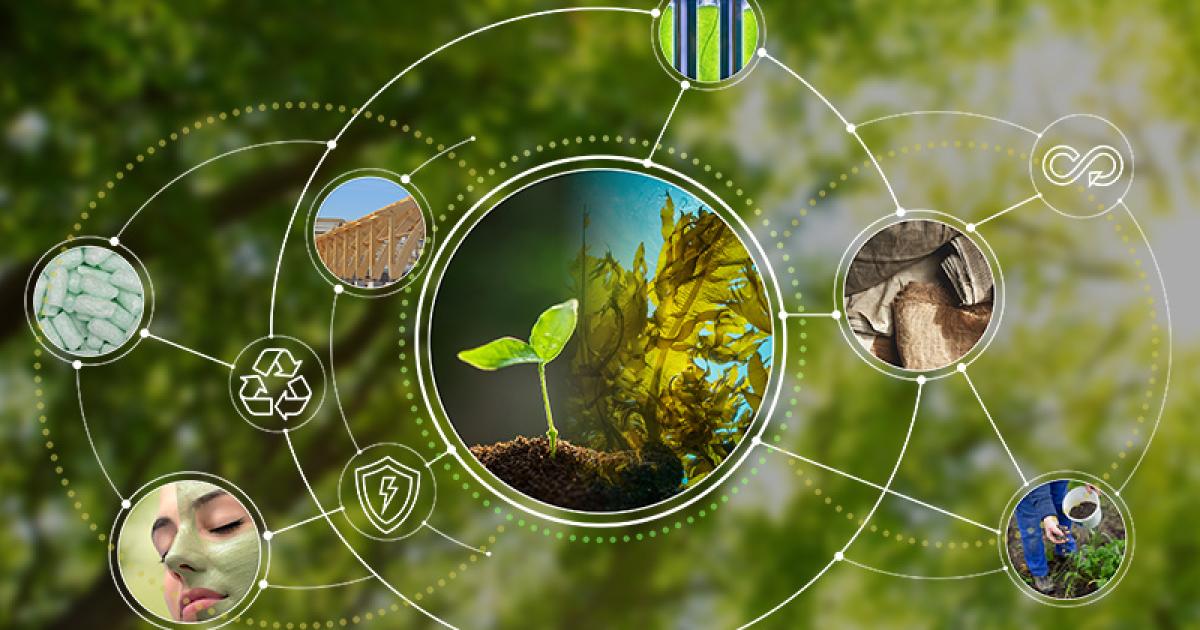
European Commissioner Jessika Roswall launched the Bio-based Europe Alliance (BEA) at the Global Bioeconomy Summit in Dublin on Wednesday (21 Oct).
By connecting actors of the bio-based value chain, the Alliance aims to provide clearer market signals, reduce investment uncertainty and unlock Europe’s bioeconomy potential.
The Alliance is a voluntary initiative that brings together European buyers of bio-based materials and products, primary producers, suppliers, and national and regional authorities committed to accelerating the uptake of European bio-based solutions.
It addresses a key challenge identified in the EU’s Bioeconomy Strategy: many bio-based companies struggle to move from research and demonstration to commercial deployment because of low product visibility and weak market demand.
“Bioeconomy represents a strategic opportunity that Europe has the talent and innovative capacity to seize. The Bio-based Europe Alliance will turn this potential into real market impact by bringing together buyers and suppliers, and giving visibility to demand.
This will help innovative bio-based companies scale up. Reducing our dependence on fossil-based materials will make European economy more competitive, circular and resilient.”
Jessika Roswall, European Commissioner for Environment, Water Resilience and a Competitive Circular Economy
The Alliance provides a collaborative framework for businesses and public authorities to develop lead markets for bio-based materials and technologies and to generate demand-pull signals across bio-based value chains.
Greater demand predictability will help producers and technology developers secure investment for new facilities, scale up innovative processes and achieve economies of scale, enabling more competitive products to reach the market. The Alliance also provides an opportunity to help shape emerging European bio-based markets and demonstrate demand for alternatives to fossil-based materials.
The Alliance will complement upcoming EU regulatory measures to support the production and market uptake of bio-based solutions, as well as parallel initiatives to improve access to finance.
Participating organisations will jointly develop its activities and scope. Over 100 stakeholders have already joined the Alliance.
Unlocking finance for market growth
The Global Bioeconomy Summit also hosted the second meeting of the Bioeconomy Investment Deployment Group (BIDG), bringing together public and private financial actors to discuss how to mobilise investment to support Europe’s bioeconomy. The European Investment Bank actively supports the initiative.
Members agreed on a roadmap for the Group’s work over the coming year, building on its role in addressing financing gaps and strengthening the pipeline of investment-ready bio-based projects. Discussions also explored ways to improve cooperation between financial stakeholders and how to facilitate access to finance for innovative bio-based solutions as they move towards commercial scale.
The BIDG will also serve as a strategic platform to discuss investment needs and bioeconomy priorities, including in the context of the next Multiannual Financial Framework (MFF) preparation.
Work will continue among members over the coming year, with the next plenary meeting planned in 2027 to advance the Group’s work.
“Farmers and foresters play a central role in unlocking Europe’s bioeconomy potential. I welcome the launch of the Bio-based Europe Alliance (BEA), a concrete step forward that brings them new market opportunities and diversification of income streams.
By turning this ambition into a long-term partnership and with support from the Common Agricultural Policy, the BEA will create predictable demand for farmers and foresters. This will enable them to keep providing sustainable biomass and invest in innovative bio-based products and solutions.”
Christophe Hansen, Commissioner for Agriculture and Food
Background
The EU’s new Bioeconomy Strategy, presented by the European Commission on 27 November 2025, aims to build a more competitive, sustainable and resilient European economy by replacing fossil-based materials and products with renewable biological resources from land and sea.
It focuses on four priorities: scaling up innovation and investment in biotechnology and biomanufacturing, creating lead markets for bio-based products such as plastics, chemicals, textiles and construction materials, ensuring a sustainable biomass supply through resource efficiency, recycling and the use of agricultural residues and organic waste, and strengthening global competitiveness through international partnerships and trade.
The Global Bioeconomy Summit took place in Dublin on 19-22 October 2026 and brought together policymakers, industry and investors around different themes: innovation and scale-up; bioeconomy solutions for global crises and sustainable development; and the policies, markets and metrics needed to scale solutions.
More information
Bioeconomy Strategy | European Commission
Bio-based Europe Alliance | European Commission