
We have the Israeli election exit polls. What happens next?
We have the Israeli election exit polls. What happens next?
4:18
While the exit polls give an early indication of what may happen next, the real contest begins once the votes are counted and the coalition building process begins. It can take weeks, or even months, for a winner to emerge.
Once the vote count is final, usually within a few days, the president holds a round of consultations in which each elected party recommends their choice for prime minister.
Based on these talks, the president then tasks one candidate with forming the government. This is not necessarily the leader of the largest party, but rather the one who has the best chance at building a viable coalition.
The way things look right now, the incumbent Prime Minister Benjamin Netanyahu is unlikely to be selected because neither the opposition bloc nor the Arab parties will recommend him.
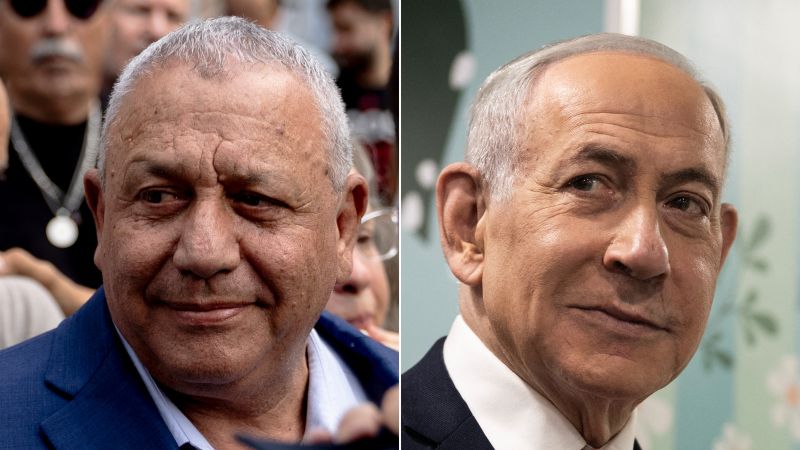
If that is the case, President Isaac Herzog is likely to give the first opportunity to form a government to Gadi Eisenkot.
He would have four to six weeks to negotiate with other parties over cabinet posts, budget priorities and policy, trying to cobble together a majority in the Knesset. If the exit polls turn out to be correct, the two Arab parties will play a key role in this process.
A survey conducted this evening by the Hebrew University’s aChord Center found that a majority of those who voted for the opposition bloc want Eisenkot to form a government with Raam, one of the two Arab parties.
If Eisenkot was to fail – a real possibility given his relative inexperience – the another candidate, most likely Netanyahu, would be given a chance by the president to form a government and the whole bargaining process starts again.
If he was to fail too, the Knesset itself gets a short window to put forward another candidate, and if it cannot – the country goes to new elections.
So winning is not only about votes and seats, it’s about building – and maintaining – a viable coalition.