
He warned that risks for the Official Cash Rate (OCR) over 2027 were “tilted further to the upside”.
“We are concerned that inflation over 2027 could prove slow to recede,” Smith said.
“Higher for longer inflation is a major headache for the RBNZ as it risks pressuring inflation expectations and other nominal anchors higher.”
He also expected consecutive 25bp hikes would be needed in December, February and March to a 3.5% OCR peak.
“Following today’s dovish hold, risks to our OCR outlook over 2027 are more heavily skewed to the upside, given upside inflation risks,” he said.
The Reserve Bank (RBNZ) did note that subdued growth in household spending was limiting the ability of some firms to pass on higher costs to restore profit margins, Smith said.
However, the RBNZ warned that the longer inflation remained high, the greater the risk of higher costs feeding into inflation expectations and price- and wage-setting behaviour, making inflation more persistent, he said.
“Our view is that a 25 basis point hike today would have been the most prudent course,” ANZ chief economist Sharon Zollner said.
“We continue to believe that it will be necessary to lift the OCR to 3.5% to head off risks of inflation becoming persistent, and our base case is that the three hikes will come at the next three meetings, in December, February and March.”
However, Zollner noted that oil shocks were “tricky, inflationary in the near term but bad for growth over the longer term, with no certainty about how the two will balance out”.
Something had “spooked” members of the committee, Infometrics economist Brad Olsen said.
Infometrics economist Brad Olsen. (Image: NZME)
“It’s hard to reconcile some of the bank’s concerns with its prior commentary and expectations of moving towards neutral.”
The committee had noted that if an abrupt weaker global economy materialised, then interest rates might need to go down, Olsen said.
“Although this statement is true, this uncertainty is also why the committee meets regularly and can react as events change. There seems limited direct evidence of an abrupt global downturn in the next six weeks!”
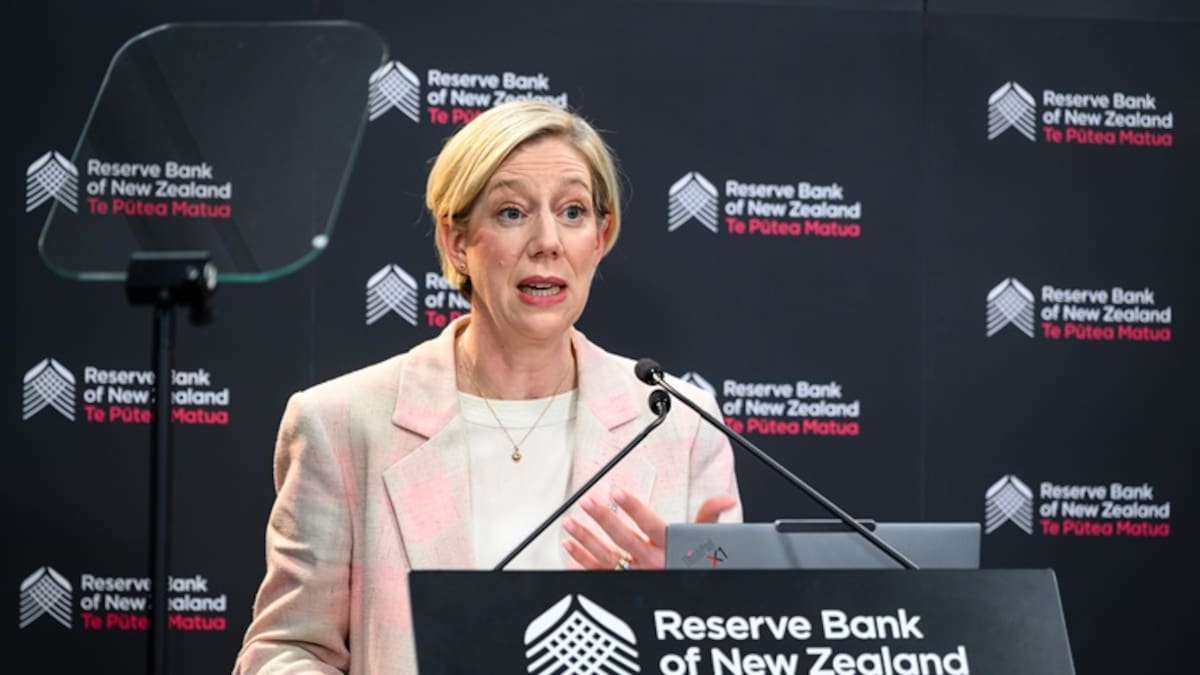
Reserve Bank Governor Anna Breman pushed back on criticism about holding the OCR despite an inflation rate of 3.7% – outside the mandated target range.
We see that the conditions to bring inflation back to target are still favourable,” she said. “So when we look very deeply at this number, 3.7% is far too high, but it was actually lower than we expected.”
Higher fuel prices hadn’t caused the indirect effects on other price categories to the extent expected, she said.
“In addition, inflation expectations have remained well anchored,” she said.
“Wage growth is actually below what we think is consistent with returning inflation to target.”
The two OCR increases delivered this year would also be starting to have an effect, she said.
“All of these conditions were important, but we still are saying that we think it’s likely that we’ll need to do further OCR rises.”
Breman also pushed back on any suggestions that the decision might have anything to do with the timing of the upcoming General Election.
It had been a tough decision, she said.
The Monetary Policy Committee was split 4-3.
“Members differed in how much weight they placed on various risks and the timing of the monetary policy response,” Breman said.
“The committee agreed that tighter monetary policy is likely to be required but remains conditional on the economic outlook.”
The rate hikes were “delayed, not cancelled”, economists at Capital Economics said.
“Overall, we don’t think the RBNZ is meaningfully walking back its tightening bias,” the economists said.
“In fact, all members agreed that “tighter monetary policy is likely to be required”, conditional on the economic outlook. The main point of contention appears to have been with regard to the timing of further tightening.”
Liam Dann is business editor-at-large for the New Zealand Herald. He is a senior writer and columnist, and also presents and produces videos and podcasts. He joined the Herald in 2003.
Stay ahead with the latest market moves, corporate updates, and economic insights by subscribing to our Business newsletter – your essential weekly round-up of all the business news you need.