

Listen to this article
Estimated 4 minutes
The audio version of this article is generated by AI-based technology. Mispronunciations can occur. We are working with our partners to continually review and improve the results.
The City of Summerside is heading into the winter months with no battery capacity to store the energy generated by its solar farm.
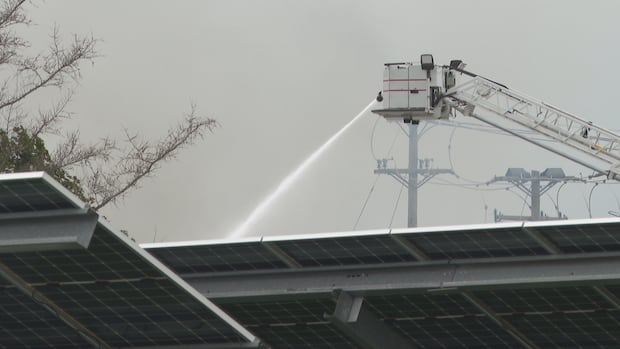
A battery at the Sunbank solar farm caught fire in September and burned for two weeks before it was declared to be out.
While the cause of the fire is still unknown, what is clear is that the city can’t rely on battery power this winter, said Summerside chief administrative officer JP Desrosiers.
“It will certainly put us in a different and sort of challenging position for the winter in comparison to the last couple of winters,” he said.
“It’s … going to take five megawatts of our dispatchable power away for this winter, and likely a couple more after that until things are sorted out.”
WATCH | How will Summerside’s solar farm fire impact power this winter?: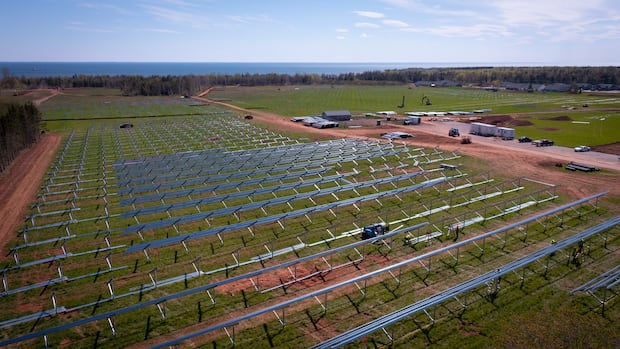
How will Summerside’s solar farm fire impact power this winter?
Earlier this year, a lithium-ion battery at the solar farm in Summerside burned for weeks. The battery was used to store power to help deal with peak demand over the winter months — but now the city can’t store any of that energy. CBC’s Tony Davis has more.
Desrosiers said the province is facing energy challenges that he expects will continue until infrastructure on both sides of the Confederation Bridge improves.
P.E.I.’s power grid has long relied on two submarine cables that connect the Island to the mainland and the electricity purchased from New Brunswick Power.
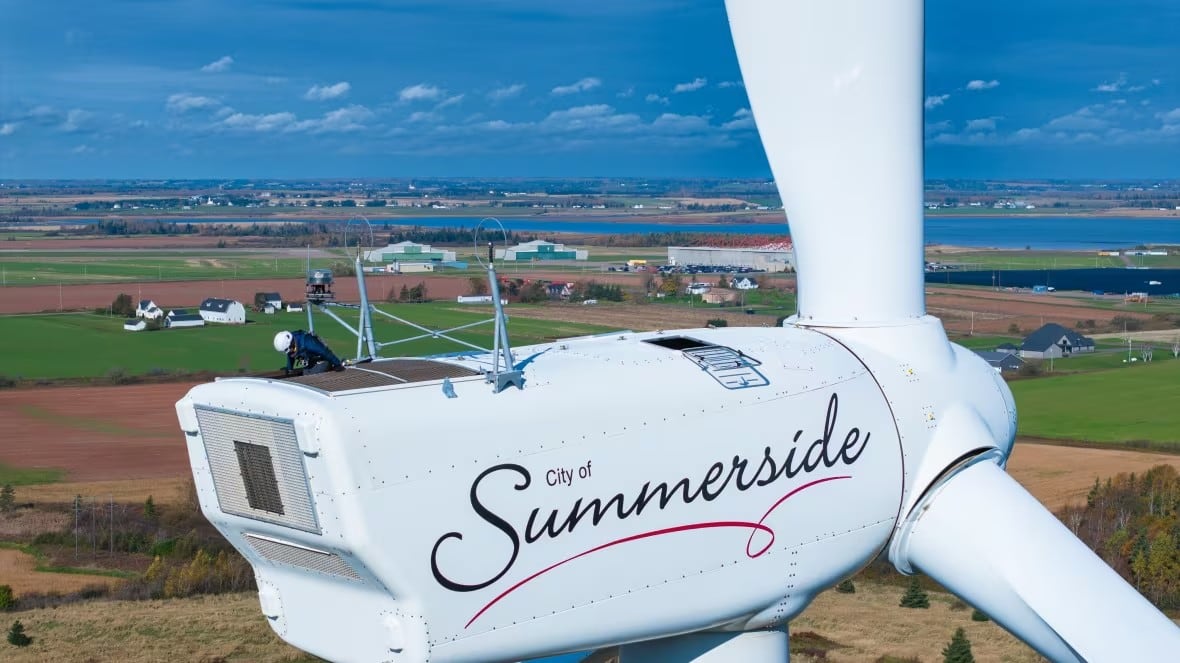
Summerside Electric generates about 60 per cent of its electricity through renewable sources like solar and wind, but it still relies on Maritime Electric’s transmission system for power that the smaller utility buys from New Brunswick.
Residents in Summerside received warnings last winter of possible rolling blackouts due to an equipment failure at Maritime Electric’s Sherbooke substation, which supplies the city with some of its power.
But, Desrosiers said, a new agreement with Maritime Electric should help fill the gap this year.
“It was determined that Maritime Electric was able to provide us with what’s called ‘conditional firm [service],'” he said.
“Our utility team tells me that we’re in a better position than we were this time last year when it comes to firm service, so we’re hopeful.”
Desrosiers said the agreement isn’t a long-term one, so the city hopes to secure its own subsea cable to the mainland in order to become a more independent power utility.
CBC News requested an interview with Maritime Electric on the details of the agreement, but no one was made available.
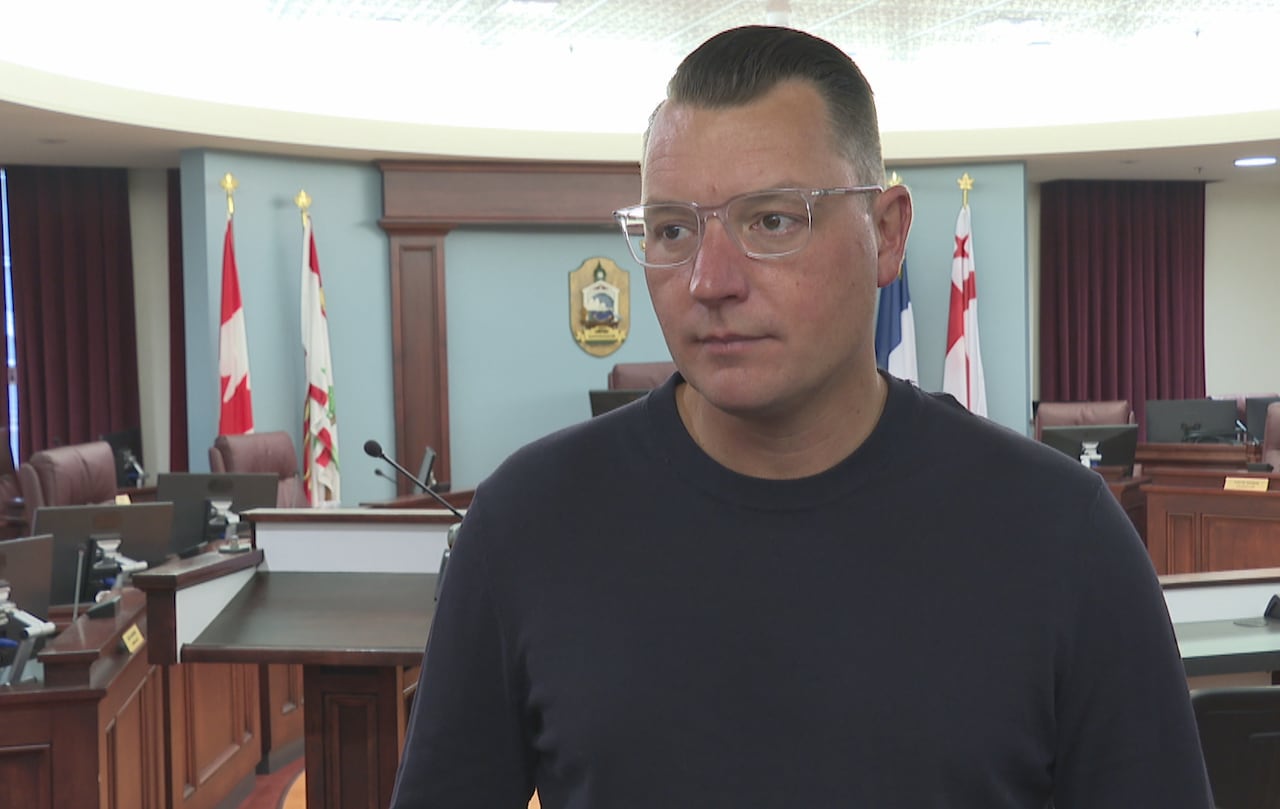
‘From an operations perspective, our teams are gearing up for long days and long nights of running generation to keep the lights on in the city,’ says Desrosiers. (Tony Davis/CBC)
Through the winter, Summerside will also be able to lean on its standby generation facility, which has 15 megawatts of power, Desrosiers said.
“It’s ideal from a capacity perspective, but the purpose of having generators is to never run them.… That hasn’t been the case the last couple of winters, and I don’t anticipate it being much different this winter,” he said.
“From an operations perspective, our teams are gearing up for long days and long nights of running generation to keep the lights on in the city.”
Battery storage ‘totally essential,’ says expert
As for the solar farm, Desrosiers said there’s a “fairly significant” remediation process the city has to work through before next steps can be determined.
But battery technology will continue to play a role in Summerside’s long-term power plan, he said.
“The fire’s unfortunate. Emergencies like that, they do happen,” Desrosiers said.
“Over the last couple of years, our team has really found significant value in having that battery, not only from a cost-savings perspective but also from a … reliance and resiliency perspective.”
Battery storage capacity is ‘essential when the majority of your power is coming from renewables like solar and wind,’ says Jeff Dahn, a professor of physics and atmospheric science at Dalhousie University. (Shane Hennessey/CBC)
Fires like the one at Summerside’s solar farm are “very, very rare and getting rarer over time,” said Jeff Dahn, a professor of physics and atmospheric science at Dalhousie University.
“It’s a technology that’s improving, and safety’s getting better and better,” he said.
For a city like Summerside, Dahn said, continued investment in battery technology is a smart move.
“This is essential when the majority of your power is coming from renewables like solar and wind, because you’ve got to store the energy when the sun is available or the wind is available, and then when it’s not available you get the energy from the battery packs,” he said.
“This is totally essential in Summerside where a vast fraction of the energy is coming from renewables.”