
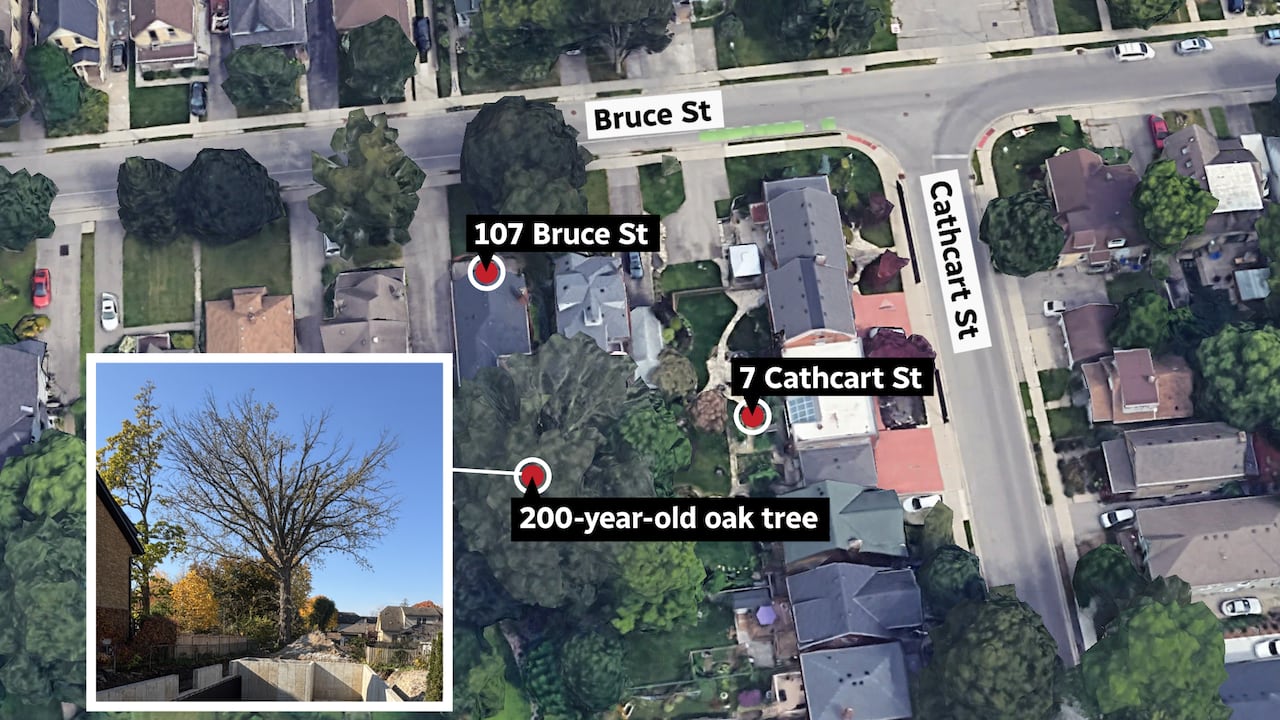
A map showing the corner in Wortley Village where the tree is located. (CBC News)
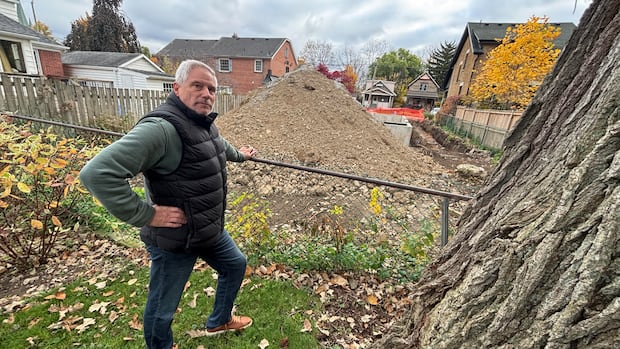
Since he became the owner of 107 Bruce St. five years ago, Rod Henning has done everything he can to protect and preserve the massive 200-year-old bur oak tree in his backyard.
Now, Henning and some of his neighbours in Wortley Village are concerned the tree could be damaged by construction happening on an adjacent property, at 7 Cathcart St.
The bulk of the tree, which is about six feet in diameter, sits on Henning’s property. A small portion of the trunk is pressing against a chain-link fence shared by the two properties.
“It is a senior tree, it’s not a teenager,” said Henning. “But this is literally the kind of tree that the bylaws were made to protect.”
In that spirit, Henning hired licensed arborists employed by ConservaTree to regularly inspect the tree and, when necessary, trim back its gnarled old limbs. The same company maintained the tree for the house’s previous owner.
The tree is registered in the city’s Tree Canopy Conservation Program which has a goal of delaying, as long as possible, the removal of larger trees in urban areas. The program reimburses property owners a portion of fees they pay to a registered arborist.
“Having a tree like this is a constant cost, but it’s one that I accept because that’s what Wortley Village is about,” said Henning. “I came here for the trees.”
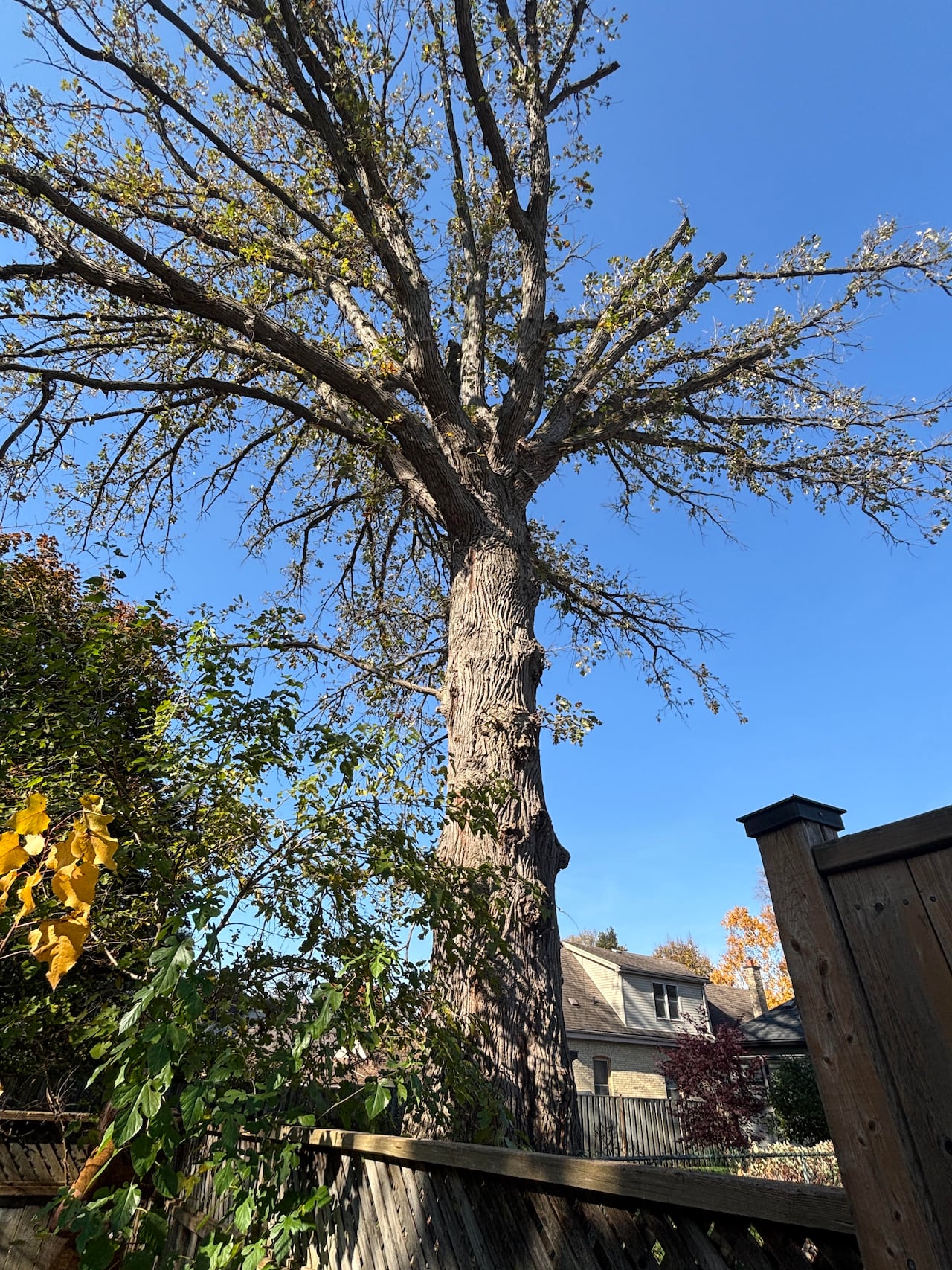
One arborist report says removing the tree is the preferred option. However, the owner of the property where the bulk of the tree is located says it can stay in place with regular care. (Andrew Lupton/CBC News)
Henning first became concerned three years when the neighbour at 7 Cathcart applied for a development application permit to remove and rebuild the house on the property. Those plans include adding a laneway that leads to garage to be built at the back of the property. Henning said he’s not opposed to the new construction, but was concerned about how adding the garage might affect the tree’s roots.
The house rebuild received planning approval by the city.
Foundations for the new house were poured earlier this month. When excavators began to dig at the back of the lot on Oct. 20, Henning became concerned about potential damage to the tree’s roots and called the city.
The city’s tree preservation bylaw has added protections for trees with trunks more than 50 centimetres in diameter. Among those protections are rules against damaging the tree’s root zone.
Shawna Chambers, the city’s director of climate, forestry and waste services, told CBC News that on Tuesday the city issued an “order to discontinue activities” at 7 Cathcart under the tree preservation bylaw.
“That was associated with excavation close to the root zone,” said Chambers. “The property owner complied and is now not excavating that area anymore.”
Chambers said the city has been in discussion with the property owner about the tree throughout the development application process.
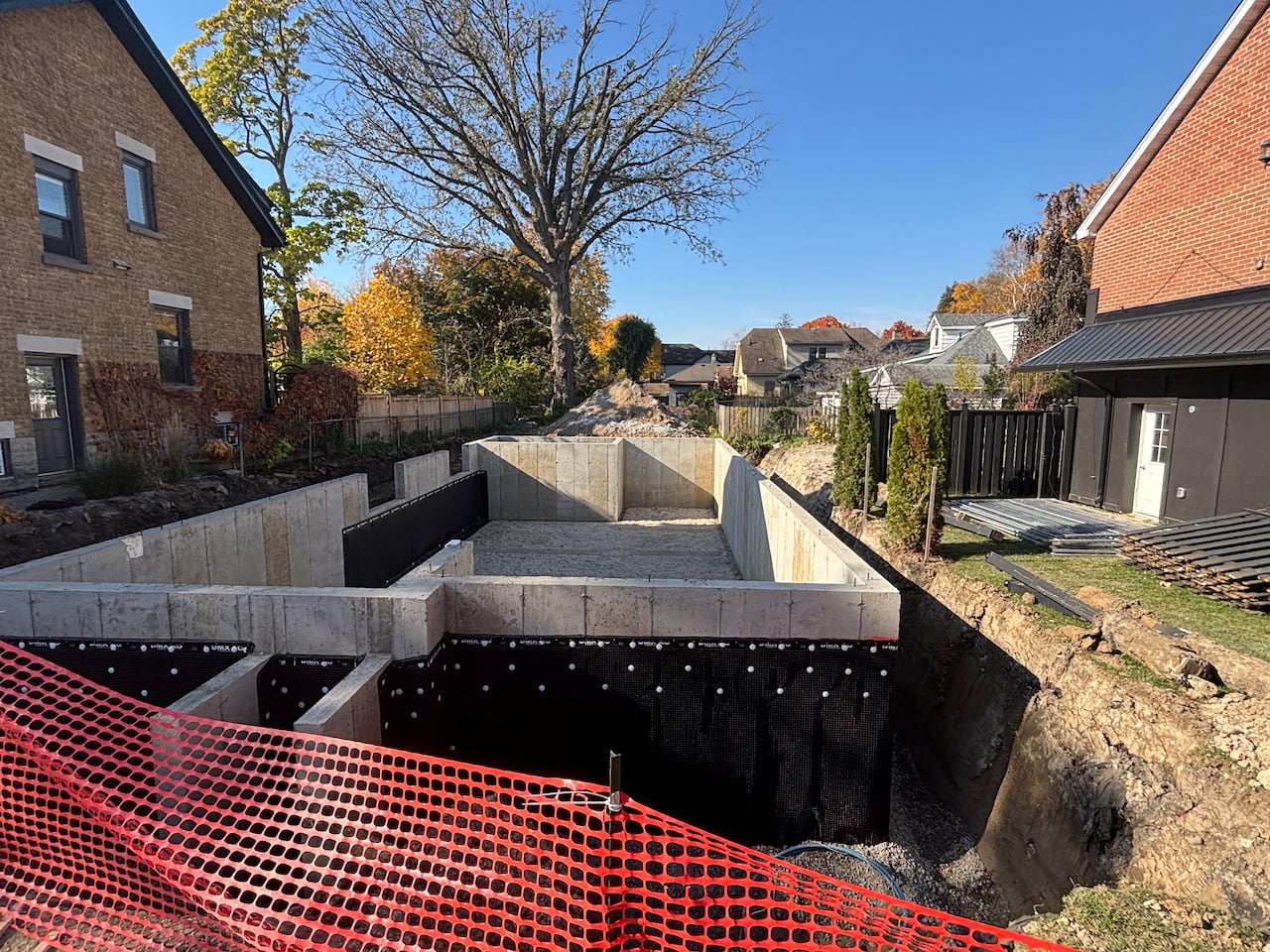
This is the property at 7 Cathcart St. The oak tree in the backyard of 107 Bruce St. can be seen in the background. (Andrew Lupton/CBC News)
The house at 7 Cathcart St. is owned by developer Ravensworth Inc.
Company president Dave Tennant said he’s complying with the city’s orders while considering his options.
Conflicting arborist opinions
He sent CBC News an arborist report his company commissioned from CLC Tree Services. It says the tree is “in major decline and exhibits structural concerns.”
The report says removal of the tree is the preferred option “given the health and structural concerns to eliminate any hazard this tree may pose.”
The report points to what it calls spots of decay on the tree.
However Alex Morrison of Conservatree, the arborist Henning hired, said he believes the tree is “of high quality” and can continue to stand with regular care.
He said older trees can often be saved through a process called “re-trenching” which involves cutting parts of the canopy away to reduce the weight of the limbs and allow the tree remain stable as it ages.
As for the dirt pile, Morrison said it could damage the tree’s roots.
“This needs to be removed as soon as possible,” he told CBC News. “It suffocates the roots and it compacts the soil underneath it. At the end of the day, that could be very damaging for the tree.”
Chambers said the city’s arborists have looked at the pile and “are not recommending its removal at this time.”
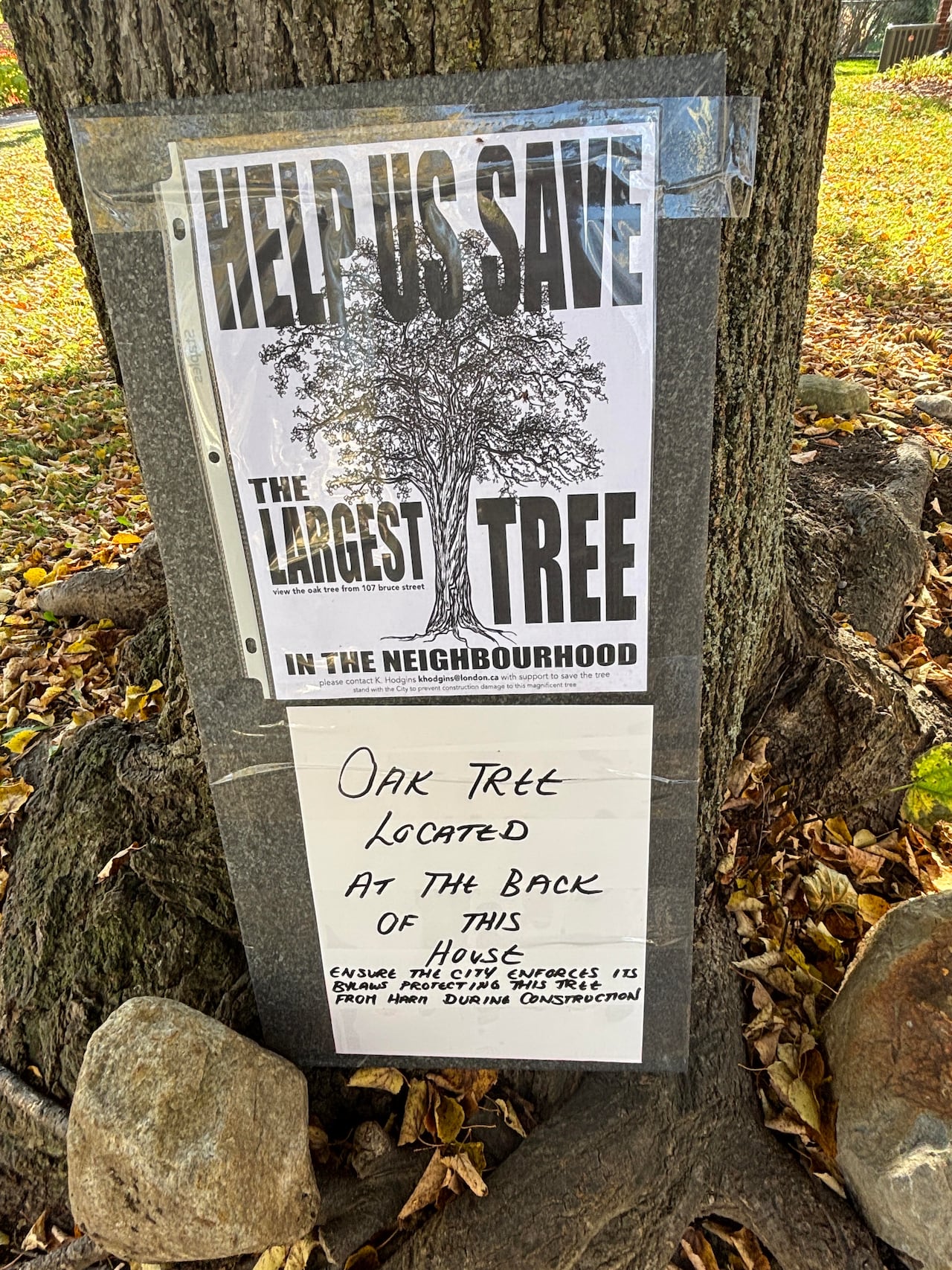
Posters like this have been appearing around Wortley Village informing residents about the threat to the oak tree at 107 Bruce St. (Andrew Lupton/CBC News)
Henning said he understands the city’s position about keeping the dirt pile in place “they’re the experts, not me.”
However, he also considers the timing of the CLC report suspicious, given that it’s dated Oct. 21, the day after the city issued its order to stop working. Ravensworth, through its lawyer McKenzie Lake, also sent Rob Henning a letter on Oct. 21 claiming qualified arborists “including an arborist for the City of London” have inspected the tree and “identified its hazardous condition.”
Chambers said there’s no city report describing the tree as dangerous. Ravensworth’s lawyers letter calls on Henning to take steps to “eliminate the hazard” including “arranging for the removal of the tree by a qualified contractor.”
Tennant said he’s has liability concerns given the trees size and condition, which he said has implications for insurance for both Henning and Ravensworth.
Henning said he’s happy the city is working with the property owner.
“My main issue is I want the city’s bylaw to be followed,” he said.
Henning said he put up the posters around Wortley Village about the tree removal to let the neighbourhood know the tree was under threat.
“This is not a neighbour dispute,” he said. “There’s a bylaw in place to protect the tree and we want the tree protected.”