
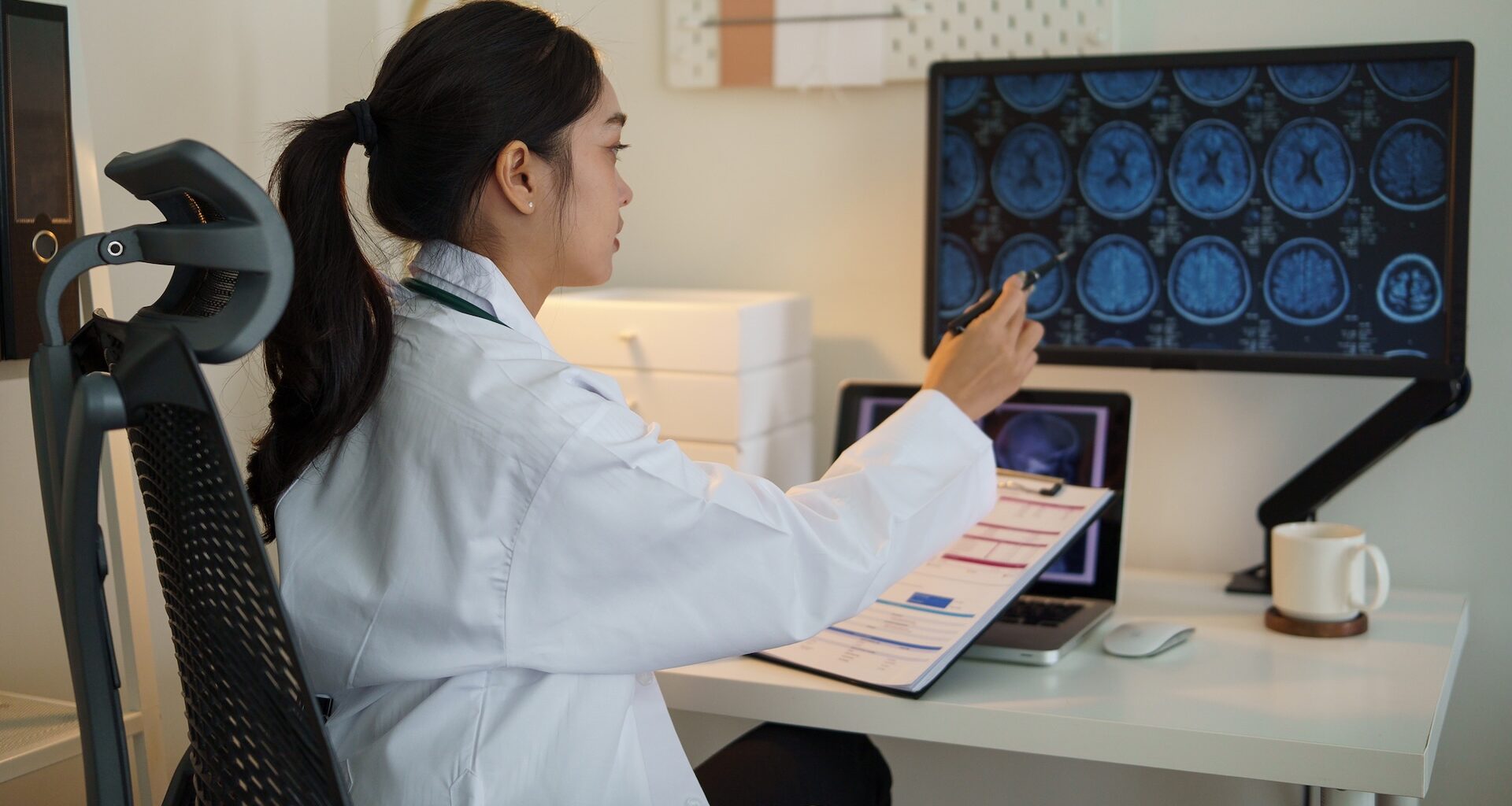
Despite decade-old predictions that artificial intelligence would replace human radiologists, the opposite has happened: there are now too few human radiologists to meet demand.
However, two radiologists have founded a startup aimed at using AI to make human radiologists more efficient and more accurate, rather than replacing them entirely. They have also voiced hope that the technology can relieve pressure on specialists without taking over their patient care roles.
Here’s what to know
Two key reasons for the increased demand for radiologists have been longer lives for patients and the use of scans to assess more and more conditions, William Boonn, a cardiovascular radiologist at Penn Medicine, told WPVI.
A heavier caseload was only part of the strain on the radiology profession, with the growing complexity of scans being another factor. Facing this combination of pressures, Boonn identified burnout as a factor in specialists leaving radiology faster than they once did.
This shortage of qualified professionals can have a real impact on patients, extending the time between a patient’s scan and when they and their care providers receive the results.
Despite the fact that prior predictions about human radiologists becoming obsolete have been proven wrong to this point, they do appear to have discouraged some students from pursuing the profession, according to Boonn.
A failed but influential prediction
About a decade ago, Geoffrey Hinton, a prominent AI researcher sometimes hailed as the “Godfather of AI,” had urged medical schools to stop training radiologists, predicting that AI would replace these specialists in five to 10 years, according to WPVI.
In debates over AI and its impact on employment, Hinton’s unfulfilled forecast has become a common point of reference. However, since Hinton made his comments, the enormous impact that AI has had on the job market, the environment, and energy prices has been undeniable.
Beyond its potential impact on jobs, AI also places increased demand on the electricity grid. The massive data centers powering the technology require enormous amounts of electricity, while large quantities of water are often used for cooling purposes.
AI tools rather than replacements
Boonn and Woojin Kim, a musculoskeletal radiologist, have founded Boring Radiology, Inc. in an effort to harness the power of AI without losing the human element of practicing medicine, according to WPVI. The company has been developing AI assistance for radiologists, pursuing the founders’ goal of supporting specialists rather than replacing them.
“AI can handle all the mundane, the boring, repetitive stuff,” Kim said, per WPVI.
Slow, outdated computer systems are among the obstacles Boonn believes AI could help address, alongside paperwork and the need to search through voluminous reports.
However, Boonn and Kim stressed that human judgment and compassion will remain indispensable in radiology. Still, they anticipate substantial changes to their profession as AI becomes more widely used.
“We want to make sure that the workforce stays healthy. So that’s where I see AI can really help,” Kim said, per WPVI.
Where can I learn more?
AI has been transforming healthcare in countless ways — and sometimes adding to clinicians’ workloads.
• Blue Cross said hospitals’ AI billing tools increased costs by $942 million without more care.
• UK doctors faced 20-page AI-generated complaints that managers said diverted time from patient care.
• A hospital patient disputed $85,000 before an AI sweep found $20,000 more in charges.
• Palantir reached one-fifth of U.S. hospital beds as nurses warn AI was worsening shortages.
• In Utah, a $4.99 AI acne app issued prescriptions as doctors reviewed fewer cases.
Get TCD’s free newsletters for easy tips, smart advice, and a chance to earn $5,000 toward home upgrades. To see more stories like this one, change your Google preferences here.
