
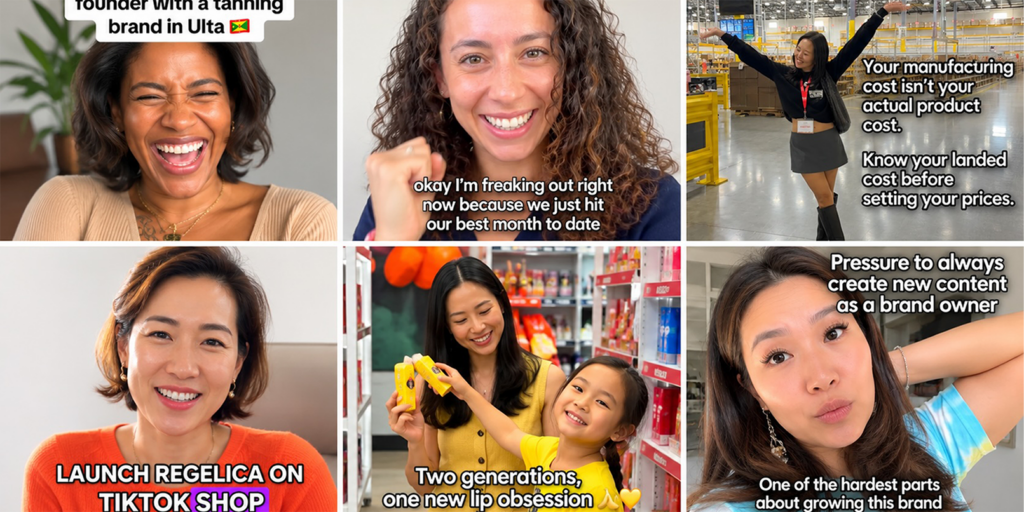
I don’t think every brand’s presence should be founder-led. If you look at some of the brands that have really mastered this strategy, there’s often a very close relationship between who the founder is and who the customer is. If you’re a new mom building a product for other moms, for example, you have the advantage of your audience seeing themselves in you. The same goes for an athlete building a supplement brand for people who train like him.
It gets more complicated when your ideal customer doesn’t necessarily look anything like you, or when you have a product that appeals to a much broader group of people. I’ve thought about that quite a bit with WashWise.
We’re building a business around the idea that the way we do laundry hasn’t really kept up with the way we live. Our lives have become more efficient in almost every other area, but we’re still treating clothing care in a pretty traditional way. We want to change that by creating products that make taking care of your clothes easier, faster and more practical.
Our first product is Reset Spray, which is essentially dry shampoo for clothes. And one of the most interesting things since launching has been seeing how different our range of customers are. We have busy moms using it to get their kids ready in the morning, guys who go straight from the gym to the office, college students who want to get another wear out of their clothes and people with beautiful vintage wardrobes who are trying to avoid washing delicate pieces unnecessarily. All of these people have completely different lifestyles, but the product solves a problem for each of them.
I wouldn’t want to build a brand where I’m the person representing all of those customers. I’m a 27-year-old woman living in New York. I can speak to my own experience, but I can’t speak to everyone’s.
That’s a big part of why we’ve never wanted WashWise to be entirely founder-led. I appear in content, our team appears in content, and particularly in the early days it’s been a great way to get creative out quickly and help people understand what we’re building. But I don’t want the brand to depend on me.
It’s also why we’ve never been interested in attaching the business to any one celebrity. Our ambition for WashWise is much bigger than any one demographic, and I don’t think there’s a single person who could represent every customer we eventually want to reach.
I’d rather build an army of people who genuinely love the product and can show how they use it in their own lives. That could be a creator, an affiliate, a customer or someone on team WashWise. The beauty of that approach is that you end up with so many different perspectives on the same product.
That’s where brands need to be a little more thoughtful. Founder-led is one strategy. Team-led is another. Celebrity-led, affiliate-led, community-led. They can all work. The question shouldn’t be whether founder content is working for everyone else. It should be whether it’s the right way to reach your particular customer.
There are plenty of incredibly successful consumer brands where the average customer couldn’t tell you who the founder is. I don’t think that’s a weakness. In some cases, it’s actually a strength.
Founder-led content works incredibly well for a number of reasons. People like knowing who’s behind the products they’re buying. There’s an element of familiarity and trust that comes with putting a face to a brand, and that’s difficult to replicate through traditional advertising.
There’s a bit of an obsession with entrepreneurship right now. There are so many people sitting in corporate jobs who have ambition to build something of their own one day, and they’re curious about what that life actually looks like. They want to see the behind-the-scenes, the decisions, the challenges, all of it.
Another reason founder-led content has become so popular is that it comes out of necessity. Content is king right now, both organically and in paid advertising. You need a constant stream of new creative to sell products, and when you’re an early-stage business with limited resources, the cheapest person to put in front of a camera is yourself. So it’s not particularly surprising that so many founders have ended up becoming content creators.
There are some brands I admire that have done this exceptionally well, like Good Girl Snacks, Abbode and Arrae. I do think we’re starting to see a shift, and I’m curious how it plays out over the next few years.
In the last decade, consumers have put enormous trust in influencers, but have become increasingly skeptical as they realized how much of what they were seeing online was paid for. I wonder whether we’re beginning to see something similar with founders. Founders are, at the end of the day, talking their own book. Of course I think my product is amazing. I built it!
People are becoming more aware of that. There’s also a lot of founder content out there that claims to show the realities of entrepreneurship but is actually just another very curated highlight reel. Which is understandable, startups have to consider their investors, but it starts to feel less authentic.
On a slightly separate note, I do think founder content has gotten a little out of control in how it portrays entrepreneurship. I’ve started making some content deglamorizing “founder life” because I find it a little concerning how entrepreneurs have made the whole thing look across socials. If you’re only looking at the social media feeds, you’d think running a business consists of photoshoots, handing out products, going to events and filming cute behind-the-scenes videos. I wish that were my day!
The reality is that most of my time is spent dealing with operational issues, figuring out why something hasn’t shipped, managing cash flow, negotiating with vendors or trying to solve some problem I didn’t know existed 24 hours earlier. It’s an incredibly rewarding job, but it’s one of the hardest things I’ve ever done.
I sometimes worry that we’re creating a generation of people who love the idea of being a founder more than they actually love the idea of building a business. Those are two very different things.
Founder content isn’t going anywhere, nor should it. It’s a great tool, and some businesses will continue to build enormous brands around their founders. But I do think we’re going to see consumers become more selective about what they trust, and brands become more intentional about how much of their identity they tie to one person.
For me, the goal has never been to make people fall in love with me as a founder. It’s to make them fall in love with WashWise and the products we’re building. If putting myself in front of a camera helps with that, amazing. But I don’t think I should necessarily be the reason someone buys the product. I’d much rather have a thousand people talking about how much they love WashWise than have a thousand people following me because they think my life looks interesting.