
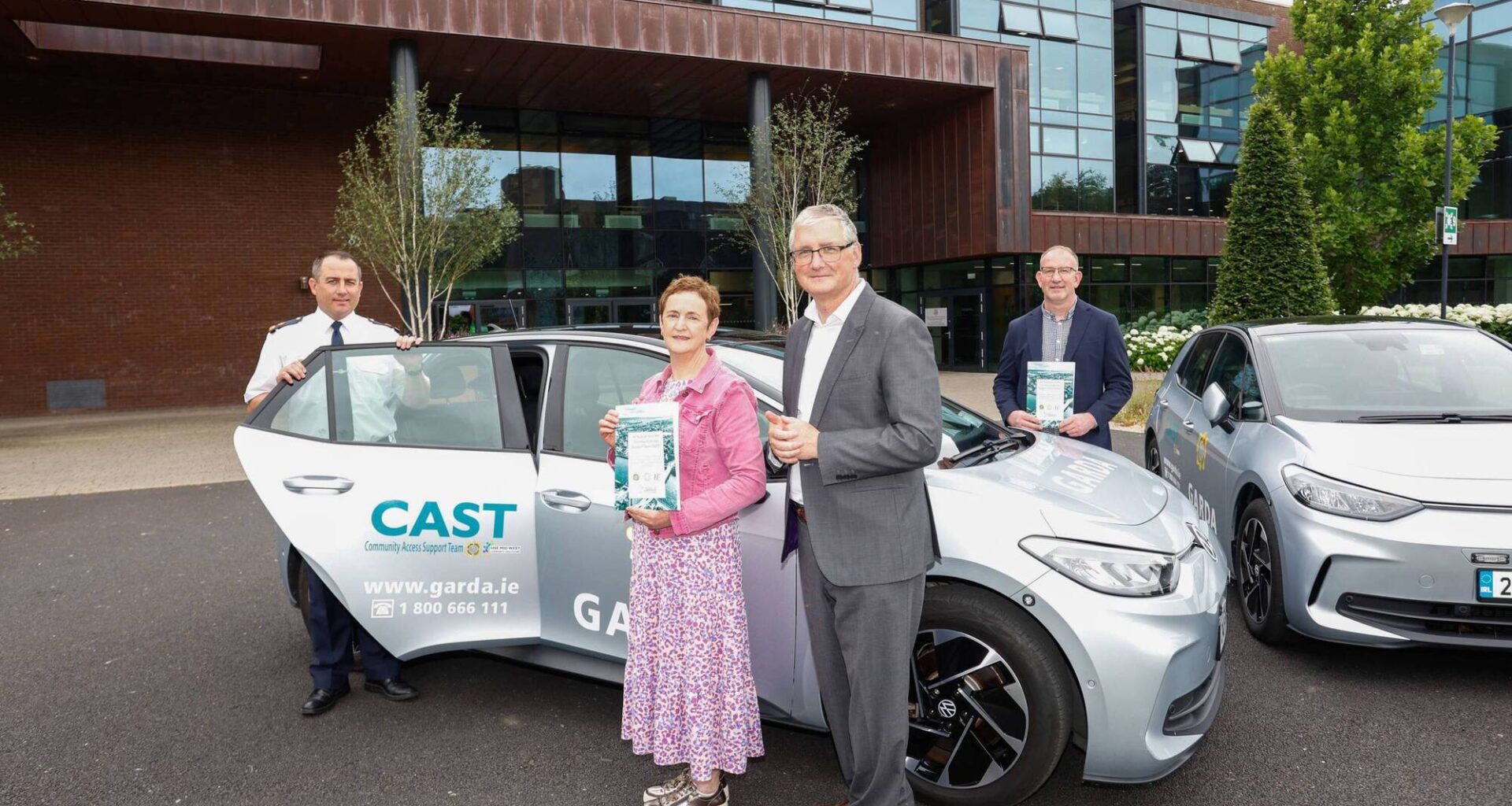
A pioneering Garda-HSE mental health intervention service piloted in Limerick has seen nearly 300 people diverted to a new crisis team in a “win for everyone”, according to the senior garda overseeing the initiative.
Cast, a joint pilot by An Garda Síochána and the HSE Mid-West Mental Health Service, comprises Garda members, a clinical nurse specialist (mental health), a social worker, and a social care worker.
The Cast team took part in the inaugural European Co-Responder Conference in Limerick, which heard from first responders, behavioural health professionals, researchers, policymakers, and leaders focused on advancing co-responder models across Europe and beyond.
The overseeing officer of the programme, Superintendent Andrew Lacey, said the group intervened with more than 290 diversions from Section 12 of the Mental Health Act.
The model aims to redirect people suffering from a mental health crisis to the Cast team, instead of bringing them to a Garda station.
“The co-responders are better trained, and we have mental health professionals at the scene. Instead of bringing them into the custody setting, we have the skill set, the knowledge and the training to deal with them in the crisis and then follow up after in the community, which is a win for everyone because we’re not draining police resources. We’re not bringing them to UHL,” Mr Lacey told the Irish Examiner.
Mr Lacey said the team would classify about 30 individuals as “chaotic users of unscheduled services”, which means users would call ambulance services and gardaí on a regular basis.
“Over the pilot of 12 months, we reduced their calls by 52% over 12 months, so we literally halved the amount of calls that they are responsible for. All those calls would be 999, which would be very labour-intensive in terms of the call-outs,” he said.
The Cast team hopes their work will be preventative.
“What we do in Cast, that no one else does in the world, is that if we go to a scene of a crisis or an attempted suicide or some sort of manifestation of suicidal ideation, we go back after the crisis. Within a day or two afterwards, we would go meet that person in their home environment,” Mr Lacey said.
According to the superintendent, data shows this move helps to prevent a second or third crisis.
Officers have been “seeing a culture shift” — and are more mindful of mental health, he said.
“For those who are not within the team, there’s a comfort there that they can refer to the team. There is a sense of reassurance for the officers,” he added.
The conference was held in Limerick to recognise the city’s pioneering work in having a national police service and a national health service work together.
Mental health minister Mary Butler reminded attendees at the Gardens International that men “are less likely to seek” mental health support.
“Every death by suicide is one death too many. It devastates communities, families, and I know many, many people who are grieved by suicide and they really find it hard to keep going and put one step in front of the other,” Ms Butler said.
She said while Ireland was “one of the worst in Europe” for suicide, there had been progress.
Earlier this year, Ireland’s Strategy to Reduce Suicide and Self-harm was launched, a national approach aiming to reduce suicide and self-harm over the next decade.
The strategy sets a national target to reduce the suicide rate to seven per 100,000 or lower by 2035 and adopts a whole-of-Government and whole-of-society approach.
Speaking of the service, Ms Butler said: “Over 8,200 men have availed of this free counselling support that was only launched 14 months ago, many for the first time.”
She added it was an indication there were a lot of people who couldn’t have afforded counselling before.