
Eddie Ghabour, CEO of Key Advisors Wealth Management, joins BNN Bloomberg to discuss the takeaways from Q3’s U.S. bank earnings.
U.S. bank earnings continue to dominate market headlines as investors assess how policy shifts, rate cuts and deregulation could shape growth into 2026. Despite short-term volatility, optimism is building around the financial and housing sectors as liquidity returns to the economy.
BNN Bloomberg spoke with Eddie Ghabour, CEO of Key Advisors Wealth Management, who expects one final market dip before a major rebound next year, driven by renewed lending activity and a more favourable policy environment for banks.
Key TakeawaysMarkets are expected to see one final pullback before a strong rebound into 2026.Looser bank regulations and potential rate cuts could inject major liquidity into the U.S. economy and boost housing growth.Smaller regional banks may see greater upside as lending picks up in a stronger economy.ETFs such as XLF and KRE offer diversified exposure to both large and regional banks.Overall sentiment and lending activity are expected to strengthen once U.S. policy uncertainty eases.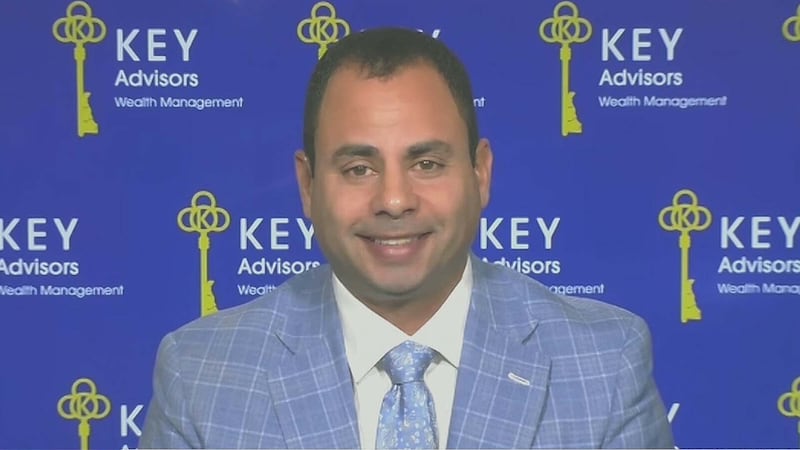 Eddie Ghabour, CEO of Key Advisors Wealth Management Eddie Ghabour, CEO of Key Advisors Wealth Management
Read the full transcript below:
ANDREW: We’re getting more earnings from U.S. financials today. Charles Schwab, U.S. Bancorp and Bank of New York Mellon are among the companies reporting this morning. Our guest says the sector looks poised for significant growth into 2026. We’re joined by Eddie Ghabour, CEO at Key Advisors Wealth Management. Eddie, always great to see you. Thanks very much for joining us. Talk to us about U.S. banks — is this a pretty sweet environment for them with interest rates coming down?
EDDIE: It really is. It’s going to be a Goldilocks environment for the financials. We’re positioning our portfolios based on where we think things will be six months from now. In the short term, we definitely expect some volatility. The VIX is showing higher highs, and the dollar has strengthened a bit.
But one of the biggest positives for financials here in the U.S. is deregulation. One problem we have in our economy is housing, and one proposal on the table is to loosen some bank regulations to encourage more lending. If we get that, along with two rate cuts we expect, there’ll be a tremendous amount of liquidity flowing into the economy over the next six months. We expect economic growth to accelerate in the first quarter of next year, putting both consumers and housing in a better spot. That’s a sweet setup for banks. We like financials heading into year-end, but we’re even more bullish going into early 2026.
ANDREW: That’s interesting. Of course, low-quality mortgage bonds were one of the big problems during the 2007-08 financial crisis, and governments have been wary of real estate deregulation ever since. But you think that boost is coming?
EDDIE: I do. History has a tendency to repeat itself. We’re in a bubble right now in asset prices — and “bubble” shouldn’t be considered a bad word. It just means asset prices are inflating and could rise higher than many expect. The issue will be when that bubble eventually pops, as they always do. That’s when investors need to be diligent about knowing when to de-risk.
These types of policies will inflate asset prices whether we agree with them or not. That’s what we tell clients — we focus more on how these moves impact prices, not on whether we personally agree with the policy.
ANDREW: Yes, it’s interesting what you say about bubbles — they’re only a problem when they pop. It’s like jumping off a building: the fall doesn’t kill you, it’s the landing. I’m getting dark here — maybe it’s the Halloween mood.
Tell us about Charles Schwab. Is that an attractive stock right now?
EDDIE: I think any of the financials with wealth management divisions will do well. With markets where they are, there’s been an increase in trading activity among wealth advisors. So, these kinds of institutions are positioned to outperform in this environment.
I’d lean toward financials that have wealth management built in, rather than just traditional banking operations. That business is booming because of the bull market we’re in. As long as that continues — which we expect through the first half of next year — those companies should continue to post strong earnings and guidance. Even with some slowing in economic data, their overall outlook still looks solid.
ANDREW: Staying with financials, one idea you’ve mentioned for viewers is XLF, the ETF that tracks large U.S. banks.
EDDIE: That’s right. For clients with the right risk tolerance, we use ETFs like XLF to gain exposure to the big institutions. It gives investors the best names in the sector without having to pick just one stock. You can be right on the sector but wrong on a single company. So, this is a safer, more diversified way to invest in a space we believe will do well.
ANDREW: A well-run company can still run into trouble for years. TD Bank was a darling before it hit money-laundering issues in the U.S. You also see promise in smaller, regional banks — KRE is the ETF there.
EDDIE: Yes. Based on our thesis that the economy and consumer will strengthen, deregulation will benefit smaller, regional banks even more. They’re more aggressive and more volatile, but in that environment they have higher upside potential. That’s part of why small-cap indexes have outperformed the S&P recently — they have greater exposure to regional lenders.
It’s a more aggressive play than XLF, but it fits our theme of economic reacceleration into 2026. Overall, we’re bullish on financials going into next year.
ANDREW: Smaller banks tend to take more risks with lending, going out on a limb for local entrepreneurs?
EDDIE: Exactly. They work with smaller businesses, which have a higher default risk than large corporations. It’s a higher-risk business model, but if the economy reaccelerates, you’ll see them lend more aggressively to small businesses.
Small business sentiment has dipped, but once it starts ticking up again, borrowing appetite will return — and those banks will welcome it. We think sentiment is near its bottom now. Once the government reopens and new policies are in place, we expect that sentiment to rebound quickly.
ANDREW: Thank you very much, Eddie. Great to hear from you.
EDDIE: Thanks for having me.
ANDREW: That was Eddie Ghabour, CEO of Key Advisors Wealth Management.
—
This BNN Bloomberg summary and transcript of the Oct. 16, 2025 interview with Eddie Ghabour are published with the assistance of AI. Original research, interview questions and added context was created by BNN Bloomberg journalists. An editor also reviewed this material before it was published to ensure its accuracy and adherence with BNN Bloomberg editorial policies and standards.