
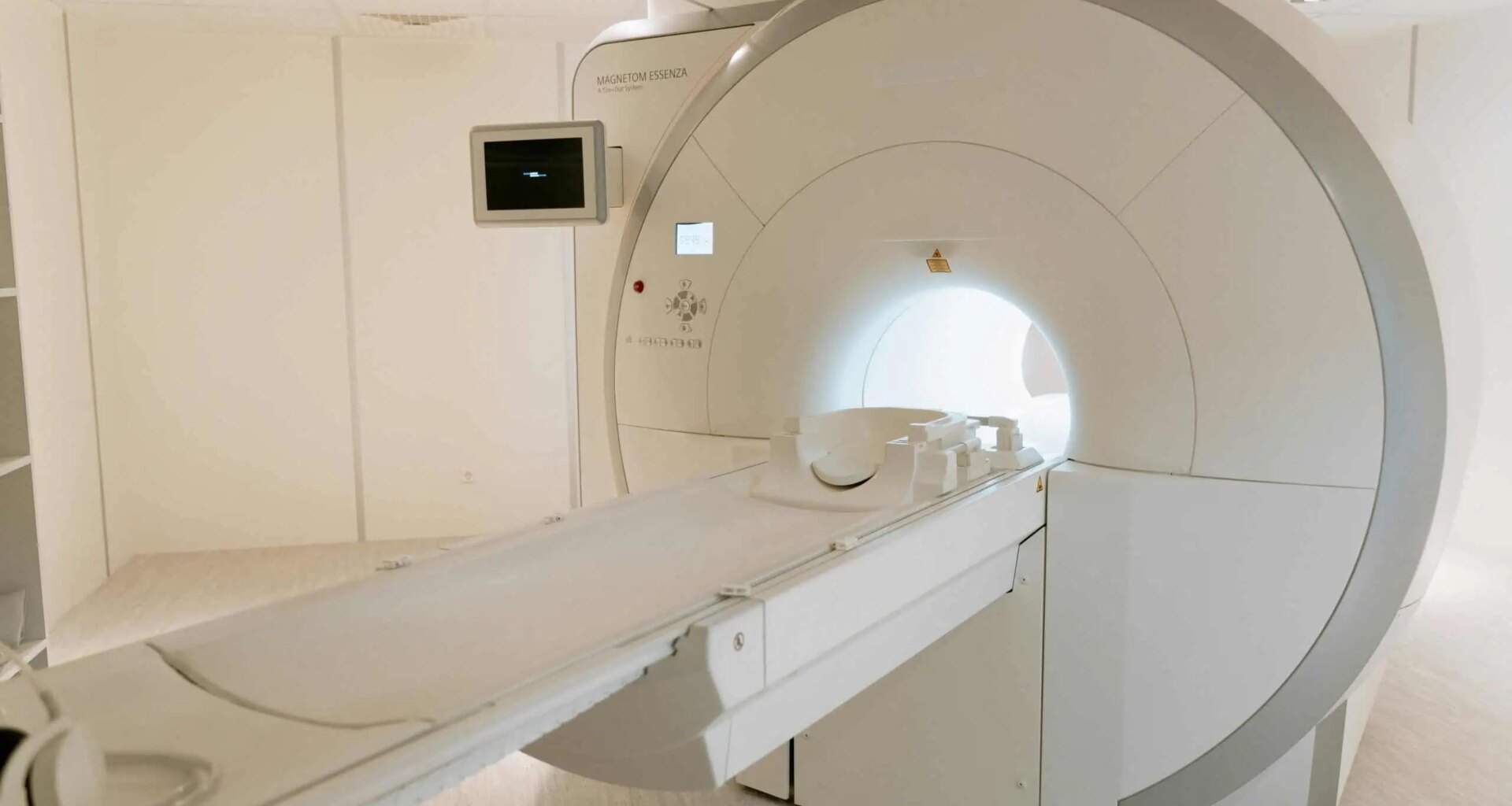
When Gina Nufrio found out she had cancer for the third time in just 10 years–and after recently completing treatment for ovarian cancer, no less–she felt, in her words, “down.”
For Nufrio, a Caledon resident who is eligible for regular MRI breast cancer screenings due to being at high-risk for the disease, the sadness and disappointment weren’t necessarily short-lived. Still, she met her new diagnosis with the same attitude that’s carried her through previous brushes with cancer: determination.
“I keep myself in good spirits,” she tells INsauga.com.
“Life goes on.”
Nufrio, who has a relatively rare genetic mutation that makes her more susceptible to several tumours (namely breast and ovarian cancer), found out about the suspicious mass during an MRI last December.
“I had a mammogram and ultrasound and they did an MRI at the same time, which was new for me. I was told the MRI found my breast cancer.”
After the MRI detected the suspicious mass, Nufrio underwent an MRI-guided biopsy, a procedure that was introduced at Brampton Civic Hospital in September 2024.
“It is new,” Dr. Andrew Peppin, a radiologist with the William Osler Health System, a health care organization that operates Brampton Civic and Etobicoke General Hospital, tells INsauga.com.
“An MRI-guided breast biopsy is the most complex breast biopsy done. Usually, the bread and butter is using ultrasound or a mammogram to guide the needle towards the target. With MRI, it’s a different situation because it’s done when the patient is in a powerful magnet.”
Peppin said the procedure can be complex and requires specialized expertise and equipment. The MRI-guided biopsy, which involves removing some of the potentially cancerous tissue from the breast to confirm or rule out cancer, is only recommended for patients whose tumours can only be detected by MRI.
“It’s rare, we probably do two or three a month,” Peppin says, adding that before Brampton Civic offered the procedure, patients had to be referred to Oakville Trafalgar Hospital.
“This is a very involved procedure; you don’t want to do it unless there’s no other way. Most patients can be managed with an ultrasound and a mammogram, which are very accurate. A certain subtype of cancer can only be seen on MRI, so the only way to sample that tissue is with an MRI. That subset of cancer patients is fairly small.”
Despite the procedure being recommended only for a small number of patients, Peppin said that bringing the technology and expertise to Brampton allows patients to receive all their tests in one place.
“It was a gap in our comprehensive care. For us to obtain this helps us close that gap,” he says.
Peppin says Fareeha Sajjad, the corporate modality supervisor – MRI at William Osler, was instrumental in bringing the technology to the Brampton hospital because she had worked with it before and was able to connect with vendors who could supply the parts and equipment needed to carry out the sensitive and precise procedures.
“It’s a testament to her dedication that we are able to bring this important service to Osler,” Peppin says, adding that physicians who carry out the biopsies receive special training.
While Peppin says the procedure can be uncomfortable because of the positioning, Nufrio said her experience was significantly better than her first breast biopsy several years ago.
“I’ll be honest, I had [a biopsy] done 10 years ago on my other breast cancer; this was a little painful, but I preferred this one. I coped with it; it wasn’t bad. It’s a little uncomfortable how you’re lying down, but I adjusted with it,” she said.
After the biopsy, which she said took about 30 minutes from start to finish, things moved quickly.
“For me, I’m lucky, everything moved quickly. I can’t complain,” she says, saying she appreciated the compassionate and prompt treatment she received at both Brampton Civic and Etobicoke General
“With my situation, every time they find something, they move quickly. I’ve had a good experience everywhere,” she says.
Peppin says that while MRI screenings (and biopsies) are rarer, they allow hard-to-see tumours to be tested quickly, potentially increasing the chances of successful treatment.
“If [these patients] didn’t have the MRI, everything would look normal and they might present later with a more advanced cancer. It enables you to find cancers much earlier. These cancers, we’re catching them early and historically, prior to MRI being available, their cancer would develop and grow until it was visible on a mammogram,” he says.
“The main group is higher-risk women, but sometimes we also use it to investigate an abnormal mammogram to find out more. Another group of patients are people with invasive lobular cancer, which means there’s a higher chance of having cancer in the opposite breast, so we do an MRI to look at the other side to see if that’s okay. If we see something, they can get a biopsy as well.”
For Nufrio, the screening test and subsequent biopsy ensured she started treatment earlier. She underwent surgery in September and has since started a new round of chemotherapy and says that anyone nervous about the procedure should go through with it with the knowledge that, while anxiety-provoking, it could be life-saving.
“I would tell them to go for the biopsy, it saved my life. It could save their life also. Don’t be too nervous, think about something nice. Always smile–it’s hard, but try to smile. That’s the way I’m coping,” she says.
Nufrio also says the doctors and nurses helped alleviate her anxiety during and after the screenings and biopsy.
“They treated me like I was the queen. After the biopsy, I had to go for a mammogram upstairs and the nurse was so nice. She took us to the place, went out of her way to walk with us to the floor where the mammogram was. They’re really kind.”
While Peppin says the number of patients requiring MRI-guided breast biopsies is low, he expects demand to grow as more women seek out screening, especially since women 40 and older at average risk of the disease are now able to self-refer for conventional mammograms.
“Right now we’re able to manage local demand, but I think, especially now that we’ve begun screening women between 40-49 routinely, that will lead to more MRI-guided breast biopsy requests, so we expect volumes to grow, but we’re well-positioned to manage that in the short term,” he says.
Ultimately, the procedure helps ensure more cancers are caught earlier.
“There’s a correlation between early detection and survival, so this definitely captures patients at an earlier stage,” he says.
Peppin also says having the technology to perform the biopsy in-house provides patients with both convenience and comfort during a frightening time.
“A committee of radiologists will decide if [MRI-guided breast biopsy] is appropriate and we can decide this in-house; we don’t need outside help to manage our patients. They can go somewhere they’re familiar with and there’s no travel time. This makes it easier to help patients get care that’s appropriate as close to home as possible,” he says.
As for Nufrio, her best advice for patients facing cancer is to trust their medical team and try to maintain as normal a routine as possible. She also says she still goes on daily walks and spends time with her children and grandchildren.
“I know we all have our own way to handle it. Life goes on, and I still do everything I was doing before. I’m still cooking, still cleaning when I can. I do my puzzles, read some books, go outside all the time, look after my flowers, talk to my flowers, and talk to myself sometimes because it helps. I do have my days, but we’re all different,” she says.
For her, staying positive is important.
“Never give up hope. Take it every day, don’t think about what will happen tomorrow, wake up in the morning and think ‘what will we do today?’ Never give up and keep it going. When the battery goes down, I charge it and get back at it. You don’t stop your life.”
Last 30 Days: 62,372 Votes
All Time: 973,242 Votes
1292 VOTES
Would you like to see another federal election in Canada next year?