
Unlock the Editor’s Digest for free
Roula Khalaf, Editor of the FT, selects her favourite stories in this weekly newsletter.
Brussels is proposing several revisions to major pieces of its green legislation to placate EU leaders who will meet to discuss the viability of the bloc’s climate ambitions at a summit on Thursday.
The European Commission said on Tuesday that it would exempt small farmers from the EU’s landmark deforestation law for a year and vastly reduce their level of compliance with the rules.
It has also said that it will revise its carbon pricing system for houses and cars, after complaints from eastern European member states, and consider watering down its 2035 combustion engine ban by allowing carmakers to make vehicles that run on carbon-neutral fuels and biofuels.
The moves to roll back some of the EU’s ambitious climate rules come amid deep concerns from member states over the bloc’s slowing economy.
EU leaders are due to discuss the bloc’s next climate target for 2040 at a summit on Thursday in Brussels. But countries are deeply divided over the pace and scale of the transition to a cleaner economy, given the cost and administrative burden it has pushed on to EU companies.
Both French President Emmanuel Macron and German Chancellor Friedrich Merz have been vocal in their concerns about several parts of the EU’s Green Deal climate law, such as the combustion engine ban and its rules on chemicals and wastewater.
They have also called for the abolition of the bloc’s due diligence law, which requires companies to root out environmental and social abuses in their supply chains.
The Trump administration has also been lobbying the EU to change the due diligence and deforestation rules.
According to a draft negotiating document for the summit, EU leaders are expected to call for a more “pragmatic” transition and “to ensure Europe’s industrial renewal and decarbonisation in a technologically neutral manner”.
Technology neutrality has become a byword for greater flexibility around the use of nuclear power and carbon-neutral fuels.
 Bas Eickhout, leader of the Greens in the European parliament, says Europe’s lack of ambition was influencing other countries © Kenzo Tribouillard/AFP/Getty Images
One EU official said they were expecting a “candid discussion” on Thursday and acknowledged that member states had “different positions” on climate legislation.
Scandinavian countries, alongside the Netherlands and Ireland, have been among those calling for the EU to uphold its climate ambitions, while eastern European countries such as Poland and the Czech Republic are pushing the commission to loosen rules.
Slovakian prime minister Robert Fico has said that he will not agree to the bloc’s next round of sanctions on Russia at Thursday’s summit unless the commission makes efforts to reduce energy prices.
Bas Eickhout, leader of the Greens in the European parliament, said that the summit was likely to be “the heaviest attack on the Green Deal” since it was introduced in 2019.
“The lack of ambition of Europe is also influencing the lack of ambition of other countries” such as China ahead of the UN’s COP30 climate conference in November, he said.
In a letter to heads of government on Monday, European Commission president Ursula von der Leyen promised to address concerns over the cost of the bloc’s emissions trading system for industry, and to ease the introduction of a new carbon pricing scheme for houses and road transport.
She also said that the commission would look at making changes to targets for the bloc’s carbon sinks, which are causing concern in Scandinavia and Ireland.
The commission on Tuesday also set out ways that member states could use state aid and EU funding to cut energy costs.
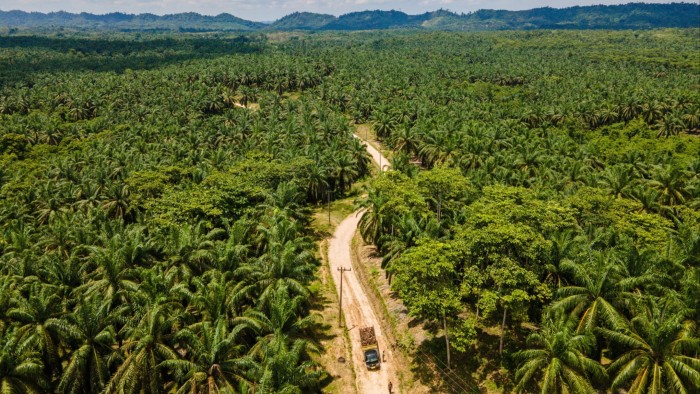
It said that changes to the EU’s deforestation law — which prohibits the sale in the bloc of commodities like rubber, palm oil and cocoa grown on deforested land — were to solve problems with a new IT platform underpinning the legislation.
But Brussels has also come under heavy pressure from conservative lawmakers and trading partners such as Indonesia, Brazil and the US to make changes to the law.
Once the changes are agreed, micro and small producers such as farmers and foresters will only have to make a one-off registration in the IT system if they are not already on an EU or national database.
It will also ease requirements for companies making products from imported commodities within the EU and delay the application of the law to smallholders for a year.
Indonesia and Malaysia have been among the most vocal about the impact on small palm oil producers, but the changes will only ease requirements for producers in countries that are considered at “low risk” of deforestation, such as EU member states, the UK and US.
European Central Bank president Christine Lagarde on Tuesday lashed out against “a growing denial of the climate crisis and a backlash against green initiatives”.
At a conference held by the Norwegian central bank in Oslo, she stressed that “the climate reality has not changed” and urged European governments to “act more decisively” to grow investment into green energy.
That approach was the “only viable path for Europe”, Lagarde said.
Additional reporting by Olaf Storbeck in Frankfurt and Andy Bounds in Strasbourg