
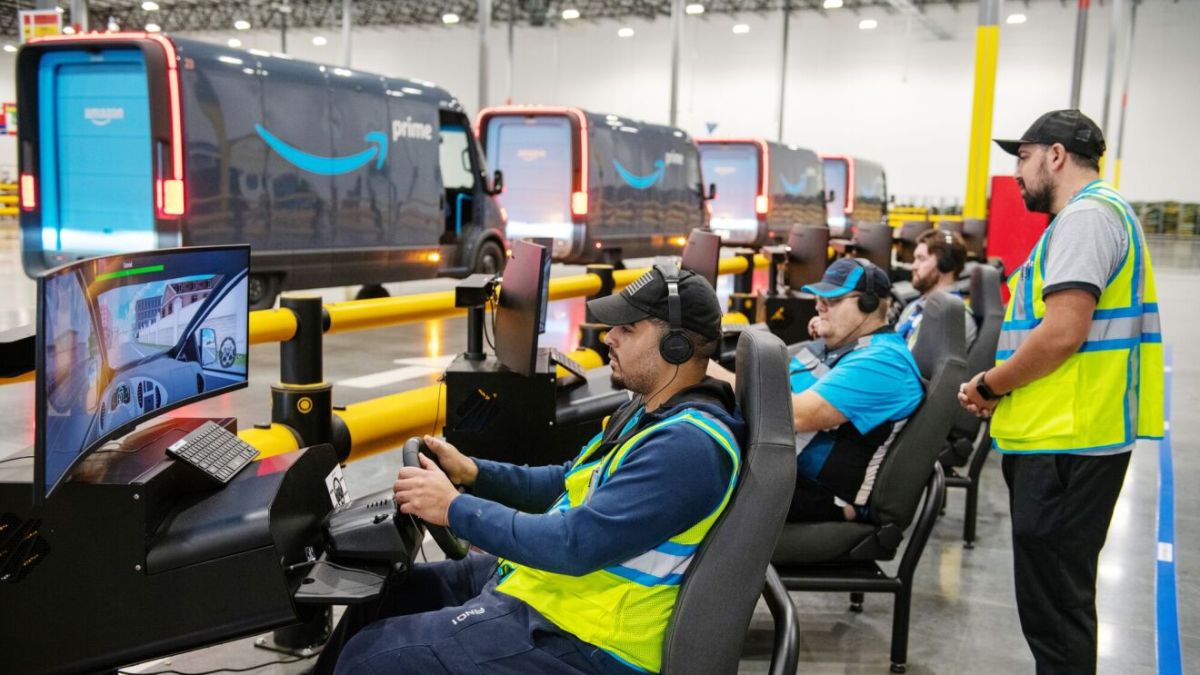
Amazon robots are redefining the jobs, tasks and physical space required in warehouses to make the ecommerce giant more efficient. Will they lead to fewer jobs for human workers?
The retailer, which is America’s second largest employer, unveiled the new AI and robotics technologies that it is developing at a warehouse in San Jose, California, on Wednesday.
They include a new robotic arm that can perform tasks that previously required three separate stations; AI software that helps warehouse workers to analyse data to make decisions such as where to deploy workers or manage supply chain bottlenecks; and smart glasses to help delivery drivers to identify packages and drive to the correct destination.
Tye Brady, chief technologist at Amazon Robotics, admits that automation could mean the company hiring hundreds of thousands fewer people in America over the next decade than it otherwise would have done. He also says that those estimates could be entirely wrong.
“I think it’s really hard to speculate even five years out on what’s going to happen,” he told The Times.
The New York Times reported on Tuesday that leaked documents appeared to show that Amazon’s automation team expected that the company could avoid hiring more than 160,000 workers in the US than it would otherwise need by 2027; by 2033 it could avoid hiring as many as 600,000 workers while doubling revenue.
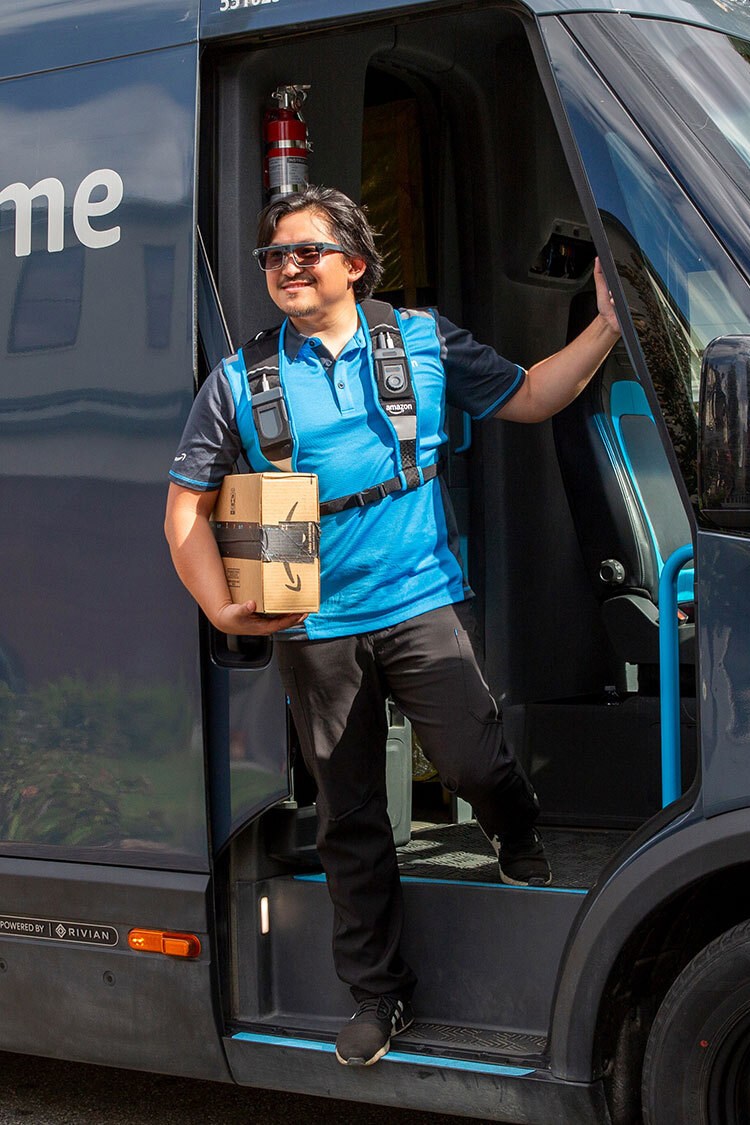
An Amazon driver wearing smart glasses
Kelly Nantel, an Amazon spokesperson, pushed back on the article. “Leaked documents often paint an incomplete and misleading picture of our plans, and that’s the case here.
“In our written narrative culture, thousands of documents circulate throughout the company at any given time, each with varying degrees of accuracy and timeliness. In this instance the materials appear to reflect the perspective of just one team and don’t represent our overall hiring strategy across our various operations business lines, now or moving forward.”
Brady pointed out that Amazon had grown its workforce more than any other US employer in the past decade, at the same time as investing heavily in robotics. Since 2018 it had tripled its US headcount to almost 1.2 million.
“Will we become more efficient? Absolutely. But at the expense of people? It’s not the way we roll.”
In a mature Amazon logistics market like the UK, though, will there be an inflection point when robotic advances mean slower jobs growth? “It’s hard to predict,” Brady said. “It depends on the area that you’re in … I think if you just took the macro scale of what we’ve done in robotics inside of Amazon, we’ve created jobs.”
Amazon workers’ tasks, however, are expected to change. “I want to eliminate the menial, the mundane and the repetitive tasks,” Brady said. “We have robots that extend and amplify what a person can do. So it allows them to be more productive, and when you’re more productive you then can invest in two elements: better collaborative machines and people.”
Amazon is investing in training existing workers, offering apprenticeships designed to teach them to manage robots. Technical roles include robot maintenance engineers and robot operators.
The robots can do anything from picking up bottles of shampoo to stacking packages and shifting heavy containers.
Exectives say robots have taken over tasks such as stowing items, freeing workers to focus on problems such as quality control and problem solving, to ensure that customers get the right product at the right time.
Earlier this year Amazon unveiled Vulcan, its first robot with a sense of touch but executives also point to flaws in the robotic systems that reflect the continued need for human workers.
Aaron Parness, Amazon director of applied science in robotics and AI, says we are decades away from robots being able to replicate the human hand.
Robot failures have included trying to pick up a yoghurt pouch but squeezing it too hard so the yoghurt starts squirting out of the end of the pouch.
“We still struggle to get anywhere close to what you have with your hands in terms of sensor density, the kinds of information you have and your ability to process that information,” he said. “There is, you know, thirty years of development that I think is ahead on getting manipulation solved to be anywhere close.”
Morgan Stanley analysts have estimated that Amazon could make up to $4 billion in cost savings per year by 2027 as it automates more logistics processes.
• Amazon joins UK’s £1bn tax club after rise in sales
Parness said Project Eluna, Amazon’s new AI agent scheduled to be tested in a Tennessee warehouse, will allow workers to ask questions such as: “You know the line on aisle four is down, what are your recommendations about how to reroute the packages in the building?”
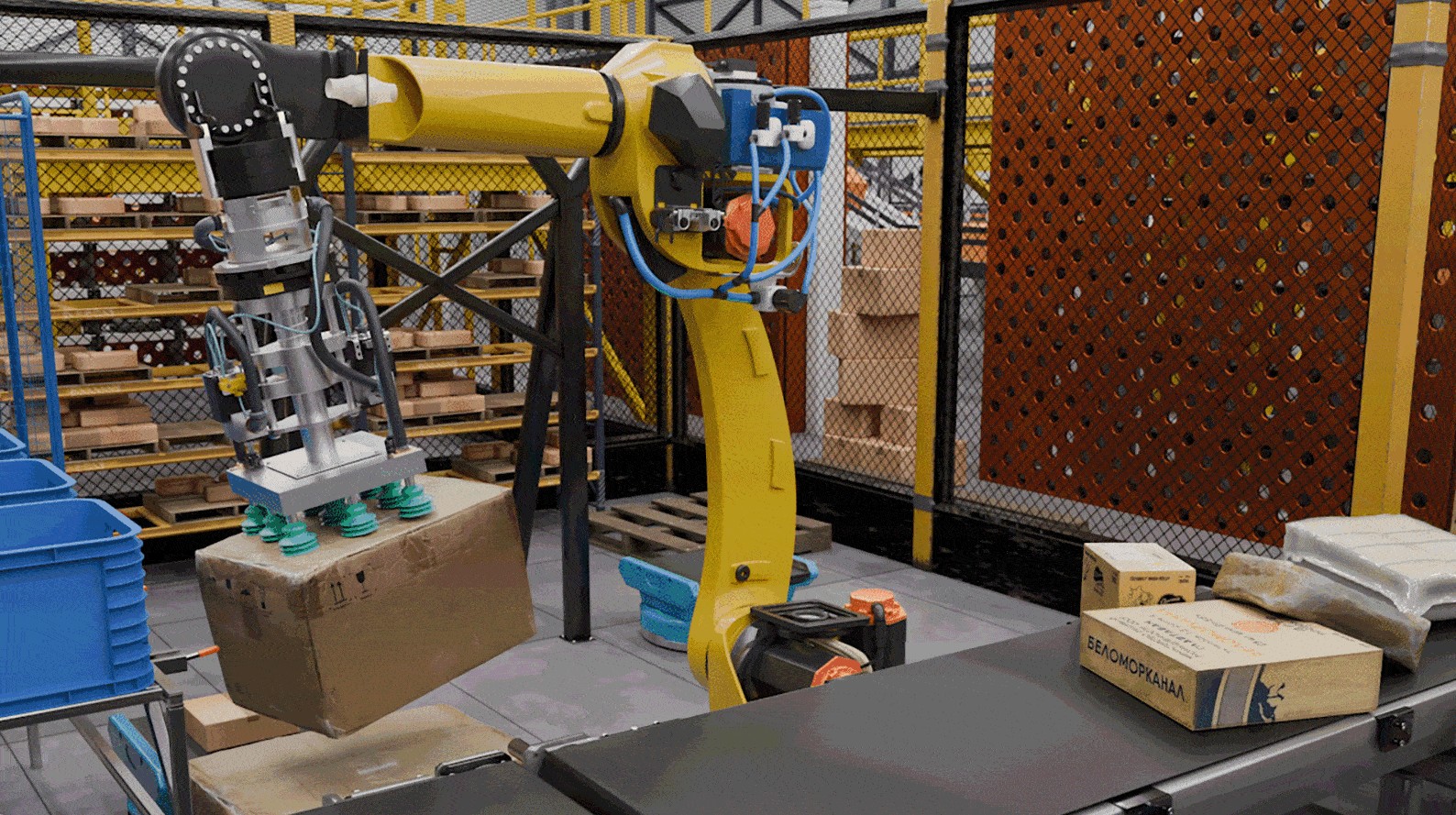
The Project Eluna AI agent
The agent can then “go and it finds all the times that’s happened before at all the other buildings and it can give you some suggestions”, replacing work that would have taken multiple days previously. Amazon could sell the software to other companies in the future, Brady said, but added that it had no existing plans to do so.
Advancements in physical AI are speeding up. Blue Jay, Amazon’s robotics arm designed to sort packages, was developed in just over a year, compared with three years for previous models, thanks to the latest developments in generative AI that helped Amazon to make virtual prototypes.
The robot is in use already at a warehouse in South Carolina, Amazon said, and it plans to extend it to more facilities in the coming months,
It can pick, sort and consolidate delivery items in a single work station, combining work that was previously carried out across three separate assembly lines. In doing so it will allow Amazon to shrink its warehouse footprint and occupy smaller sites in urban areas to carry out deliveries faster and at a lower cost.
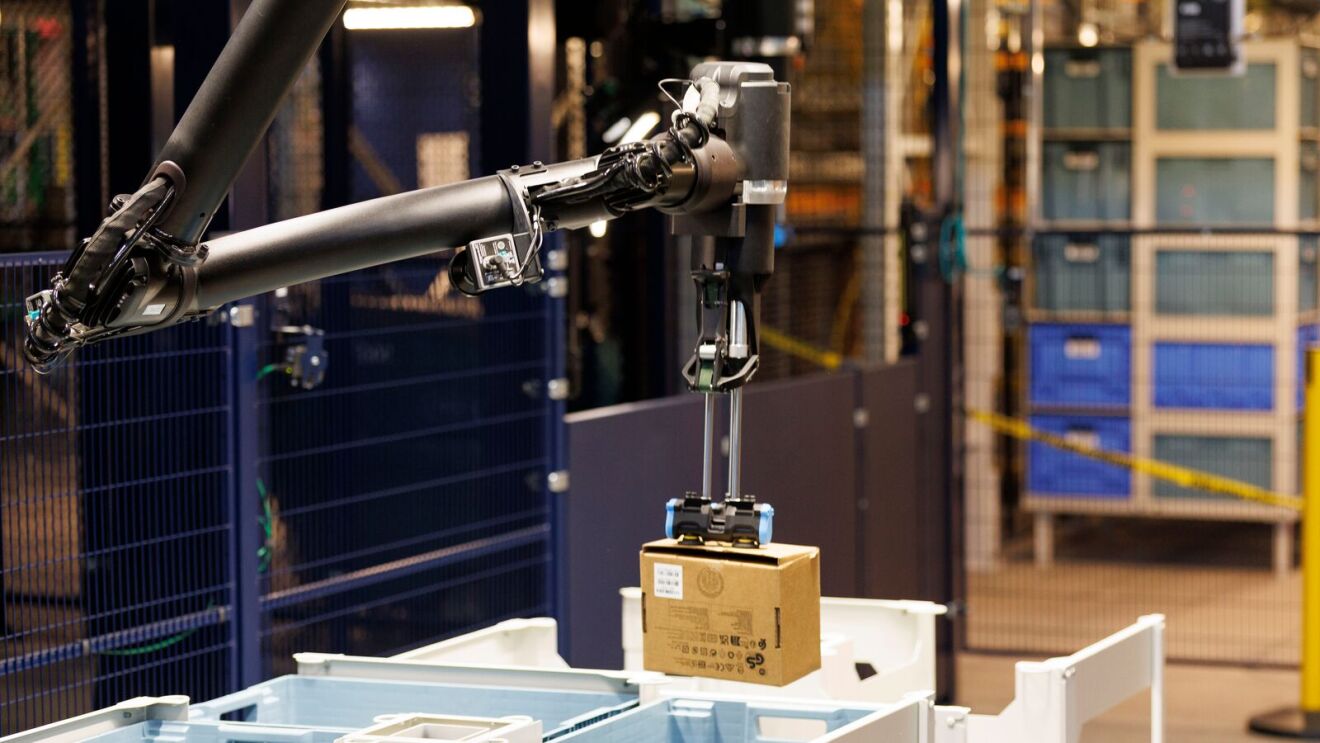
The Blue Jay robotic arm.
“When the goods are close to the customer’s door I can reduce the cost of those goods,” Brady said.
He is worried about the public perception of AI and the dystopian tales of robotics told by Hollywood, insisting that we should be optimistic.
His stance contrasts with that of Elon Musk, the chief executive of Tesla, who declared this week that AI and robots would replace all jobs.
Writing on X, his social media platform, Musk said: “AI and robots will replace all jobs. Working will be optional, like growing your own vegetables, instead of buying them from the store.”
Brady said that “collaborative robots” with an “intuitive interface” that people can use will in the future move beyond ecommerce to augment industries from fishing and agriculture to the medical field and the automotive sector.
He will know when robotics have become really effective when we are no longer talking about it and the technology “blends ubiquitously into the background” and people are using them like they use an app today. “But it’s going to be in the analogue, real world.”
As for what the technology means for job numbers, Amazon cannot give a straight answer.