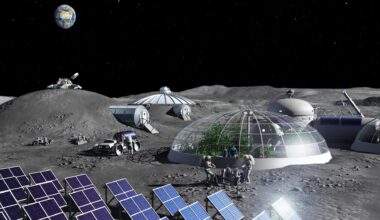
SScience Read More Do we need a lunar building code to build moon bases safely?June 20, 2026 GOLDEN, Colorado – Here on Earth, centuries of accumulated engineering knowhow, hard-learned lessons, and societal evolution have shaped…

SSpace Read More We keep asking whether humans can survive on Mars and skipping the more important question of whether we should go at allJune 20, 2026 A few months ago, I found myself deep in a conversation about Mars colonization timelines. The other person…
SScience Read More Largest Denisovan DNA study reveals ancient genes still active in Oceanian populationsJune 20, 2026 Ancient DNA inherited from Denisovans, an extinct group of human relatives, still influences the biology of people living…
SSpace Read More Boeing tests quantum protocol in Q4S payload prior to launchJune 20, 2026 Engineers at Boeing demonstrated a key quantum protocol during ground testing of the payload for the Q4S mission,…
SScience Read More The Sky Today on Saturday, June 20: Libra’s Ghost ClusterJune 20, 2026 Back to Article List The globular cluster NGC 5897 glows in Libra the Balance, a ghostly twin to…
SSpace Read More Asteroids may have helped create the conditions for life on early Earth; scientists find |June 20, 2026 For decades, asteroid impacts have been seen as forces of pure destruction, the kind that wiped out the…
WWildlife Read More Bird flu in Australia could be catastrophic for nation’s vulnerable species, experts warnJune 20, 2026 The outlook could be grim for Australia’s wildlife if a deadly strain of bird flu spreads to ducks,…
SScience Read More The longest continuous spaceflight in history — 437 days aboard the Russian Mir space station, completed by cosmonaut Valeri Polyakov in 1995 — was specifically conducted to prove that a human being could survive a round-trip mission to Mars, in a piece of human endurance that has been waiting unused on a shelf for three decadesJune 20, 2026 The record sits at the top of every list of human spaceflight endurance achievements, has been there since…
WWildlife Read More Seal pups and seabird chicks are suffering in extreme weather. How can we protect them?June 20, 2026 Extreme weather is becoming the new normal, disrupting human communities across the globe. It is also affecting wildlife…
SScience Read More Earth’s First Land Animals May Never Have Been Amphibian-Like After AllJune 20, 2026 Paleontologists from the Field Museum of Natural History have described the fossilized remains of baby embolomeres, crocodile-like predators…
PPhysics Read More In 2002 astronomers averaged the light of 200,000 galaxies and announced the universe was pale turquoise — then traced the color to a software error and corrected it to a beige they nicknamed cosmic latteJune 20, 2026 The universe is the color of weak coffee In 2002 two astronomers at Johns Hopkins University, Karl Glazebrook…
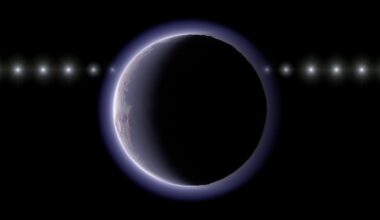
SScience Read More A body on the edge of our Solar System has an atmosphere – and scientists still aren’t sure how that’s possibleJune 20, 2026 Astronomers have discovered signs of a thin atmosphere surrounding an icy body beyond the orbit of Neptune –…