SScience Read More Back-to-back Arctic storms can double sea ice lossSeptember 14, 2026 Weather can dramatically reshape the Arctic’s frozen surface, and some storms appear to be far more destructive than…
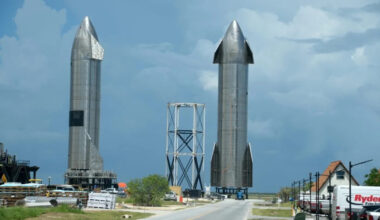
SSpace Read More SPCX CFO Bret Johnsen Says China Has an ‘Amazing Space Program’ — But It’s ‘Not on a Starship Level’September 14, 2026 Benzinga and Yahoo Finance LLC may earn commission or revenue on some items through the links below. Space…
WWildlife Read More ASIA WATCH: With no pandas at home, Japanese fans visit Xiang Xiang in ChinaSeptember 14, 2026 YA’AN, China – With Japan now without pandas for the first time in nearly half a century, devoted…
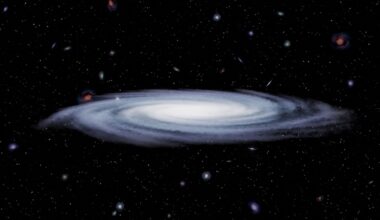
SScience Read More The universe’s first stars probably ignited 100–250 million years after the Big Bang and died within a few million years. Their ancient light can still reach Earth, but individual stars are so distant and rare that none has been conclusively identified—although cosmic gravitational lenses may finally bring one within JWST’s view.September 14, 2026 The universe had to make stars before it could make almost everything familiar. Carbon, oxygen, silicon and iron…
EEnvironment Read More Global warming is breaking a 400-year climate link between two oceansSeptember 14, 2026 A new study suggests that the climate connection between the tropical Indian and Pacific oceans can be disrupted…
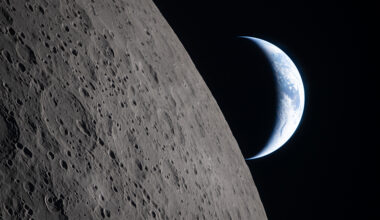
SSpace Read More What will life look like on the Moon?September 14, 2026 Space is back in the news. Whether it’s Donald Trump unveiling Space Force uniforms inspired by Starship Troopers,…
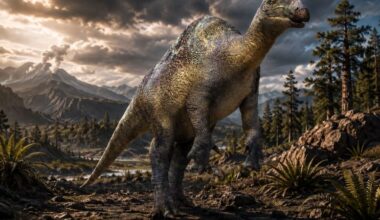
SScience Read More 90-Million-Year-Old Fossil Reveals a Small Dinosaur Living Along Japan’s CoastSeptember 14, 2026 Iguanodontians were a diverse group of plant-eating dinosaurs that thrived from the Late Jurassic through the Late Cretaceous.…
EEnvironment Read More Scientists say August was Earth’s hottest month : NPRSeptember 14, 2026 Visitors pass by the cooling fog device at Gwangmyeong Cave tourist site in Gwangmyeong, South Korea, Aug. 6,…
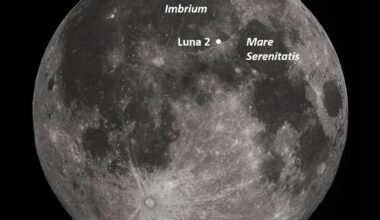
SSpace Read More First human-made object made contact with another celestial body 67 years ago todaySeptember 14, 2026 On September 13, 1959, the Soviet Union’s Luna 2 became the first human-made object to make contact with…
PPhysics Read More There’s a blind spot in quantum readiness?September 14, 2026 BANKS are preparing years ahead of the Q-Day deadline to avert a quantum disaster. Blockchains, however, are at…
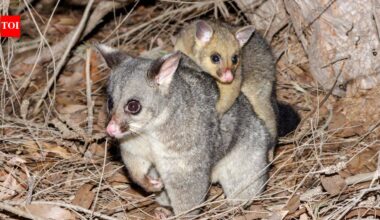
WWildlife Read More In 1837, New Zealand imported possums for a fur trade; 189 years later, aerial photos show they have damaged about half the vulnerable trees in one rare South Island forestSeptember 14, 2026 PossumsRepresentative image In 1837, New Zealand introduced Australian brushtail possums in the hope of building a profitable fur…
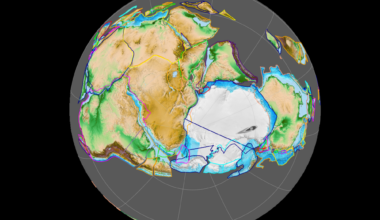
SScience Read More Scientists find evidence for an ancient supercontinent that covered 80 percent of Earth’s surfaceSeptember 14, 2026 A new global isotopic map has revealed vast fragments of ancient Gondwanan crust buried beneath younger mountain belts…