SScience Read More Stars Survive Despite Black Holes’ Repeated AttacksAugust 23, 2026 Most galaxies are thought to harbor a supermassive black hole at their center. These enormous objects can weigh…
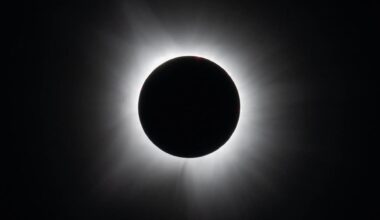
SSpace Read More On this day in space! Aug. 21, 1914: Total solar eclipse expedition crashed by WWIAugust 23, 2026 On Aug. 21, 1914, a total solar eclipse temporarily darkened skies across Europe and Asia. A young German…
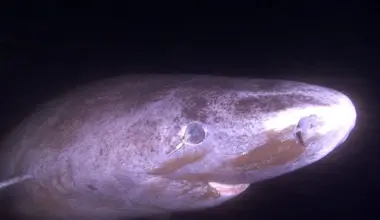
WWildlife Read More This shark can live 400 years. Its eyes barely seem to ageAugust 23, 2026 Dorota Skowronska-Krawczyk watches a Greenland shark glide slowly through the dark waters of the Arctic on her computer…
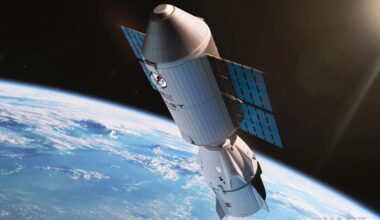
SScience Read More This could be the Earth-orbiting habitat that replaces the International Space StationAugust 23, 2026 France has signed a two-mission agreement with US space company Vast to send French astronauts to both the…
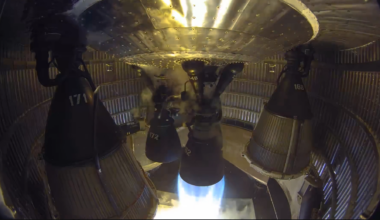
SSpace Read More SpaceX fires up Starship ahead of megarocket’s 1st orbital flight (video)August 23, 2026 SpaceX is picking up the pace of preparations for the next launch of its giant Starship rocket. On…
WWildlife Read More Hawaii once considered releasing cats to kill invasive rats on an island; scientists rejected the idea because the cats would attack native birds too | World NewsAugust 23, 2026 Image: Division of Forestry and Wildlife, Department of Land and Natural Resources Lehua Island, a 284-acre seabird sanctuary…
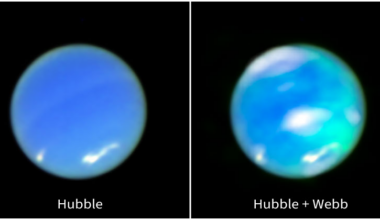
SScience Read More When scientists announced Webb’s first definitive detection of Neptune’s auroras in March 2025, they revealed another surprise: observations taken in 2023 showed that the planet’s upper atmosphere had cooled by several hundred degrees since Voyager 2 visited in 1989—and scientists still don’t know exactly why.August 23, 2026 The first definitive detection of auroras on Neptune came with a quieter discovery concealed in the same infrared…
SSpace Read More Our favorite reader images of the 2026 total eclipseAugust 23, 2026 Credit: David Gluchowski On Aug. 12, a total solar eclipse crossed Iceland and Spain — the first time…
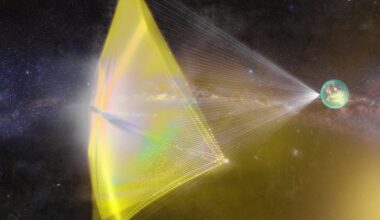
PPhysics Read More Physics says a spacecraft with mass can never reach the speed of light: as it accelerates closer to c, the energy required rises without limit, so light speed isn’t merely difficult to reach — for massive objects, it’s physically unattainable.August 23, 2026 A powerful enough engine can make a spacecraft move faster and faster. That familiar sentence contains a trap:…
WWildlife Read More This shark can live 400 years. Its eyes barely seem to ageAugust 23, 2026 Dorota Skowronska-Krawczyk watches a Greenland shark glide slowly through the dark waters of the Arctic on her computer…
SScience Read More Strange Quantum Oscillations Reveal New Physics in an Exotic MaterialAugust 23, 2026 Zirconium pentatelluride continues to produce quantum oscillations under magnetic fields so strong that conventional behavior should disappear. Credit:…
SSpace Read More TB 26-04 Updates and Modernization of NASA’s Chemical Equilibrium with Applications (CEA) CodeAugust 23, 2026 For more information, contact Mark K. Leader, Glenn Research Center, mark.leader@nasa.gov Download the PDF version NASA’s Chemical Equilibrium…