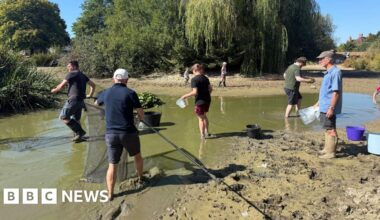
WWildlife Read More Kent communities rally to keep wildlife safe in heat – BBCAugust 19, 2026 Kent communities rally to keep wildlife safe in heat BBCHow will the heatwaves affect nature in the West? BBCZookeepers battle…
SScience Read More Creative Biolabs Supports Organ-on-Chip and Macrophage Model Development for Biomedical ResearchAugust 19, 2026 Creative Biolabs SHIRLEY, NY, UNITED STATES, August 19, 2026 /EINPresswire.com/ — Creative Biolabs, a biotechnology solutions provider specializing…
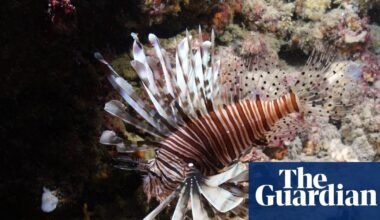
EEnvironment Read More Carbon pollution has fuelled ‘massive expansion’ of marine heatwaves in Europe, study finds | OceansAugust 19, 2026 Carbon pollution has fuelled a “massive expansion” of marine heatwaves in Europe this summer, research has found, with…
SSpace Read More On this day in space! Aug. 18, 1868: Total solar eclipse leads to discovery of heliumAugust 19, 2026 On Aug. 18, 1868, a French astronomer named Pierre Jules César Janssen discovered helium while observing a total…
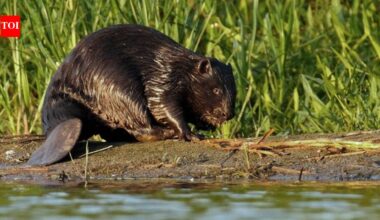
WWildlife Read More In 1937, Finland Released Seven American Beavers to Restore Its Extinct Native Beaver; Scientists Learned 36 Years Later That They Were a Different Species | World NewsAugust 19, 2026 A beaver feeding near the edge of a freshwater pond. Credits – Wikipedia Commons In the 1930s, Finland…
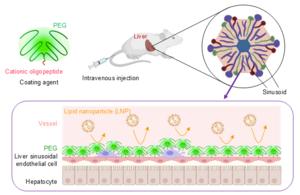
SScience Read More Preventing the accumulation of mRNA-loaded lipid nanoparticles in the liverAugust 19, 2026 image: A positively charged oligopeptide containing double-stranded PEG transiently coats the sinusoidal walls of the liver, thereby inhibiting…
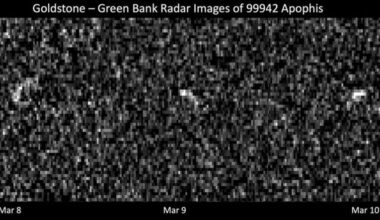
SSpace Read More On 13 April 2029, a roughly 375-metre asteroid named Apophis will pass closer to Earth than some of our own satellites — just 32,000 kilometres above the surface — and new calculations suggest up to 90% of humanity could potentially see it cross the sky with the naked eye.August 19, 2026 On 13 April 2029, asteroid 99942 Apophis will pass roughly 32,000 kilometres above Earth’s surface. For a few…
PPhysics Read More Tiny quantum defects in diamonds to unlock the secrets of the universeAugust 19, 2026 Researchers in the US have launched a USD 1 million project to develop quantum sensors by using the…
WWildlife Read More Wildlife Park Guests Get the Cutest Surprise From a Proud Capybara MomAugust 19, 2026 If there’s one animal almost everyone is instantly smitten with, it’s the capybara. There’s just something about them…
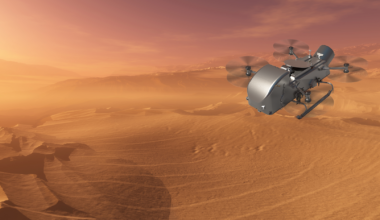
SScience Read More NASA’s Dragonfly rotorcraft will launch on a SpaceX Falcon Heavy in July 2028 and spend six and a half years crossing the solar system to land on a moon that has weather, seasons, rivers and seas — with methane and ethane flowing across its surface instead of water.August 19, 2026 In July 2028, if the current schedule holds, a SpaceX Falcon Heavy will rise from the same Florida…
EEnvironment Read More Arctic Iceberg Drones Turn Sheer Ice Into Landing PadsAugust 19, 2026 This article is part of our exclusive IEEE Journal Watch series in partnership with IEEE Xplore. Microspines are…
SSpace Read More NASA Glenn’s Legacy Forged Through Decades of Flight ResearchAugust 19, 2026 Many of NASA’s most important aerospace breakthroughs that began in the laboratory were ultimately proven in the sky. For decades,…