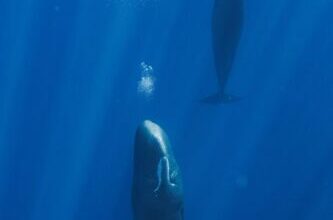
WWildlife Read More Sperm Whales blow bubbles to achieve restful, vertical sleepJuly 26, 2026 New research from the University of St Andrews and Université de Neuchâtel, has uncovered the mechanism which allows sperm…
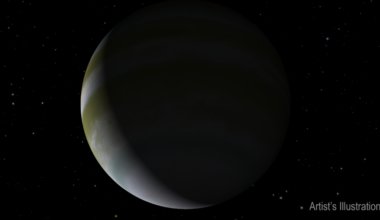
SScience Read More The second closest potentially habitable planet to Earth is not around a famous star; it is GJ 887 d, confirmed in 2026 around a quiet red dwarf 10.7 light-years awayJuly 26, 2026 There is something almost comic about the name GJ 887 d. It sounds like a storage code, not…
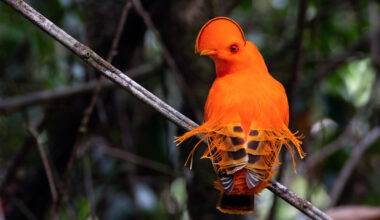
SScience Read More AI tool helps explain how perching birds became so diverseJuly 26, 2026 Perching birds evolved their body shapes in rare, sudden bursts that lined up with moments of upheaval in…
SSpace Read More We tend to imagine the habitable zone as a narrow ring around a star, but icy moons have transformed that picture. Far beyond the reach of life-sustaining sunlight, vast oceans may remain liquid beneath their frozen surfaces—warmed by the constant gravitational flexing of the giant planets they orbit.July 26, 2026 The picture most of us were given at school was wonderfully simple. Put a star in the middle,…
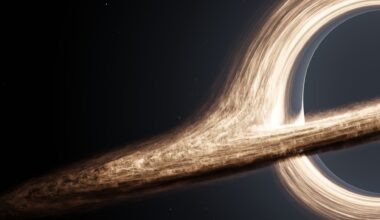
SScience Read More A star near the centre of our galaxy reaches almost 3 per cent of the speed of light as it is whipped around something four million times the mass of the Sun that emits no light of its own — and tracking its orbit for nearly three decades helped two astronomers win a Nobel PrizeJuly 26, 2026 Near the centre of the Milky Way, about 26,000 light-years from Earth, a young blue star repeatedly performs…
SSpace Read More JWST May Be Missing Water Hidden Deep Within Mini-Neptune WorldsJuly 25, 2026 Sub-Neptune exoplanets, exoplanets that are slightly smaller than Neptune, have been designated as the most common type of…
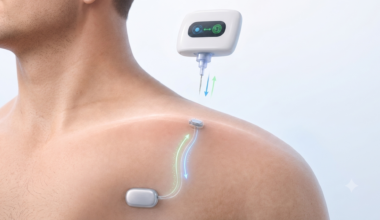
SScience Read More UC Irvine’s Conductive Polymer Bio-Outlet Delivers 16 Mbps Data Stream to Neural ImplantsJuly 25, 2026 UC Irvine scientists develop hidden charging interface for long-term implanted medical devicesNeedle-access outlet powers implants without permanently exposing…
SSpace Read More Psyche spacecraft rehearses asteroid science at MarsJuly 25, 2026 Mars was a rehearsal, not a destination. Here is what a spacecraft built for a metal asteroid came…
SScience Read More Underwater drones find Benin coral reef long presumed dead, and it’s teeming with lifeJuly 25, 2026 A coral reef off the coast of Benin that scientists had long assumed was dead has been found…
SScience Read More The James Webb Space Telescope is parked a million miles from Earth and runs on less power than a household kettle — and its deployment sequence had 344 single points of failure, any one of which could have ended the missionJuly 25, 2026 The James Webb Space Telescope is often described by what it can see: galaxies forming near the dawn…
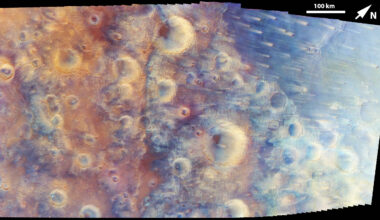
SSpace Read More ESA’s Mars Express meets NASA’s PsycheJuly 25, 2026 On 15 May, whilst en route to a metallic asteroid, NASA’s Psyche mission flew just 4500 km above…
SScience Read More Voyager 1 is now so far from Earth that a signal traveling at the speed of light takes more than 22 hours to reach it — so when engineers send a command, they can wait nearly two days to know whether the spacecraft respondedJuly 25, 2026 The delay is no longer a poetic way of describing deep space. It is an operating condition. Voyager…