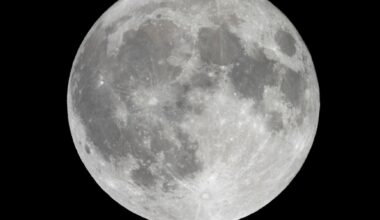
Classic Moon-formation simulations treated the colliding proto-Earth and Theia as strengthless fluids, typically producing a debris disk that assembled later—but when Southwest Research Institute researchers added temperature-dependent rock strength, one canonical simulation produced an intact Moon in roughly five hours.
For decades, the standard computer version of the Moon’s birth began with a practical simplification. A Mars-sized body…