Israel News Beep | NewsBeep.com
  • News Beep
  • Israel
  • Headlines
  • Business
  • Entertainment
  • Health
  • Science
  • Sports
  • Technology
Israel News Beep | NewsBeep.com
  • News Beep
  • Israel
  • Headlines
  • Business
  • Entertainment
  • Health
  • Science
  • Sports
  • Technology

Browsing Tag

Microglia

26 posts
HHealth
Flavonoid-rich dietary patterns and incident hospital-recorded Parkinson
Read More

Tea, berries and dark chocolate featured in a diet linked to lower Parkinson’s risk

  • August 27, 2026
From tea and berries to dark chocolate, researchers tracked how a flavonoid-rich dietary pattern relates to Parkinson’s disease…

HHealth
Immune cells communicate across a continuous, bidirectional circuit between the CNS and periphery. Immune cells from across the body engage CNS tissues and, in turn, are shaped by signals returning from the brain. (Left) Under peripheral equilibrium, immune effectors mobilized from visceral organs, secondary lymphoid organs, hematopoietic tissues, and the peripheral nervous system (PNS) - including CD4+ and CD8+ T cells, B cells, monocytes (top 3 cell types), NK cells, dendritic cells, mast cells, neutrophils, and innate lymphoid cells (bottom cluster of cells) - engage the CNS in a homeostatic dialogue that supports neural cell health, plasticity, and repair, sustaining a protective environment. (Right) Age-associated dysfunction across the same peripheral compartments reshapes this circuit: altered immune effectors enter the CNS and contribute to shifting the local environment toward a degenerative state in which microglia adopt disease-associated programs, astrocytes become reactive, and neurons accumulate pathology. This model underscores how the same circuitry can yield protective or pathogenic outcomes and that neurodegeneration is downstream of dysfunctional brain-immune crosstalk. Study: Neurodegeneration as a dysregulation of neuroimmune crosstalk
Read More

Disrupted brain-immune signaling may help drive neurodegeneration

  • August 24, 2026
From gut-primed T cells to microglial signaling and persistent gene-regulatory states, researchers map an intricate immune network that…
HHealth
AI toolset reveals links between lung fibrosis and aging
Read More

Study suggests lipid droplet accumulation is a conserved feature of senescent cells

  • July 16, 2026
A new research paper was published in Volume 18 of Aging on July 1, 2026, titled “Senescent cells accumulate lipid droplets.”…
HHealth
Research examines oral health benefits of toothbrush choice and brushing duration
Read More

Study compares different light therapies for treating Alzheimer’s disease

  • July 6, 2026
“We wanted to compare the two most common tPBM paradigms head‑to‑head in a well‑established AD mouse model,” explains…
HHealth
Study explores scent's role in social status perceptions
Read More

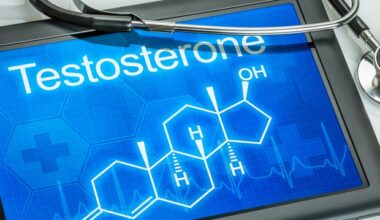
Study challenges assumptions about testosterone’s role in brain cancer

  • May 9, 2026
Scientists have long suspected that androgens, male sex hormones like testosterone, may help tumors grow because the hormones…
HHealth
Berberine improves cognitive function in diabetic encephalopathy mice
Read More

Neurodegeneration in Down syndrome may begin shortly after birth

  • May 8, 2026
Signs of neurodegeneration in individuals with Down syndrome may start as early as birth, a critical stage of…
SScience
Anxiety treatment improves outcomes for low-risk chest pain patients
Read More

Calcium signals in microglia drive anxiety and compulsive behaviors

  • April 22, 2026
Researchers had previously discovered a population of immune cells within the brain that can act as accelerators and…
HHealth
AI tool SeeMe detects hidden signs of consciousness in brain injury patients
Read More

Microglia actively shape glioblastoma growth and tumor spread

  • April 22, 2026
Glioblastoma, the most common and most aggressive brain tumor type in adults, remains difficult to treat because it…
HHealth
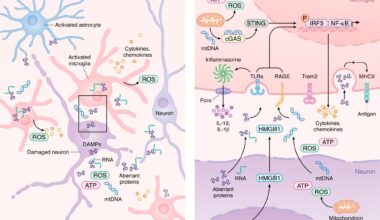
Innate immune activation and microglial transition during neurodegeneration. (A) During neurodegeneration, distressed neurons release DAMPs such as mtDNA, ROS, HMGB1, aberrant proteins, and pTau–bound RNA. These signals activate resident microglia and astrocytes, which then recruit peripheral immune cells. As shown in more detail in B, activated microglia upregulate PRRs, including TLRs, RAGE, and cGAS, enabling detection of neuron-derived DAMPs. Engagement of PRRs induces proinflammatory gene expression programs and activates inflammasome pathways that promote release of chemokines and cytokines into the CNS parenchyma. As microglia transition from homeostatic to reactive states in a TREM2-dependent manner, damage-associated microglia increase MHC-II expression to support antigen presentation and coordination of adaptive immune responses that attempt to limit neurodegeneration.
Read More

How the immune system may influence Alzheimer’s, Parkinson’s, and related diseases

  • April 17, 2026
A sweeping review shows how the brain’s immune defenses can both fight and fuel neurodegeneration, revealing why timing,…
HHealth
Microglia among neurons
Read More

Affecting a Signaling Pathway Alleviates Alzheimer’s in Mice

  • April 10, 2026
A new study shows that the overexpression of somatostatin (SST), a neuropeptide produced in neurons and acting mostly…
HHealth
Neuroscience News logo for mobile.
Read More

Single Immune Switch Drives Both Arthritis and Alzheimer’s

  • April 7, 2026
Summary: Inflammation is the body’s natural defense, but when it gets stuck in the “on” position, it drives…
HHealth
AI tool SeeMe detects hidden signs of consciousness in brain injury patients
Read More

Blocking fructose metabolism may improve brain tumor immunotherapy response

  • March 18, 2026
Northwestern Medicine scientists have discovered that specialized immune cells within the glioblastoma tumor metabolize fructose to suppress immune…
Israel News Beep | NewsBeep.com
www.newsbeep.com