
The Labour Party broke its two-year policy drought this week with a pair of economic announcements intended to boost domestic industries and create more jobs.
First, it revealed it would create a new sovereign investment fund that would leverage existing state-owned enterprises to make profitable, public-good investments.
Then it promised an increase in subsidies for New Zealand-based video game developers, aimed at protecting jobs and growing the nascent industry.
Labour’s implicit pitch was that hands-on economic management could create more job opportunities than the Coalition’s laissez-faire approach, laying the groundwork for a policy to raise tax revenue.
Both policies were moderately safe as National has sustained the video game sector subsidies and supports the broad idea of state-owned investment company.
The Future Fund proposal was light on detail allowing critics and fans to project their own fears and desires onto it. Opponents saw it as a slush fund for fashionable projects, supporters thought it was a way to outmanoeuvre rent-seeking capitalists.
It was simultaneously to be a venture capitalist; an infrastructure developer; a regional or industrial development agency; a philanthropic fund investing in unprofitable public goods; and a sovereign wealth fund for the future.
But it cannot be all of these at once, so which actually is it?
Dual mandate
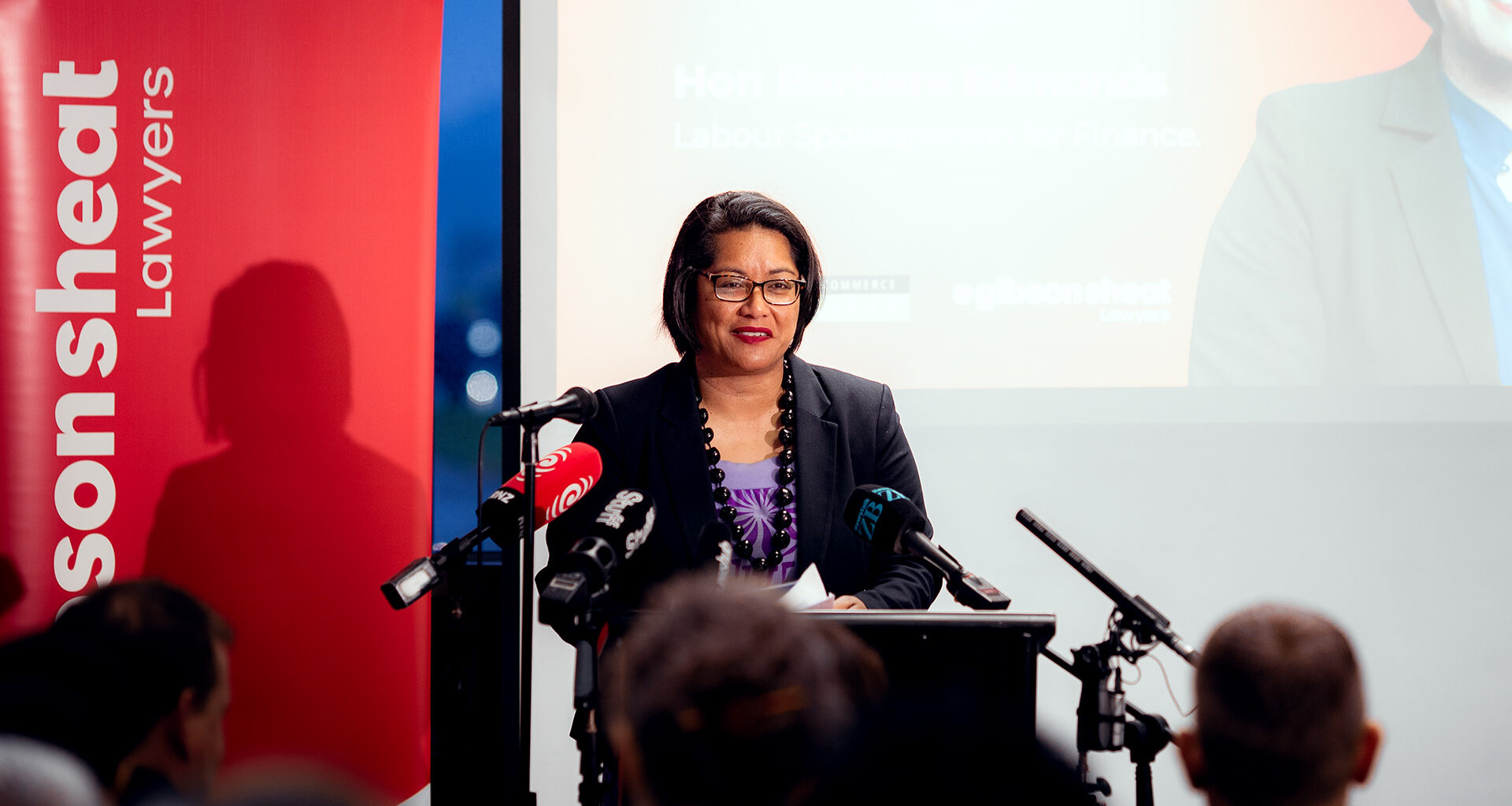
Barbara Edmonds, Labour’s finance spokesperson, told Interest.co.nz it would have a dual mandate: Investments would need to deliver a financial return and public good.
She said it would make “mission-based commercial investments” which had to turn a profit but there wouldn’t be a specific benchmark for annual returns. This would allow it to make ‘public good’ investments as well as profit-led ones.
Unlike the Reserve Bank’s old dual-mandate, there would not be a hierarchy. The problem with this is that public goods are not directly measurable like commercial returns.
It is fairly objective to assess which investment has the best risk-adjusted reward, but highly subjective to decide whether a solar farm or affordable housing contains more public good.
Edmonds plans to address this by designing a detailed investment framework with Treasury and the Fund’s managers once in government. This would set criteria for public good and help to navigate these trade-offs.
Once the mandate has been set, Edmonds said the investment decisions themselves would be independent of politicians’ meddling and rely on a commercial approach.
Her model for the fund is not Singapore’s Temasek but Ireland’s Strategic Investment Fund, which invests on a commercial basis but with the goal of supporting economic activity and employment.
Irish model
Underneath the Irish fund’s “double bottom line” are four “investment themes” it prioritises four investments: Climate, housing, scaling local businesses, and agriculture.
All these additional goals reduce overall profits. It has returned an average of 3.4% a year since it started in 2014, compared to NZ Super Fund’s 10% annual return.
But, importantly, the Irish fund does have an investment target — it is expected to beat the rolling five-year cost of Government debt, which was at 2.6% in 2024.
So, what exactly is the Future Fund? It is a sovereign investment fund that will aim to make modest returns by investing in housing, renewable energy, and potentially NZ-focused private equity or venture funds.
The economics aren’t perfect – it badly needs an investment benchmark – but they aren’t terrible either. The Fund will pick winners but at arms-length from politicians.
It is not clear that it will create many jobs on net, but it ought to deliver better investments than if ministers tried to make these decisions directly.
The National Party would prefer a Temasek model. A state-asset manager tasked purely with maximising profit and building wealth for Singapore’s future. Public goods can be delivered in other ways and through other means, its leaders believe.
Gaming the system
Labour’s second economic announcement was smaller. An $11 million expansion to existing annual subsidies of about $22 million for NZ-based video game developers.
The economic rationale for subsidies is shaky. They tend to shift activity between sectors rather than generate new business. Products that are otherwise uncompetitive are kept afloat, potentially blocking better value ones from forming.
However, Labour didn’t start these economic distortions. It only reluctantly agreed to them in 2023 in retaliation to Australian subsidies, which were luring NZ businesses across the ditch.
Since these subsidies were already on offer in the Australasian single-market, arguably countering with our own set of subsidies minimises the internal damage.
They are unlikely to disappear as subsidies are sticky. New Zealand’s film industry has evolved to be structurally dependent on them and they cannot be withdrawn.
Again, this is largely because other countries have their own subsidy schemes; it’s a race to the bottom. The gaming sector will probably end up the same, never fully being weaned off the subsidies.
But Labour’s announcement was less about the gaming sector itself and more about showing voters the party is willing to get its hands dirty to try create jobs.
Whether it will work is a different, harder, and almost irrelevant question.