
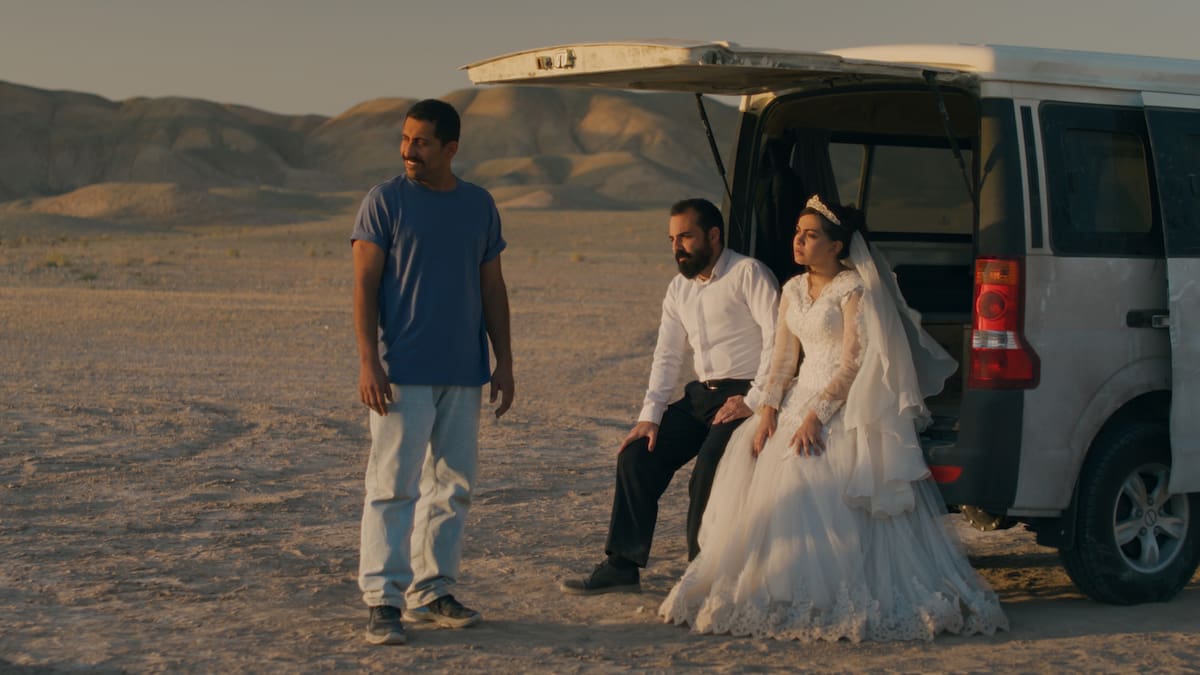
Enraged, Vahid stalks and kidnaps Rashid/Eghbal, intending to show exactly as much mercy as the notorious tormentor showed his victims. But on his way to executing his captive, doubt creeps in. Does Vahid have the right man? He seeks validation from some fellow former prisoners: a wedding photographer named Shiva (Maryam Afshari); her ex, Hamid (Mohamad Ali Elyasmehr); and an almost-bride (Hadis Pakbaten) whose almost-groom (Majid Panahi) has little choice but to join their rolling debate over justice and the burden of proof.
From left, Afssaneh Najmabadi, Delmaz Najafi and Ebrahim Azizi are on the road in an opening scene of “It Was Just an Accident”. Photo / Neon
You may think you know where Panahi is going with this, but even if you guess some of the mileposts, it shouldn’t keep you from being entertained or – more to the point – challenged. This is a film-maker whose work always earns its resistance adjectives. Imprisoned multiple times for collusion and propaganda against the regime (the same charges levelled at Vahid in the screenplay), Panahi is said to have filmed much of his latest movie in Iran surreptitiously, with cinematographer Amin Jafari (No Bears, 3 Faces) moving stealthily and efficiently through a 28-day shoot that never looks rushed or cut-rate on-screen. The resilient auteur is also dodging the Iranian Government by collaborating with France, which co-produced and is submitting the film for Oscar consideration after its Palme d’Or win at the Cannes Film Festival.
It Was Just an Accident has been stockpiling fans along the festival circuit not because it’s perfect – I could have done without the overt metaphor of the barren Waiting for Godot tree that grows in the desert near a freshly dug grave awaiting a body, for example – but because it leads with sneaky humour, as well as sincerity and openness that never seem false or simplistic. Every character in this story is at a moral crossroads. The path they choose will determine the world in which they – and, not subtly, the rest of us – live.
Panahi doesn’t need Godot to get across his aversion to waiting around for “the system” and its agents to do the right thing. In the film’s first ending, he explores the complexities of individual accountability and empowerment. But then, in the end end, he circles back to human nature and its primal need to assert dominance.
If anyone has the right to make a revenge fantasy, it’s Jafar Panahi. And yet, this movie isn’t that. Panahi doesn’t make statement films; he makes question films, designed to instigate soul-searching and debate. The real brilliance of those two endings is that they’re not actually endings at all.
It Was Just an Accident opens in NZ cinemas on January 29.