
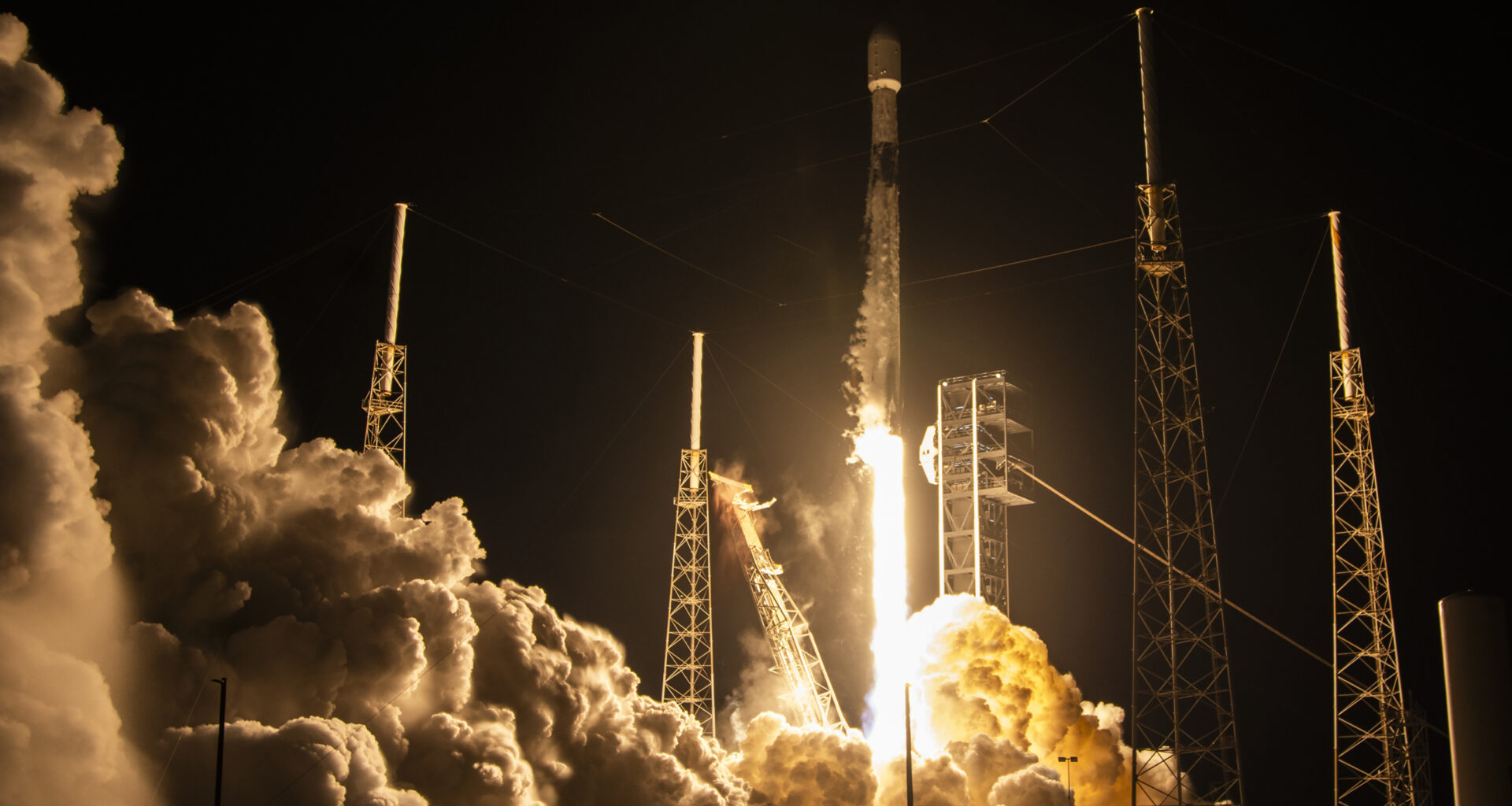
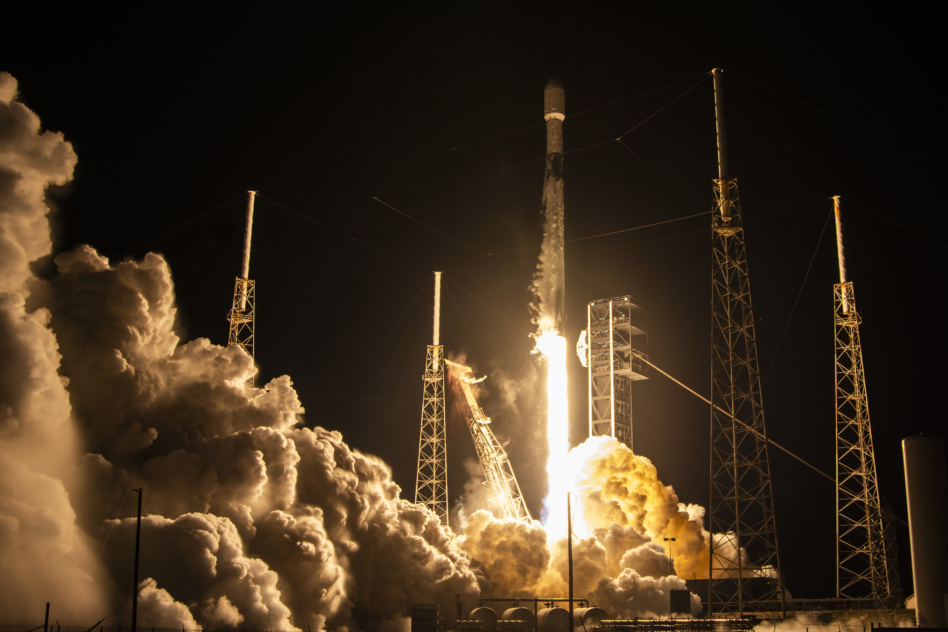
 Bandwagon-4 lifts off. Image: SpaceX
Sign up for our Flagship Daily Newsletter
A Falcon 9 rocket lifted off the pad at Cape Canaveral Space Force Station in the early hours of Sunday morning with a pair of next-gen payloads on board
In total, the flight brought 18 payloads to mid-inclination orbit, including many repeat customers, as part of SpaceX’s fourth Bandwagon rideshare mission in less than two years.
The manifest: On board the flight were two notable technologies flying for the first time:
The first iteration of an orbital AI data center from Washington-based startup Starcloud, which is carrying a NVIDIA ($NVDA) GPU to run AI models in space. This flight sets the stage for Starcloud’s first commercial satellite—Starcloud-2—which is scheduled to offer 24/7 data center access beginning in 2026.The first demo hardware from Vast is attempting to validate many of the technologies that will fly on the company’s first commercial space station, Haven-1, which is expected to launch as early as next year. Vast’s Haven Demo will test the future space station’s propulsion, flight computers, and navigational systems.
Joining the flock: The flight wasn’t all new tech, however, and many of the payloads deployed on orbit yesterday were part of larger constellations.
South Korea’s Agency for Defense Development deployed the fifth and final satellite as part of the nation’s 425 Project, a constellation now consisting of four SAR sats and one electro-optical/infrared sat.Space42, the UAE-based EO company, launched three ICEYE SAR sats.Tomorrow.io launched a pair of AI powered weather detecting satellites.
Turkish delights: Also onboard the Bandwagon flight were a handful of satellites from Turkey, including four IoT picosats developed by Gumush Aerospace, as well as the second GPS satellite from Fergani Space, which hopes to launch a 100-sat constellation within the next five years.