
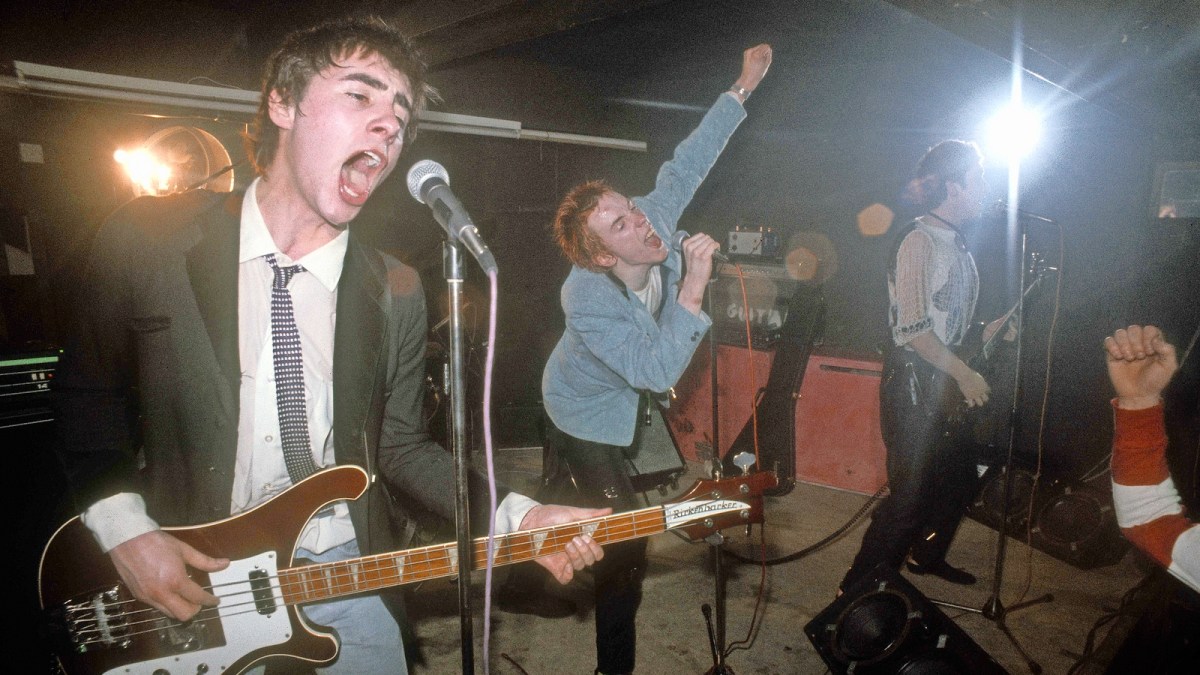
It is one of the most famous stories in rock’n’roll: that in February 1977 Glen Matlock was thrown out of the Sex Pistols for liking the Beatles. It is also not true.
“Malcolm McLaren was covering his back,” the bassist says of his former manager’s telegram to the NME, in which Matlock’s love of the Fab Four was proclaimed. We’re in his basement flat in Maida Vale, where a skull painting by Damien Hirst hangs on a wall, a present from the artist in exchange for Matlock signing his copy of the Pistols’s only album, Never Mind the Bollocks. On another wall is a poster for the first Pistols concert in Moscow, in 2008. “I left because I was on a hiding to nothing, especially with John [Lydon], who wanted his mate Sid Vicious in. I’d just turned 20, I was annoyed with Steve [Jones, guitar] and Paul [Cook, drums] for not standing up for me, and I thought: f*** ’em.”
A month after that infamous telegram, McLaren asked Matlock to rejoin the band. “We met in the Blue Posts in Soho and he said: ‘It’s not working out with Sid, would you come back in?’ I replied, ‘You sent that horrible telegram, which was a lie, so it’s not happening.’”
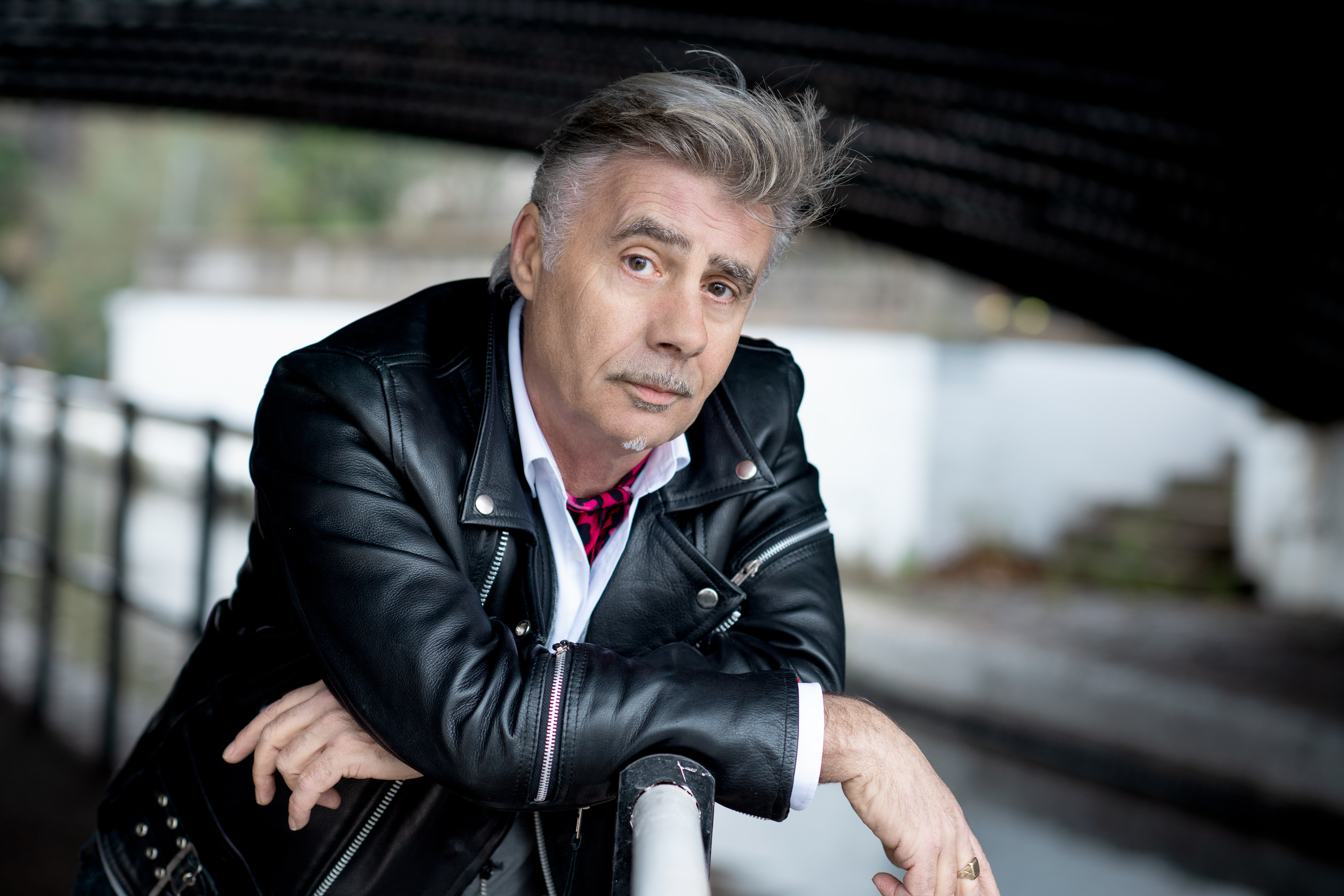
Matlock in 2019
TINA KORHONEN
Now Matlock has a chance to tell his side of the story. I Was a Teenage Sex Pistol, a documentary based on his 1990 memoir, reveals how the band that encapsulated the post-hippy nightmare of late Seventies Britain was a complicated beast. It all began when a 16-year-old Matlock — fresh from causing anarchy in a Bayswater department store (Whiteleys) after improperly loading money into a canister destined for the cashier’s office — walked into Let It Rock, McLaren and Vivienne Westwood’s Fifties-themed clothes shop on the Kings Road, in 1973.
“It was the antithesis of everything going on in the UK at the time,” says Matlock of Let It Rock, soon to change its name to Too Fast to Live, too Young to Die, then Sex, where it became ground zero for punk and the birthplace of the Pistols. “I went in for some brothel creepers. I couldn’t afford them so I asked for a job instead.”
This was in the era of mass strikes, mass inflation and IRA bombings, all of which fed into the Pistols. “One day at [Central] St Martins College, I was doing a photography project with these two Irish blokes on Charing Cross Road and they just disappeared. Turns out they’d been collared by the police and spent two nights in the cells. They were art students! This kind of thing was going on all the time.”
The jukebox at Sex featured singles by mid-Sixties bands labelled “garage punk”, including You’re Gonna Miss Me by the Thirteenth Floor Elevators and Psychotic Reaction by the Count Five, nuggets of primeval brilliance amid the bloated excess of progressive rock. “Then John [Lydon] came along, a second generation Irish bloke with a chip on his shoulder,” Matlock says of the key event in the Pistols’s origin story. “He was a Roman Catholic. You can only imagine what it was like for him to sing ‘I am an Antichrist.’”
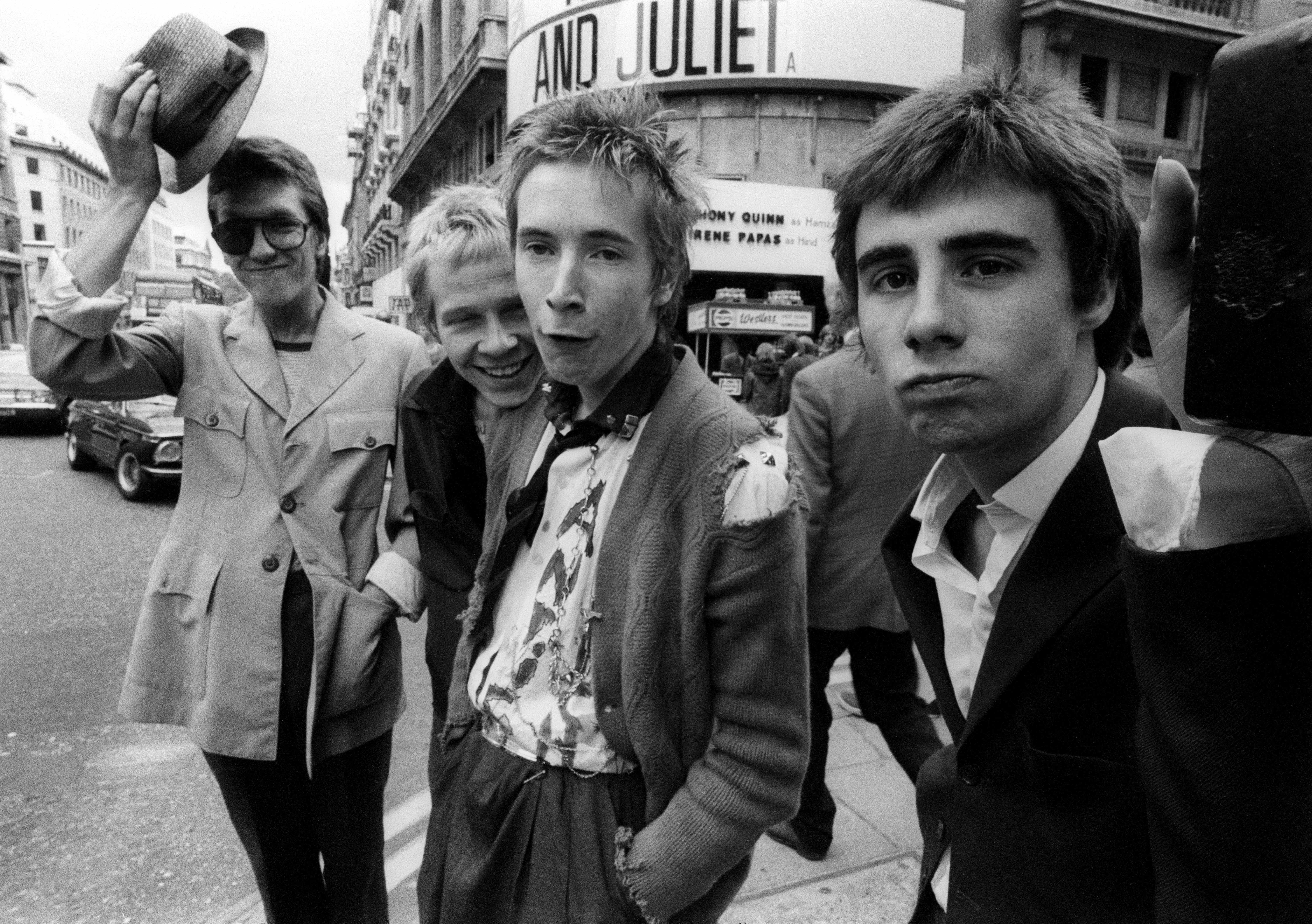
The Sex Pistols in 1976: Steve Jones, Paul Cook, Johnny Rotten and Matlock
VANTAGE MEDIA/ I WAS A TEENAGE SEX PISTOL PRODUCTION
Once the Pistols coalesced into a proper band, with Lydon on vocals, Jones on guitar and Paul Cook on drums (the bespectacled guitarist Wally Nightingale having been dispensed with for not looking the part), Matlock abandoned his degree in fine art painting to be the band’s bassist. Before he left the college he convinced the social secretary at Central St Martins to book his band as support for a concert by the pub rockers Bazooka Joe, on November 6, 1975. A blue plaque now marks the spot on Charing Cross Road where the Pistols’s first concert took place.
• Glen Matlock: I’m not a big fan of Bob Dylan
Life in the Pistols was fantastic in the early days, Matlock says. Tasked by McLaren with providing a manifesto, the band wrote Anarchy in the UK. “But when I came up with the chords I had the theme tune to Sunday Night at the London Palladium in my head.” God Save the Queen, originally titled No Future, came from the idea that there was no future unless you made one for yourself: punk’s DIY ethic in a nutshell. The problems only started after the famous Bill Grundy incident of December 1, 1976, when the Pistols and their cohorts — booked as a last-minute replacement for Queen — appeared on Thames Television’s Today programme, swore profusely after being goaded by an intoxicated Grundy and all hell broke loose.
“It affected what size hat John wore,” Matlock says of the episode. “Before that, we had done gigs to nobody. We played a chicken-in-a-basket working men’s club in the north with a host who looked like Bernard Manning. We played a gig at a teacher training college in Dundee where they bottled us off.”
In October 1977 the Pistols released Never Mind the Bollocks, on which 10 of the 12 songs were co-written by Matlock. As Noel Gallagher of Oasis says in the documentary, “Imagine getting it so right, once. I made ten albums. In my own mind they don’t match up to that and I’m an arrogant bastard.” It all collapsed with a disastrous US tour in January 1978. Then on August 22 Matlock and Vicious played a gig together at the Electric Ballroom.

Matlock and Lydon
VANTAGE MEDIA/ I WAS A TEENAGE SEX PISTOL PRODUCTION
“One night at [punk venue] the Roxy, John and Sid turned up,” Matlock says. “I went for a pee and Sid came into the toilet, egged on by John, going, ‘I’m going to get you because I’m the bass player in the Pistols and you’re not.’ But then I offered to give him bass lessons because I’d heard he wasn’t doing too well and he went, ‘Would you really do that?’ Sid was quite sweet, really. We came out together, smiling, and John was furious because it didn’t go how he planned it. We did the gig to show we weren’t enemies.”
• Glen Matlock: why I really left the Sex Pistols
Two days later Vicious left for New York. Six months after that he died of a heroin overdose. “I let him have the cash for the gig not realising that Malcolm was keeping him short of money so he didn’t put it up his arm,” Matlock says. “He turned up in New York with all this money so in a way I hastened his demise.”
The original line-up of the Pistols did get back together in 1996 for the suitably named Filthy Lucre tour. “We did a press conference at the Chateau Marmont in Hollywood and someone asked: ‘Are you going to write new songs?’ John replied, ‘What’s wrong with the old ones?’”
How did the reunion happen? “None of us had seen each other in years but I was in LA for a solo album so I gave Steve a call. I drove up to his place and he said: ‘Let’s go and see John.’ I was going, ‘errr …’ We went out for lunch. The bill was sitting on the table, nobody was picking it up and eventually I did, which is when John went, ‘Ooh, I was going to get that!’ From that moment we had a tour.”
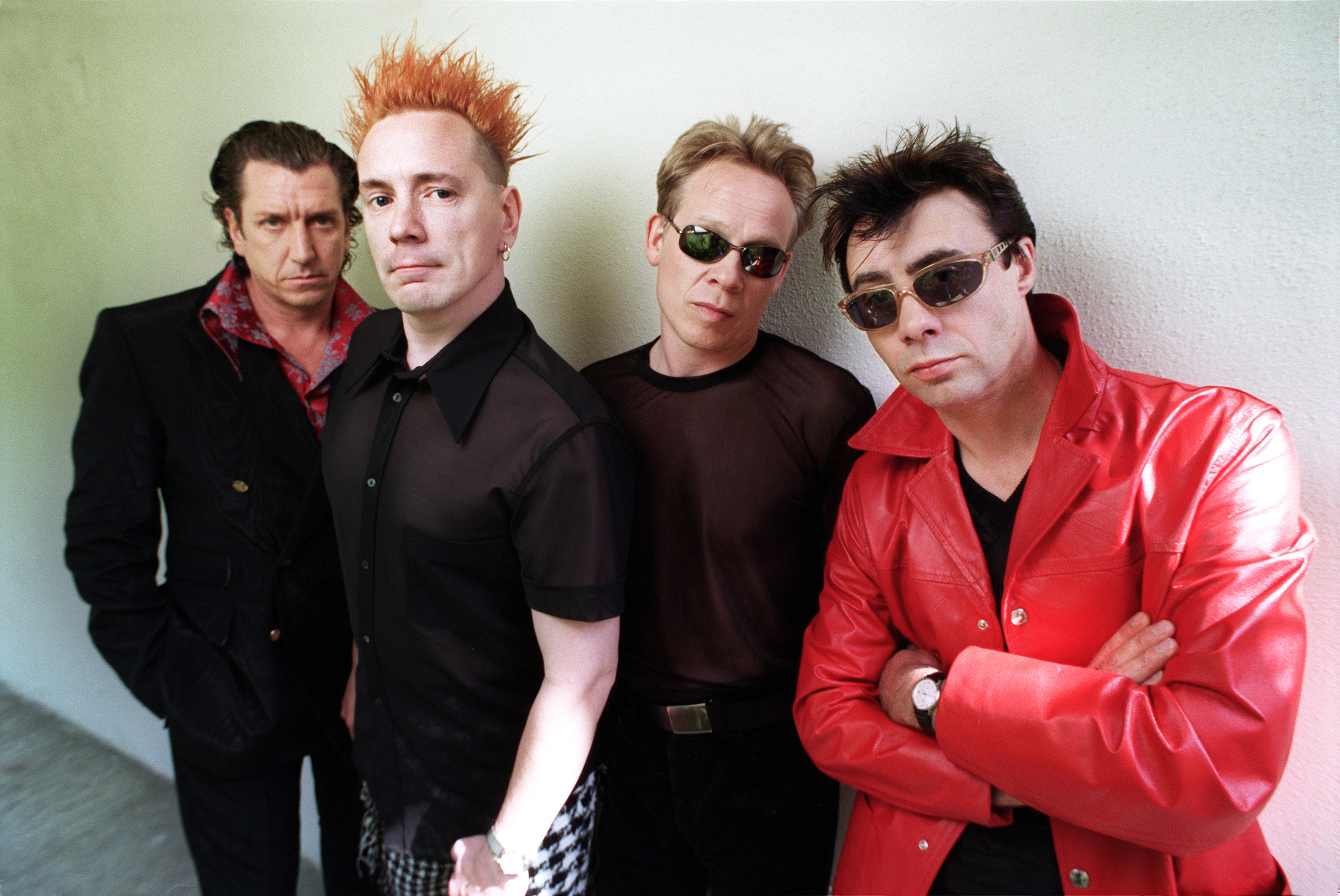
The original line-up reunited in 1996
AL SEIB/LOS ANGELES TIMES VIA GETTY IMAGES
In true Pistols style the good times were not to last. Matlock says the tensions on the reunion tour arose not from Lydon but from his ever-present minder, the late John “Rambo” Stevens. “I don’t wish ill of most people but Jesus … his job was to stop trouble but if there wasn’t trouble he didn’t have a job so he created it. John insisted on him coming, even though he knew we didn’t want him there, so it put a wedge between John and the rest of us.”
Could that wedge be removed? “There’s too much water under the bridge. The Thames Barrier is stuck in the lock position.”
In 2024 the Pistols reformed with Frank Carter of the Noughties punks Gallows as the frontman. Lydon dismissed it as “no different to karaoke” but Matlock sees it differently. “Me, Steve and Paul have something in common that nobody else has, and when we get in a room and plug in, we’re the Sex Pistols. Then Frank does his take on John’s lyrics and it’s great. How long he wants to do someone else’s songs when he’s quite capable of doing them in his own right is another matter.”
After spending an hour or so talking about his brief stint in the band, we do a quick run-through of the rest of his life: forming the new wave pioneers the Rich Kids with Midge Ure and Rusty Egan in 1977, making solo albums, playing bass for Iggy Pop, Blondie and many others. But his teenage band cast a long shadow.

The Rich Kids in London in 1977
DICK BARNATT/REDFERNS
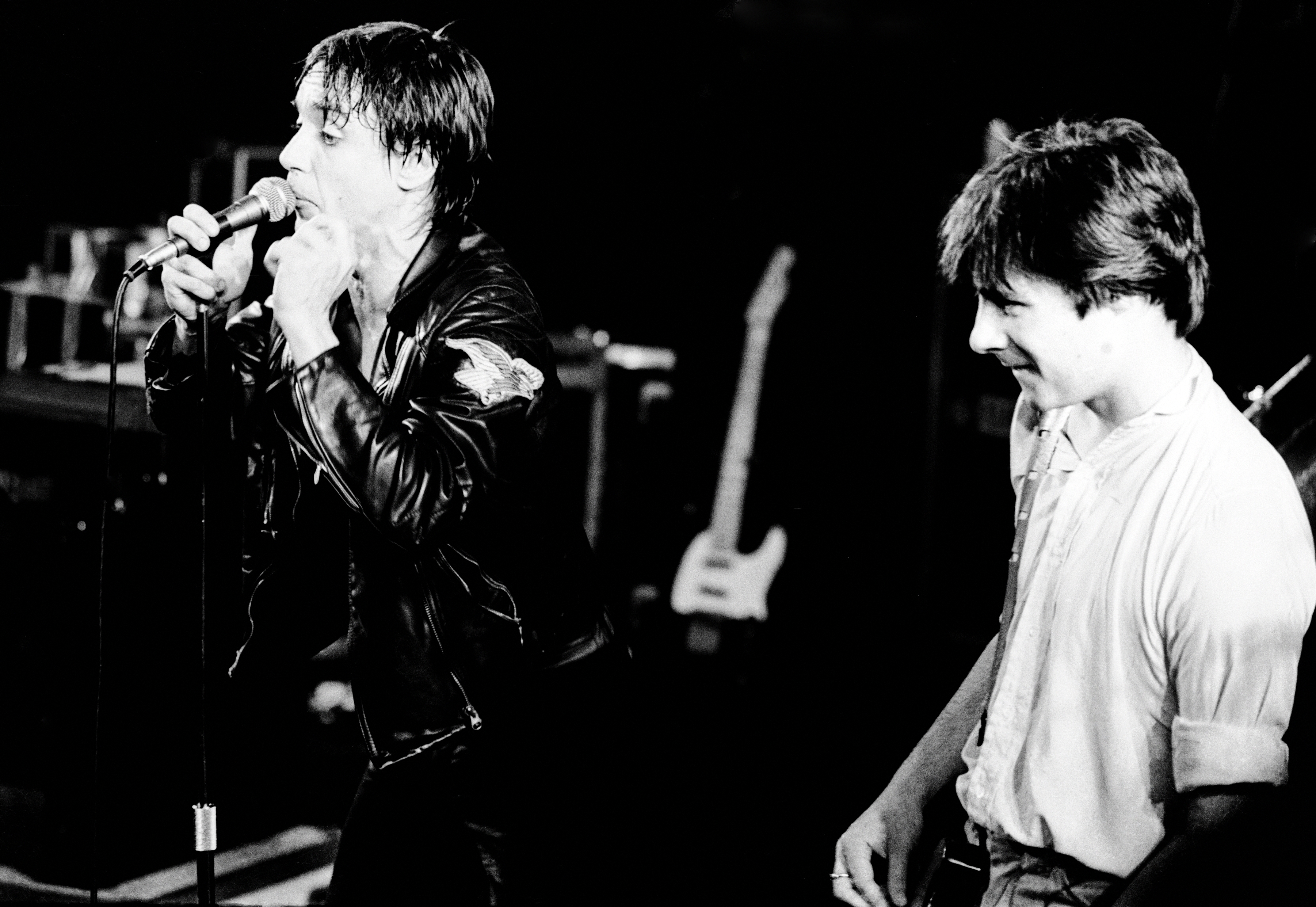
Playing bass for Iggy Pop in 1979
GUS STEWART/REDFERNS
“All four of us will do something on our own, climb the greasy pole of artistic integrity, but as soon as you have anything to do with the Sex Pistols you’re back to square one,” he says, sighing with a resignation half a century in the making. “John Lydon has never been allowed to not be Johnny Rotten and I think he blames us for it. I ended up with a drink problem because of being the bloke who was sacked from the Pistols for liking the Beatles — which wasn’t true.”
• Glen Matlock: ‘I went partying with David Bowie in New York’
In other words Matlock will always be a teenage Pistol. “It’s not such a terrible thing,” he concludes. “The problem is that when we play live, all we can do is rearrange the order of the 12 songs on the album. And maybe wear a different shirt.” Such is the cost of making one perfect album, changing the course of history and leaving it at that.
I Was a Teenage Sex Pistol is on Sky Arts at 9pm on Nov 6, then Amazon and Apple TV from Nov 8