
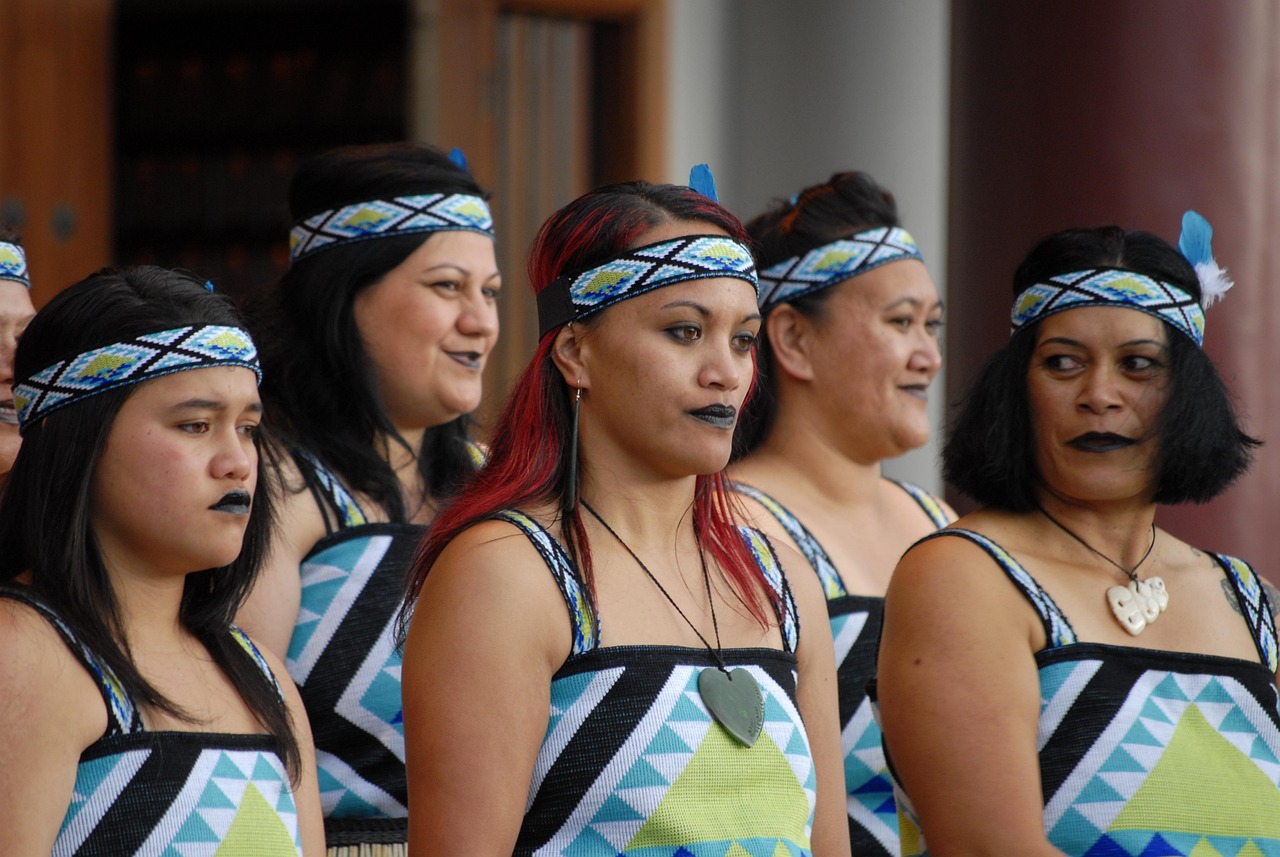
 Māori in New Zealand face a culturally unsympathetic education system, which has hindered graduation rates and students’ prospects. With roots in debate regarding their separateness from other peoples, which directly affects how special provision is dispensed in mainstream education, there are several schemes to resituate Māori custom in students’ learning. New Zealand is at a cultural crossroads between facilitating Māori beliefs within the classroom or conversely encouraging students out of it into a vocational environment. Here is more information about vocational Māori education in New Zealand.
Contextualizing the Māori Experience
In 1840, there were 80,000 Māori in comparison to 2,000 non-Māori inhabiting New Zealand; by 1896, this figure has drastically reversed with 42,000 Māori to 700,000 non-Māori. Issues of inequality remain tightly bound to ethnicity as poverty disproportionately affects the Māori which, when combined with an education system that does not reflect their beliefs, has reinforced social barriers.
In 2023, 28.3% of Māori school leavers did not achieve the NCEA (National Certificate of Educational Achievement) Level 1, New Zealand’s official secondary school qualification, in contrast to just 14% of the non-Māori. Only 63.6% of Māori students remain enrolled in school until age 17, compared with 79% of non-Māori students.
Colonial Legacies or Responsibilities?
Educational disparities have close ties with historic prejudices; when European colonial authorities settled, the Māori experienced stigmatization. To form an agreement between the two, the settlers and the Māori signed the Treaty of Waitangi in 1840. However, Māori and English translations of the treaty vary on one crucial point: Māori authority. Article 3 of the treaty not only grants Māori with the same citizenship rights as European colonial authorities, but also states that the Crown should provide accessible and appropriate education. However, what some deem accessible and appropriate is both a changeable and controversial topic.
In a move the government hoped would create greater social equality, it formed the Treaty Principles Bill which was voted down in April 2025 and would have, had it not received a rejection, effectively dissolved the Treaty of Waitangi’s statement of the Māori’s need for individual determination and provision. Seeing differentiation as a form of discrimination or facilitation directly changes how Māori customs are honored, or not, in mainstream education. So, New Zealand’s continual legislative insecurity has resulted in alternate pathways to widen Māori access to education: the first within and the second outside of the classroom.
Schemes Within Mainstream Education
Against a defective educational background sits the so-called ‘Māori Renaissance,’ a phrase notably European in reference and a movement which prioritizes the iwi, the Māori term for their people. Created in 1995, the Māori Affairs Select Committee made a model to support iwi in their attainment of higher educational outcomes.
These outcomes were set to begin early, with the rollout of Te Kōhanga Reo from the 1980s providing a total immersion in Māori language for preschoolers. A more culturally conscious mode of teaching has also received encouragement in the classroom, as a renewed emphasis on building a whānau, an extended family, between teachers, students and parents has aimed to prevent further disaffiliation with mainstream education.
The 2025 Budget further affirms this aim, adding another $50 million in New Zealand’s capital funding to support Māori students’ success with enhanced curriculum and teacher training, including but not limited to:
Training 51,000 teachers for years 0-13 in Te Reo, the Māori language, and Tikanga, Māori customs Creating a STEM virtual learning network to help 5,500 senior secondary school students Developing Māori Studies as a subject area taught between years 11-13
There are also three Māori Universities offering anything from Bachelors in Māori Performing Arts, to Māori nursing, or even Mātauranga Māori, a degree in iwi philosophy. As an alternative to a purely vocational path, these courses bring Māori knowledge in line with more traditional degree paths to allow members of the community access to higher education without forfeiting their cultural beliefs.
However, on the June 7, 2025, the New Zealand government removed Māori and Pacific learners as an eligible category for extra funding, prompting insecurity and anxiety as to how Māori accommodations will continue to work in mainstream education.
Vocational Schemes Outside Mainstream Education
Vocational learning is an experience intrinsically Māori in practice, as past generations would impart crafts like weaving and woodworking in a familial practice known as the Tuakana teina dynamic. This principle also determines a Māori’s rights to ancestral lands, roles within the iwi and even, historically, potential marriages. With a focus on how individual responsibility intersects with the community, it provides an excellent framework for vocational training schemes.
A nonprofit actively utilizing this dynamic is the Tāwharau Housing Trust, which originated in 2017. It uses the customary acquisition models of the Māori community to teach trades within the construction industry, while also building affordable housing. One can translate ‘Tāwharau’ as the verb “to shelter” or the noun “a shelter,” which encapsulates the overall sustainability of the project as it not only addresses the housing needs of the immediate community, but provides future generations with the skills needed for job security.
The Rotorua School of Māori Arts and Crafts
Another vocational Māori education scheme in New Zealand is The Rotorua School of Māori Arts and Crafts, which originated in 1926. Translated as “The World of Light,” kinship is built between students and their instructors as they work on projects together such as the building of a meeting house, dining rooms and various other community buildings. Many of their graduates rejoin as staff to train the next generation of Māori carvers in a cyclical pattern not only preserving traditional practices, but also careers which support creative and cultural expression.
The Māori Trade Training Scheme
Finally, the Māori Trade Training Scheme, which has been operational since the 1960s, led Māori school leavers down vocational pathways by relocating them to specialist training centers. In addition to giving those who grew up in rural communities the opportunity to live in an urban environment, the trades on offer have come to range from carpentry to electrical work and even engineering to name a few.
Looking Ahead
Considering the closure of the Māori Trades and Training Fund on June 30 2025, the future of vocational Māori education in New Zealand is largely dependent on the community’s own self-determination in light of lost government aid.
– Carys Davies
Carys is based in London, UK and focuses on Good News for The Borgen Project.
Photo: Pixabay